
Agra needs only one introduction: the Taj Mahal, the white marble mausoleum that Mughal emperor Shah Jahan built for his beloved wife Mumtaz Mahal, and one of the most recognisable buildings on Earth. But this city on the banks of the Yamuna River was the seat of Mughal power for generations, and its skyline of red sandstone forts, tombs, and gardens tells a much fuller story of India's imperial golden age than the Taj alone.
Agra sits at the heart of India's "Golden Triangle" alongside Delhi and Jaipur, and it is one of the most eagerly anticipated stops for guests travelling aboard the Maharajas' Express and the Palace on Wheels, the two great luxury trains in the Palace Trains collection that journey through Rajasthan and northern India. Arriving by private train adds real theatre to the visit — guests wake in Agra, are met by private guides and air-conditioned coaches, and are timed to see the Taj Mahal at its most luminous, in the soft light of early morning.
Beyond its marble icon, Agra rewards travellers with a working Mughal capital: a mighty fortress, an abandoned red city nearby, bustling bazaars, and a cuisine as rich and layered as its architecture.
- ✦The Taj Mahal at sunrise
- ✦Agra Fort's red sandstone halls
- ✦The abandoned Mughal city of Fatehpur Sikri
- ✦Delicate marble inlay at Itimad-ud-Daulah
- ✦Agra petha and Mughlai cuisine
- ✦Golden Triangle stop on the Maharajas' Express
- ✦A signature destination on the Palace on Wheels
Places to See in Agra
Taj Mahal
The ultimate monument to love, commissioned by Shah Jahan in 1632 for his wife Mumtaz Mahal and completed over roughly two decades. Its symmetrical white marble dome, inlaid with semi-precious stones in intricate pietra dura work, changes colour with the light — palest pink at dawn, brilliant white at midday, golden at sunset. A UNESCO World Heritage Site and one of the New Seven Wonders of the World.
Agra Fort
This immense red sandstone fortress on the Yamuna River was the primary residence of the Mughal emperors until 1638. Within its walls are the Diwan-i-Am (Hall of Public Audience), the Diwan-i-Khas (Hall of Private Audience), the Jahangir Palace, and Musamman Burj, the octagonal tower where Shah Jahan was imprisoned by his son Aurangzeb, reputedly gazing out at the Taj Mahal until his death.
Fatehpur Sikri
A remarkably preserved ghost city roughly 40 km from Agra, built by Emperor Akbar in the 1570s as his capital before being abandoned decades later due to water shortages. Highlights include the Buland Darwaza (Gate of Victory), the Jama Masjid mosque, and the tomb of Sufi saint Salim Chishti.
Itimad-ud-Daulah (the "Baby Taj")
Often called a draft for the Taj Mahal, this exquisite marble tomb was built in the 1620s for Mirza Ghiyas Beg, grandfather of Mumtaz Mahal, and is celebrated for its delicate lattice screens and early use of pietra dura inlay.
Mehtab Bagh
A restored Mughal garden directly across the Yamuna River from the Taj Mahal, offering one of the finest unobstructed views of the monument, especially prized by photographers at sunset.
Akbar's Tomb, Sikandra
The grand mausoleum of Emperor Akbar, blending Hindu, Christian, Islamic, Buddhist, and Jain architectural motifs, set within a peaceful walled garden on the outskirts of Agra.
Kinari Bazaar and Sadar Bazaar
Agra's atmospheric old-city markets, ideal for browsing marble handicrafts, inlay work, leather goods, and jewellery, and for soaking up everyday city life away from the monuments.
Food & Gastronomy
Agra's food culture carries the same Mughal richness as its architecture, shaped by centuries as an imperial capital where royal kitchens perfected slow-cooked meats, fragrant rice, and elaborate sweets.
- Mughlai cuisine — the city's signature culinary tradition of richly spiced curries, kebabs, and biryanis, often finished with cream, nuts, and saffron in the style once served in Mughal courts.
- Agra petha — the city's most famous sweet, a translucent candy made from ash gourd (winter melon) cooked in sugar syrup and flavoured with rose, saffron, or paan; sold in shops across the old city and taken home as the classic Agra souvenir.
- Bedai and jalebi — a beloved Agra breakfast pairing of spicy, deep-fried lentil-stuffed bread (bedai) served with tangy potato curry, followed by hot, syrup-soaked jalebi.
- Dalmoth — a crunchy, spiced lentil and nut snack mix that Agra is known for producing, sold alongside petha as a classic local specialty.
- Mughlai kebabs and korma — slow-cooked, richly spiced meat dishes reflecting the city's Mughal heritage, widely available in the restaurants and bazaars around Sadar and the old city.
- Chai and street food — Agra's lanes near the fort and Kinari Bazaar buzz with tea stalls, chaat vendors, and kachori sellers, offering an easy, informal counterpoint to the grandeur of its monuments.
On board the Maharajas' Express and Palace on Wheels, guests also enjoy multi-course Indian and international dining prepared by onboard chefs, giving a taste of royal-train hospitality that bookends the flavours found in Agra itself.
Luxury Trains That Visit Agra
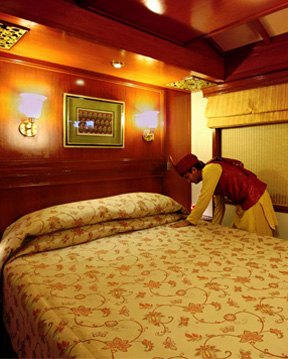 Asia · India
 Maharajas' Express
The Maharajas' Express recreates the splendour of India's royal era, whisking up to 88 guests through Rajasthan's palaces, tiger reserves and Mughal monuments in lavishly appointed suites. Four distinct itineraries fan out across the subcontinent, each delivering all-inclusive fine dining, guided excursions and 24-hour valet service.
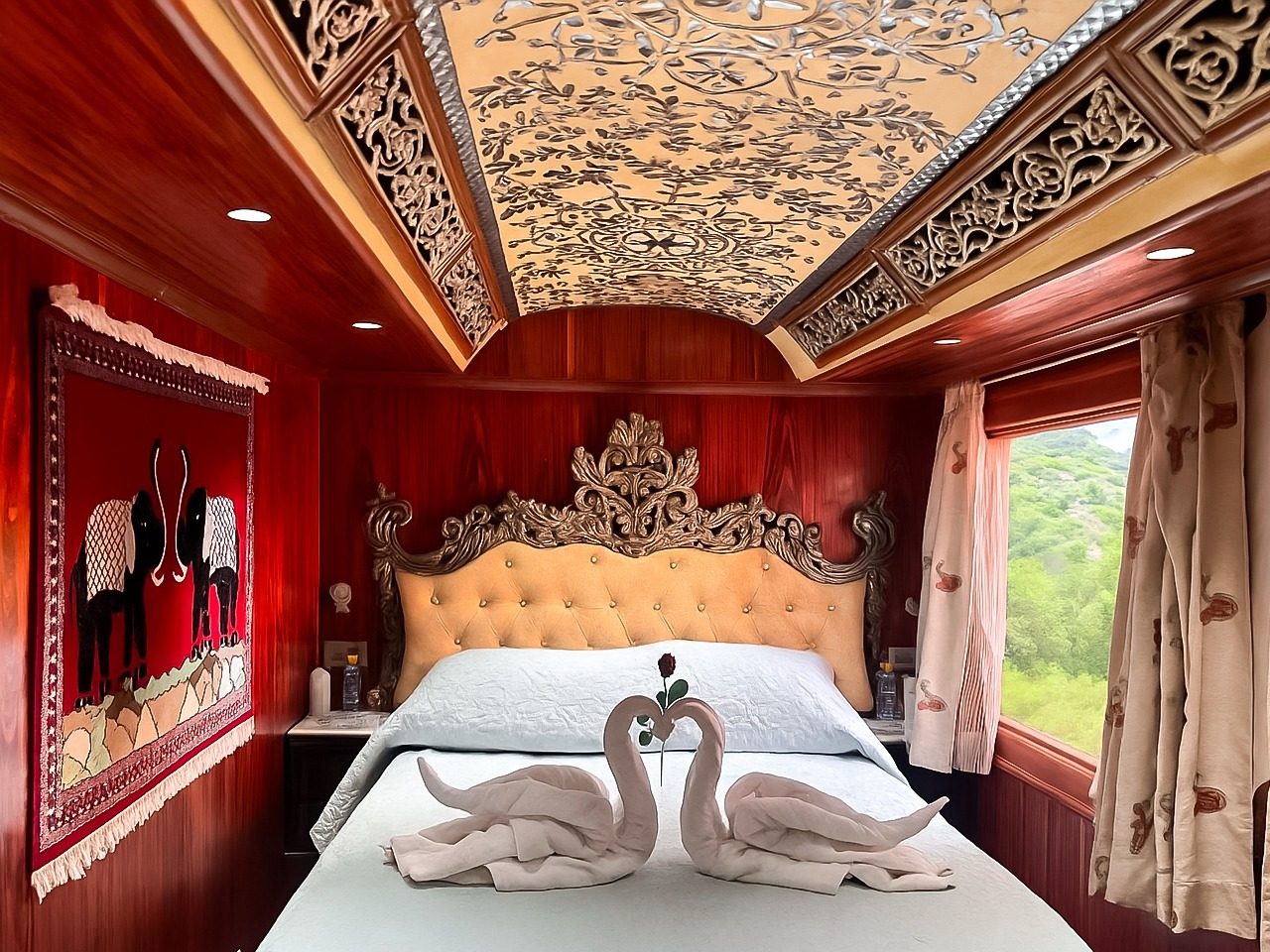 Asia · India
 Palace on Wheels
Launched in 1982, the Palace on Wheels is India's pioneering luxury train — a joint venture between RTDC and Indian Railways that whisks guests through eight regal destinations in 7 nights and 8 days. Named No. 1 in Condé Nast Traveler's 2024 Readers' Choice Awards, it remains the benchmark for royal rail travel on the subcontinent.