Bath is England's only entire city to be designated a UNESCO World Heritage Site, prized for its honey-coloured limestone terraces, sweeping Georgian crescents, and the naturally hot mineral springs that gave the city its name and its purpose nearly two thousand years ago. The Romans built a temple and bathing complex here around the sacred spring at Aquae Sulis, and by the 18th century Bath had reinvented itself as Britain's most fashionable spa resort, drawing the likes of Jane Austen, whose novels immortalised its assembly rooms and promenading society.
Today Bath rewards slow exploration on foot: narrow lanes open onto grand squares, the River Avon slips beneath a bridge lined with shops, and the whole city seems to glow at golden hour. It is an easy, scenic day trip from London and pairs perfectly with a classic rail journey through the rolling countryside of southern England.
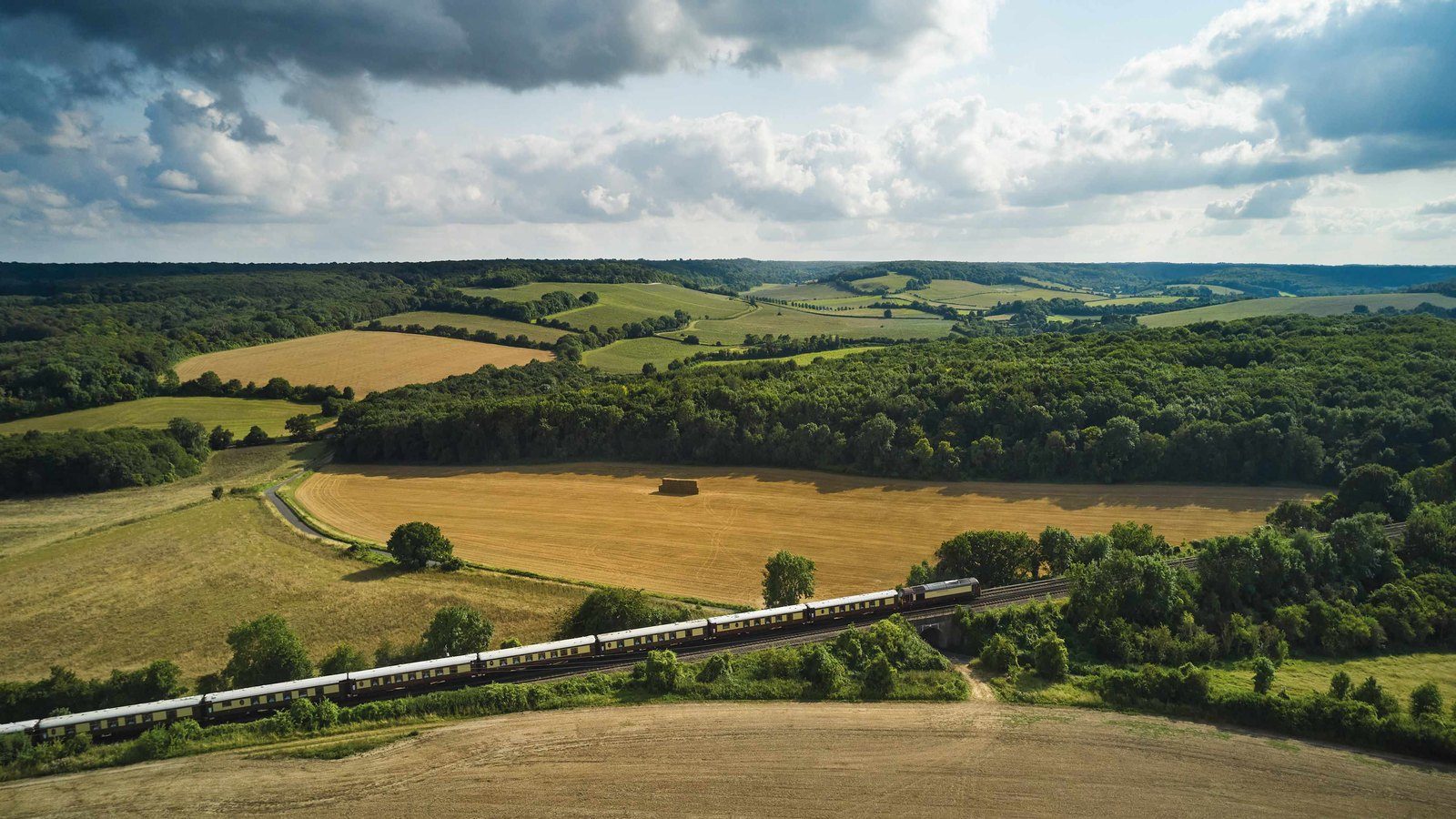
Palace Trains brings Bath within effortless reach aboard the British Pullman, Belmond's fleet of meticulously restored 1920s and 1930s Pullman carriages. Travelling to Bath by vintage train turns the journey itself into part of the occasion — polished marquetry, white-linen dining, and attentive stewards setting the tone long before the city's Georgian terraces come into view.
- ✦UNESCO World Heritage Georgian city
- ✦Roman Baths and sacred spring
- ✦Royal Crescent and The Circus
- ✦Jane Austen's historic home city
- ✦Georgian Pump Room afternoon tea
- ✦Thermae Bath Spa rooftop pool
- ✦Reached aboard the British Pullman
Places to See in Bath
The Roman Baths
The city's centrepiece: a remarkably preserved Roman bathing and temple complex built around Britain's only natural hot spring. Walkways lead past the steaming Great Bath, the sacred spring, and an excellent museum of Roman artefacts, gilded bronze relics, and curse tablets thrown into the water by ancient visitors.
Bath Abbey
A soaring 15th-century Gothic abbey church famed for its fan-vaulted ceiling and the West Front's carved stone angels climbing ladders to heaven. Its tower tours offer panoramic views over Bath's rooftops.
Royal Crescent
One of Britain's most celebrated pieces of Georgian architecture: 30 terraced houses arranged in a sweeping crescent overlooking a wide lawn. No. 1 Royal Crescent is preserved as a museum recreating 18th-century domestic life.
The Circus
A perfectly circular row of townhouses designed by John Wood the Elder, its facades decorated with friezes of acorns, serpents, and classical columns. It sits a short stroll from the Royal Crescent.
Pulteney Bridge and the River Avon
One of only a handful of bridges in the world lined with shops on both sides, modelled on Florence's Ponte Vecchio. Boat trips and riverside walks along the Avon offer fine views back toward the weir and the city skyline.
The Pump Room and Thermae Bath Spa
The elegant Georgian Pump Room, where visitors once "took the waters," now serves afternoon tea beside a fountain of natural spring water. For a modern soak, the rooftop pool at Thermae Bath Spa offers open-air bathing in naturally heated mineral water with views across the city.
Jane Austen Centre
Housed on Gay Street, this museum celebrates Austen's years living in Bath and the city's starring role in novels such as Persuasion and Northanger Abbey, complete with costumed guides and Regency-era exhibits.
Bath Assembly Rooms and Fashion Museum
The restored 18th-century Assembly Rooms once hosted the balls and card evenings that defined fashionable Bath society, and the adjoining collection traces 400 years of fashion history.
Food & Gastronomy
Bath's food scene mixes traditional English tearoom charm with a lively contemporary dining culture, much of it built around the city's spa heritage and its position amid Somerset's dairy and orchard country.
- Sally Lunn's Bun — a large, light, brioche-like bun served sweet or savoury at Sally Lunn's Historic Eating House, reputedly Bath's oldest house, dating to 1482.
- Bath Bun — a richer, sugar-topped cousin of the Sally Lunn, studded with candied peel and crushed sugar, a classic teatime treat found across the city's bakeries.
- Afternoon Tea in the Pump Room — finger sandwiches, scones with clotted cream and jam, and pastries served to the accompaniment of a live trio, beside the spring that made the city famous.
- Somerset cheeses and cider — the surrounding county is cider and cheese country; look for local cheddar and farmhouse cider on menus and at Bath's markets.
- Bath Chaps — a traditional West Country dish of cured, slow-cooked pig's cheek, historically a Bath speciality still found on some heritage-minded menus.
- Bath Green Park Farmers' Market — held in a handsome Victorian former railway station, one of the UK's original farmers' markets, selling Somerset produce, artisan bread, and local meats.
The city's dining rooms range from cosy pub kitchens serving Sunday roasts and West Country ales to smart restaurants in Georgian townhouses — a fitting way to unwind after a day of sightseeing, and a gentle prelude to the fine dining that awaits back aboard the British Pullman.