Bilbao is the great transformation story of modern Spain: a hard-working industrial and shipbuilding port on the Nervión River that reinvented itself, in little more than a generation, into one of Europe's most compelling cultural capitals. The catalyst was the Guggenheim Museum Bilbao, but the city's appeal runs far deeper than a single building — into the tangle of medieval lanes in the Casco Viejo, the grand Belle Époque boulevards of the Ensanche, and a Basque culinary scene that regularly rivals San Sebastián's.
Set in the green, rain-fed hills of the Basque Country, Bilbao rewards travellers who linger over pintxos, ride the century-old vizcaína funicular for river views, and wander a riverfront that has been stitched back together with parks, footbridges and Norman Foster's gleaming metro stations.
Bilbao is also the gateway city for two of Palace Trains' great Spanish rail journeys, the Costa Verde Express and El Expreso de la Robla, both of which use the city as a starting or finishing point for scenic routes across the mountains and coastline of Green Spain.
- ✦Guggenheim Museum Bilbao
- ✦Historic Casco Viejo old town
- ✦Basque pintxo bar culture
- ✦Mercado de la Ribera
- ✦UNESCO-listed Vizcaya Bridge
- ✦Gateway for the Costa Verde Express and El Expreso de la Robla
- ✦Panoramic views from Mount Artxanda
Places to See in Bilbao
Guggenheim Museum Bilbao
Frank Gehry's titanium-clad landmark on the Nervión riverbank single-handedly changed the city's fortunes when it opened in 1997. Beyond the building's sculptural curves, the collection and rotating exhibitions of contemporary and modern art draw visitors from across the world, and Jeff Koons's flower-covered Puppy stands guard outside.
Casco Viejo (Old Town)
Bilbao's atmospheric medieval quarter is built around the Siete Calles, the original seven streets of the city. It's the beating heart of pintxo culture, packed with tapas bars, the Gothic Catedral de Santiago, and the lively Plaza Nueva arcaded square.
Mercado de la Ribera
One of Europe's largest covered markets, this Art Deco riverside hall has fed the city since the 1920s. Its stalls of Cantabrian Sea seafood, Basque produce and pintxo bars make it as much a sightseeing stop as a place to shop.
Museo de Bellas Artes de Bilbao
The city's fine arts museum holds an outstanding collection ranging from Old Masters like Zurbarán and El Greco to Basque painters and 20th-century greats including Gauguin and Bacon, all in a far less crowded setting than the Guggenheim.
Puente de Vizcaya (Vizcaya Bridge)
A UNESCO World Heritage Site just outside the city, this 1893 transporter bridge over the Nervión estuary was one of the first of its kind in the world and still ferries passengers and cars across on a suspended gondola.
Basilica of Begoña
Perched on a hill above the old town and reached by a funicular or a long flight of steps, this Gothic basilica honours the patron saint of Bizkaia and offers sweeping views over the city.
Azkuna Zentroa
Architect Philippe Starck transformed a former wine-storage warehouse into this striking cultural centre, distinguished by its rooftop swimming pool with a glass floor that lets light stream into the atrium below.
Funicular de Artxanda
A short cable railway climbs from the city centre to Mount Artxanda, where a terrace and park deliver postcard views over Bilbao's rooftops, the river and the surrounding green hills.
Food & Gastronomy
Bilbao sits at the heart of Basque gastronomy, a region with more Michelin stars per capita than almost anywhere on earth, and eating here is as much a civic ritual as a meal. The pintxo bars of the Casco Viejo and Calle Ledesma serve an ever-changing parade of bite-sized creations, from simple skewered olives and anchovies to elaborate towers of foie gras and seafood, traditionally chosen by eye at the bar and paid for on the honour system.
Signature dishes worth seeking out include bacalao al pil-pil, salt cod gently emulsified in its own gelatine and olive oil into a golden sauce; marmitako, a hearty tuna and potato stew born from fishermen's galleys; and txipirones en su tinta, baby squid stewed in their own ink. Look also for Idiazabal, a smoky sheep's-milk cheese from Basque shepherds, and the simple but perfect tortilla de patatas found at every pintxo bar.
To drink, order a glass of txakoli, the crisp, slightly sparkling young white wine poured from a height to aerate it, or a zurito, the small beer that's the standard pintxo-bar order. For dessert, Basque cheesecake — burnt, creamy and now famous worldwide — was born just up the coast in San Sebastián but appears on menus throughout Bilbao.
- Bacalao al pil-pil — salt cod in an emulsified olive oil sauce
- Marmitako — tuna and potato fisherman's stew
- Txipirones en su tinta — squid cooked in its own ink
- Pintxos — Basque bar-top tapas, an essential Bilbao ritual
- Idiazabal cheese — smoked sheep's-milk cheese from the Basque hills
- Txakoli — light, slightly effervescent Basque white wine
Luxury Trains That Visit Bilbao
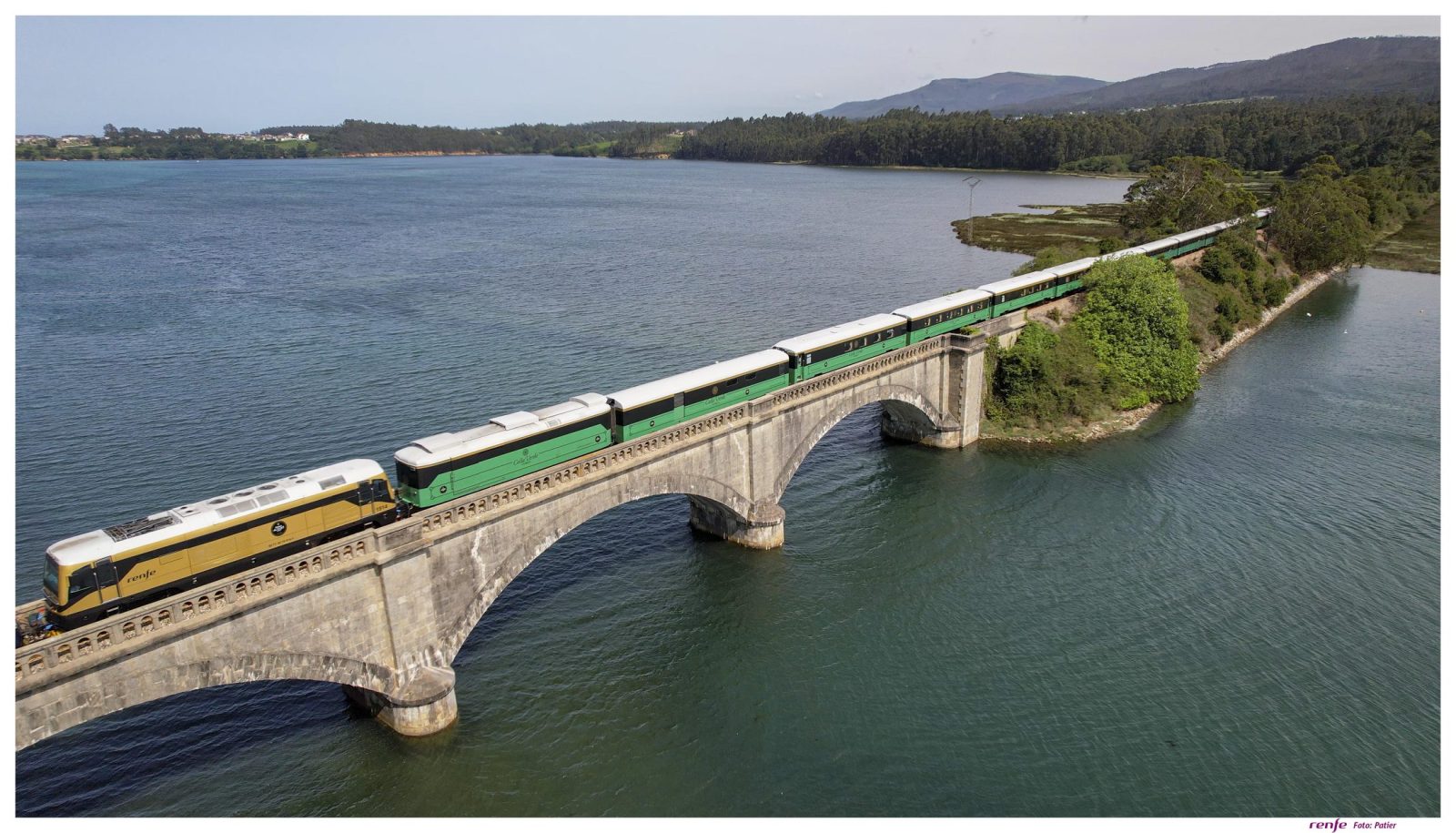 Europe · Spain
 Costa Verde Express
The Costa Verde Express glides between Bilbao and Santiago de Compostela through the verdant, less-visited north of Spain, combining 1920s Pullman heritage with gourmet dining, guided excursions, and private suite comfort.
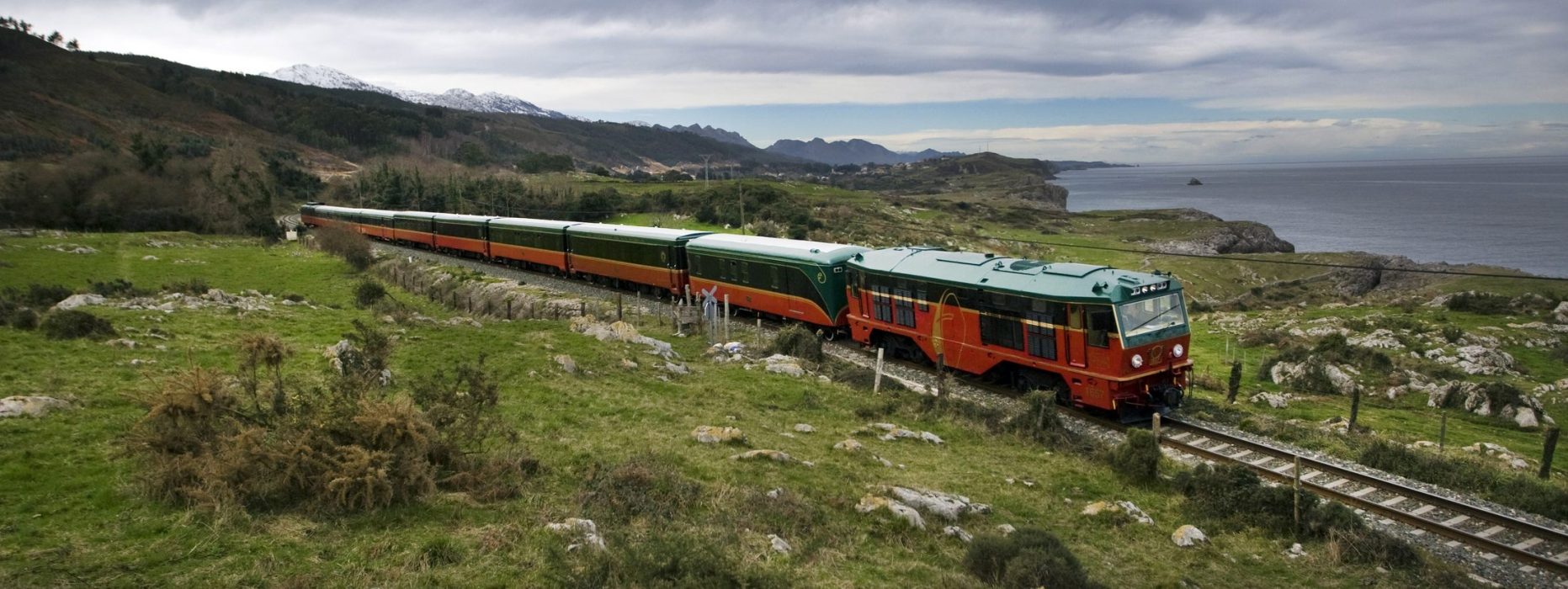 Europe · Spain
 El Expreso de la Robla
El Expreso de la Robla winds through the spectacular scenery of northern Spain aboard an air-conditioned vintage train, combining guided excursions to historic towns with regional lunches and a peaceful overnight stay at each station.