Budapest is really two cities knit together by the Danube: hilly, medieval Buda on the west bank and flat, elegant Pest on the east, joined by a chain of ornate bridges. Once the second capital of the Austro-Hungarian Empire, it still wears that grandeur openly, in gilded coffee houses, thermal bathhouses fed by natural hot springs, and a skyline of turrets, domes and Parliament spires reflected in the river at dusk.
It is a city built for slow, indulgent discovery, which is exactly what arriving by rail affords. Budapest's Keleti and Nyugati stations are storied gateways in their own right, and travellers on the Venice Simplon-Orient-Express pull into the city as part of its classic Central European routings, stepping off 1920s carriages directly into a destination that feels equally cinematic. The Danube Express Golden Eagle, meanwhile, is built around Budapest as a heartland: its Central European and Grand Tour itineraries use the city as a hub for exploring Hungary and the wider Danube region in vintage rail comfort.
Whether it is your first stop or the finale of a longer luxury rail journey through Central Europe, Budapest rewards travellers with world-class architecture, a rich thermal bathing tradition, and a dining scene that ranges from paprika-laced classics to Michelin-starred reinvention.
- ✦Thermal baths fed by natural hot springs
- ✦Neo-Gothic Hungarian Parliament on the Danube
- ✦Buda Castle and Fisherman's Bastion views
- ✦Paprika-rich Hungarian cuisine
- ✦Grand imperial-era coffee houses
- ✦Historic Jewish Quarter and Great Synagogue
- ✦Gateway city for the Venice Simplon-Orient-Express and Danube Express Golden Eagle
Places to See in Budapest
Hungarian Parliament Building
One of the world's largest legislative buildings, this neo-Gothic riverside landmark dominates the Pest skyline. Guided tours reveal the frescoed Grand Staircase and the Hungarian Crown Jewels displayed beneath the central dome.
Buda Castle & Castle Hill
The former royal palace crowns Castle Hill on the Buda side, now home to the Hungarian National Gallery and Budapest History Museum, with the medieval streets of the surrounding Castle District nearby.
Fisherman's Bastion
A fairy-tale terrace of white turrets and arcades beside Matthias Church, built in neo-Romanesque style purely for the view — one of the best panoramas of the Danube and Parliament.
Széchenyi Thermal Bath
The largest medicinal bath complex in Europe, its neo-Baroque outdoor pools fed by natural hot springs are a quintessential Budapest experience, day or night.
Chain Bridge (Széchenyi Lánchíd)
The first permanent bridge across the Danube, this 19th-century suspension bridge guarded by stone lions links Buda and Pest and is especially striking illuminated after dark.
St. Stephen's Basilica
Budapest's largest church, named for Hungary's first king, whose mummified right hand is preserved inside; its dome offers sweeping city views.
Great Synagogue (Dohány Street Synagogue)
The largest synagogue in Europe and a centrepiece of the historic Jewish Quarter, with a moving Holocaust memorial garden in its courtyard.
Heroes' Square and City Park
An imposing square marking Hungary's millennium, flanked by the Museum of Fine Arts and leading into City Park, home to Vajdahunyad Castle and the Budapest Zoo.
Great Market Hall
A soaring iron-and-glass Art Nouveau market hall stocked with paprika, salami, embroidery and produce stalls — a lively introduction to Hungarian everyday life.
Food & Gastronomy
Hungarian cuisine is hearty, paprika-forward and built for cold winters, and Budapest is the best place in the country to taste it across every register, from century-old bistros to contemporary fine dining.
- Goulash (gulyás) — the classic paprika-spiced beef and vegetable soup that gave Hungarian cooking its international name, though true gulyás is thinner and more soup-like than versions served abroad.
- Chicken paprikash (paprikás csirke) — chicken braised in a rich paprika and sour cream sauce, typically served with nokedli (soft egg dumplings).
- Lángos — deep-fried dough topped with sour cream, cheese and garlic, a beloved street-food snack found at markets across the city.
- Töltött káposzta — stuffed cabbage rolls filled with minced pork and rice, simmered in a smoky, paprika-tinged sauce.
- Dobos torte — a many-layered sponge cake with chocolate buttercream and a signature caramel top, invented in Budapest in the 1880s.
- Chimney cake (kürtőskalács) — a spiral pastry roasted over charcoal and rolled in sugar, cinnamon or nuts, sold hot from market and street stalls.
- Fisherman's soup (halászlé) — a fiery paprika-based river-fish soup, a traditional centrepiece of Hungarian holiday tables.
Pair a meal with Tokaji, Hungary's famed sweet dessert wine from the Tokaj wine region, or an Egri Bikavér ('Bull's Blood') red from Eger. Budapest's café culture is equally storied: grand institutions like New York Café and Café Gerbeaud serve coffee and pastries in gilded, chandelier-lit rooms that recall the city's imperial heyday, while the Great Market Hall remains the best spot to sample and shop for paprika, salami and other Hungarian staples.
Luxury Trains That Visit Budapest
 Europe · Central Europe · Eastern Europe · Balkans
 Danube Express Golden Eagle
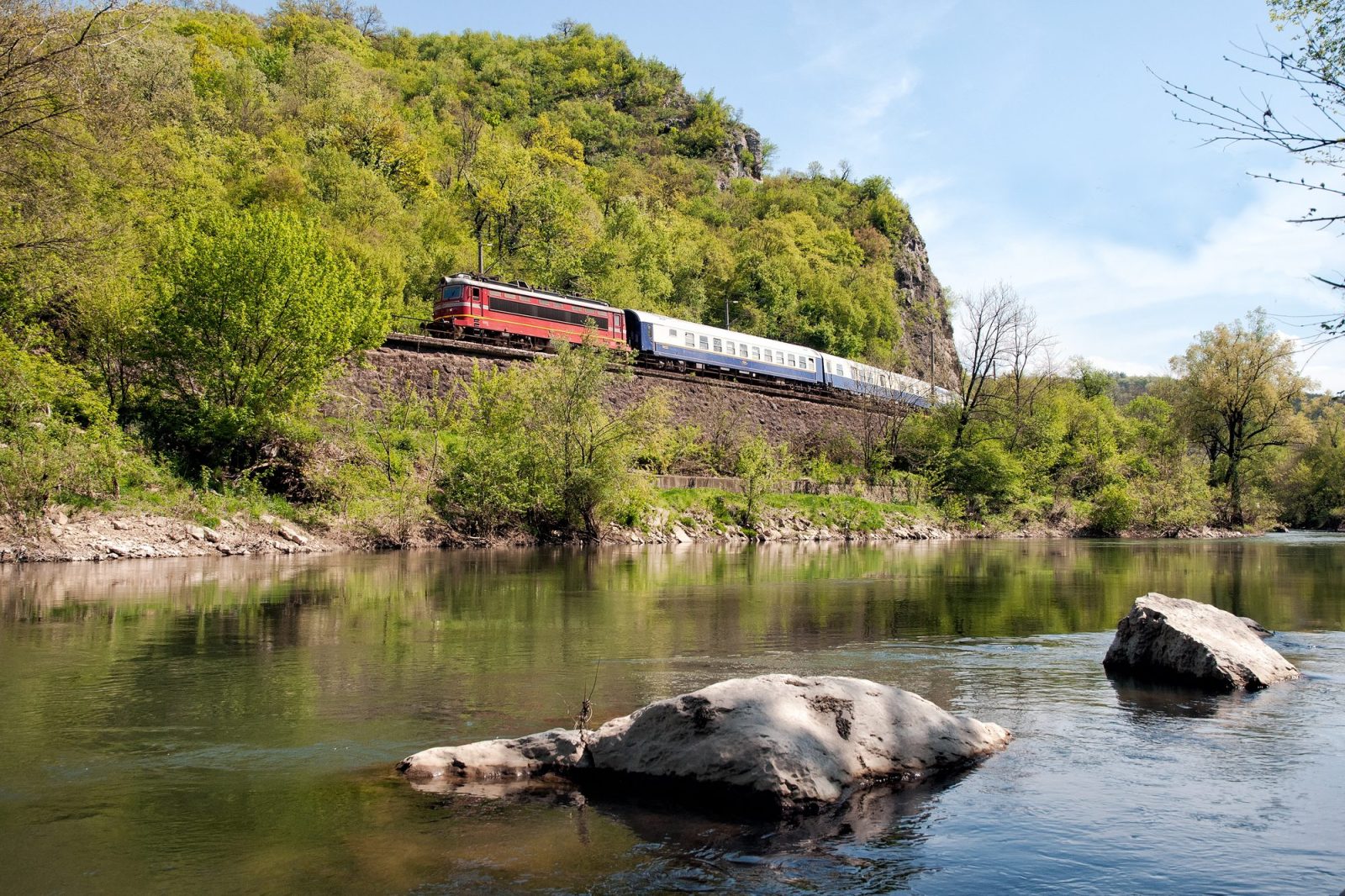
The Danube Express carries just 50 passengers through the heart of Central and Eastern Europe, combining elegant cabin accommodation, freshly prepared regional cuisine, and expert-guided excursions into some of the continent's most storied cities and landscapes.
 France · Italy · Austria · Germany · Belgium · England · Hungary · Romania · Turkey · Europe
 Venice Simplon-Orient-Express
Step aboard the Venice Simplon-Orient-Express and enter a living legend — a lovingly restored Art Deco masterpiece gliding between Europe's greatest cities. From Paris to Venice, Budapest to Istanbul, each journey is a celebration of the golden age of rail travel.