Córdoba was once the largest and most sophisticated city in Western Europe, the capital of Islamic al-Andalus and a beacon of learning, poetry and science when much of the continent lay in darkness. That golden age is still written into its streets: a whitewashed old town of hidden courtyards, narrow lanes and the single most astonishing building in Spain, the Mezquita-Catedral, where a Renaissance cathedral rises improbably from the heart of a 10th-century mosque.
Walking Córdoba today means moving through layers of history — Roman bridge, Almohad walls, Sephardic synagogue, Christian palace — compressed into a compact, walkable core that UNESCO has recognised in its entirety as a World Heritage Site. It is a city that rewards slow travel: long lunches in flower-filled patios, wandering the Judería at dusk, and letting the call to prayer that once echoed here give way to church bells without either ever quite disappearing.
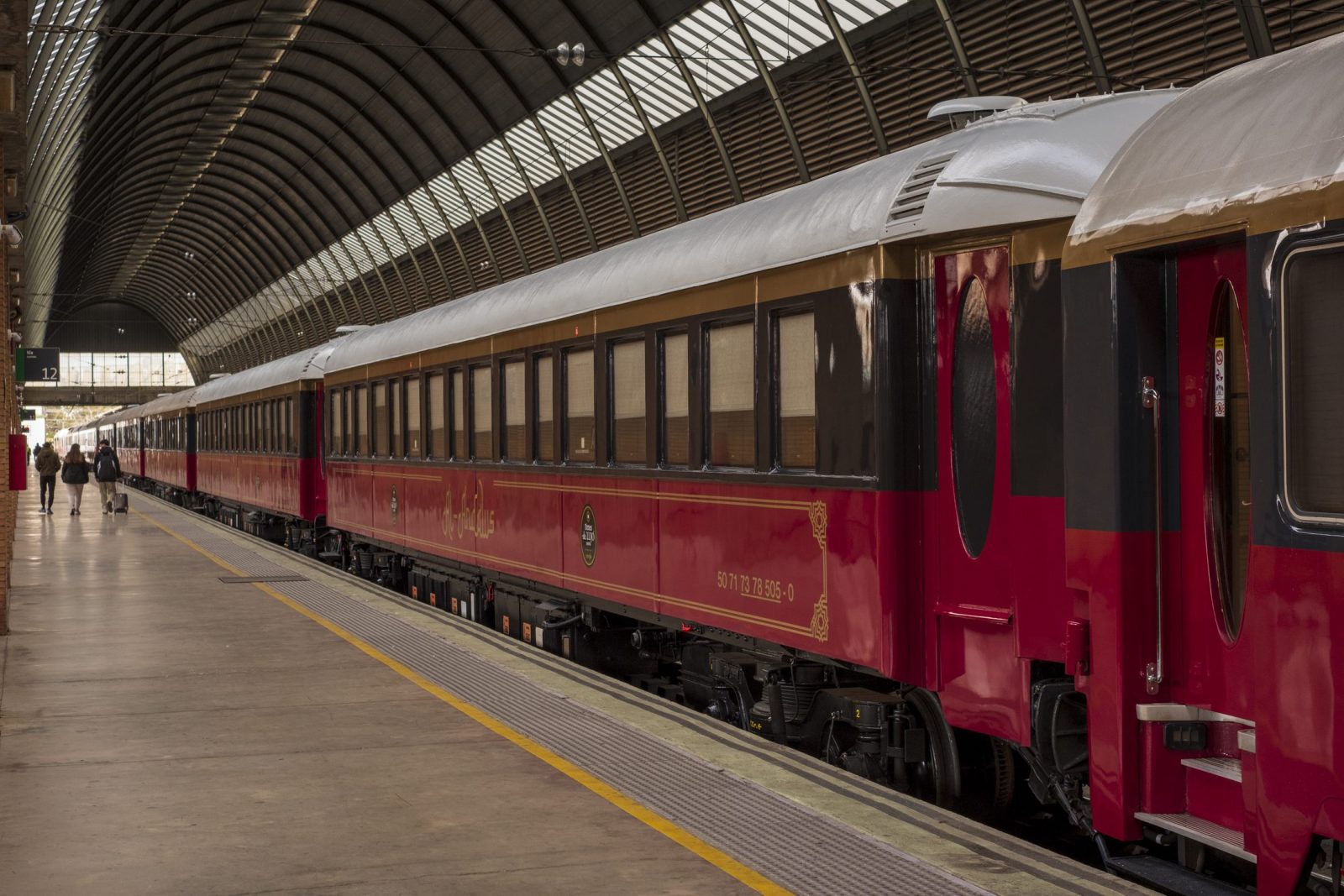
Córdoba is one of the signature stops on the Al Andalus luxury train, which threads together the great cities of southern Spain aboard beautifully restored early 20th-century carriages. Arriving by rail, in the unhurried style of a bygone era, is arguably the most fitting way to reach a city built on the idea that civilisations can leave their mark on one another.
- ✦The Mezquita-Catedral's forest of striped arches
- ✦UNESCO World Heritage old town
- ✦The Alcázar's terraced gardens
- ✦Medieval Judería and historic synagogue
- ✦Medina Azahara's caliphal ruins
- ✦Salmorejo and flamenquín in a shaded patio
- ✦A stop on the Al Andalus luxury train
Places to See in Córdoba
Mezquita-Catedral de Córdoba
The unmissable heart of the city: a forest of over 850 columns and red-and-white striped double arches built by the Umayyad emirs from 785 AD, with a full Gothic-Renaissance cathedral inserted into its centre in the 16th century. The mihrab, glittering with Byzantine mosaics, is one of the masterpieces of Islamic art.
Alcázar de los Reyes Cristianos
A fortified palace built for Christian monarchs Ferdinand and Isabella, later used as an Inquisition headquarters and prison. Its terraced gardens, reflecting pools and cypress avenues are among the most photographed in Andalusia, especially when illuminated on summer nights.
Judería (Jewish Quarter)
A maze of whitewashed alleys, wrought-iron window grilles and flower-draped balconies surrounding the Mezquita, home to one of Spain's few surviving medieval synagogues (1315) and the Calleja de las Flores, a tiny lane framed with potted geraniums.
Roman Bridge and Calahorra Tower
Spanning the Guadalquivir River on Roman foundations dating to the 1st century BC, the bridge offers the classic postcard view back toward the Mezquita's bell tower, especially at sunset. The fortified Calahorra Tower at its far end houses a small museum on Córdoba's three cultures.
Palacio de Viana
A 14th-century noble mansion built around twelve distinct patios, each with its own character — orange trees, wells, columns, potted plants — offering the best introduction anywhere to the Cordoban patio tradition.
Courtyard Festival Quarter (Barrio de San Basilio)
The neighbourhood most closely associated with the Fiesta de los Patios, Córdoba's UNESCO-listed May festival when private courtyards overflowing with carnations and jasmine open to the public.
Medina Azahara
The ruins of a vast 10th-century palace-city built by Caliph Abd al-Rahman III just outside Córdoba, once one of the most opulent complexes in the medieval world and now a UNESCO World Heritage Site with its own visitor centre.
Plaza de la Corredera
A rare rectangular arcaded square in the Castilian style, unusual for Andalusia, historically used for bullfights and markets and today ringed with tapas bars.
Food & Gastronomy
Cordoban cuisine blends Roman, Moorish and Christian influences with the produce of the surrounding countryside — olive oil, wild game, and vegetables from the Guadalquivir valley. Long lunches unfold slowly, often in a shaded patio, with sherry-style wines from nearby Montilla-Moriles standing in for the more famous jerez of Cádiz.
- Salmorejo cordobés — a thick, chilled tomato and bread soup, richer and creamier than gazpacho, topped with hard-boiled egg and jamón.
- Flamenquín — a roll of pork loin wrapped around serrano ham, breaded and deep-fried, served with fries and alioli.
- Rabo de toro — oxtail stewed for hours in red wine, a dish with roots in the city's bullfighting tradition.
- Berenjenas con miel — thin-sliced fried aubergines drizzled with cane honey, a Moorish-influenced tapa found across the old town.
- Mazamorra — a cousin of salmorejo made with almonds instead of tomato, showing the city's Andalusi culinary roots.
- Montilla-Moriles wines — the region's own answer to sherry, made from Pedro Ximénez grapes and served chilled as an aperitif.
- Mercado Victoria — a lively gourmet market in the Jardines de la Victoria, good for grazing a wide range of Cordoban and Andalusian small plates in one stop.
The streets around the Mezquita and the Judería are dense with traditional taverns, while the terraces of Plaza de la Corredera and Plaza de las Tendillas fill each evening for tapas, vermouth and unhurried conversation.