Cusco was the beating heart of the Inca Empire, and centuries later that legacy is still etched into its streets: colonial Spanish churches and mansions rise directly atop the massive polygonal stonework the Incas left behind. Wander the historic center and you move seamlessly between Quechua and Spanish worlds, between ceremonial plazas and baroque cathedrals, between mountain markets and candlelit courtyard restaurants. At over 3,400 meters (11,200 feet) above sea level, Cusco is also the traditional gateway to the Sacred Valley and Machu Picchu, making it one of the most storied destinations in South America.
Palace Trains brings Cusco to life through two legendary rail journeys. The Hiram Bingham departs from Cusco's Poroy station for a scenic run through the Sacred Valley to Machu Picchu, complete with gourmet dining and live Andean music aboard vintage-style Pullman carriages. From Cusco, the Andean Explorer, South America's first luxury sleeper train, threads across the high Altiplano to Lake Titicaca in Puno and onward to Arequipa, passing Inca ruins, alpaca herds, and some of the highest rail track in the world. Together, these journeys make Cusco not just a city to visit, but a place to arrive at and depart from in extraordinary style.
Beyond the trains, Cusco rewards travelers who linger: its altitude calls for a slower pace, its cuisine draws on ingredients found nowhere else, and its architecture reveals a civilization that has never fully disappeared.
- ✦Former capital of the Inca Empire
- ✦Inca stonework beneath colonial architecture
- ✦Gateway to Machu Picchu and the Sacred Valley
- ✦Home to the Qorikancha and Sacsayhuamán
- ✦Vibrant San Pedro Market and San Blas artisan quarter
- ✦Departure point for the Hiram Bingham to Machu Picchu
- ✦Starting point of the Andean Explorer to Lake Titicaca
Places to See in Cusco
Plaza de Armas
Cusco's main square was the ceremonial center of the Inca capital and remains the city's social heart, ringed by arcaded colonial buildings, the Cusco Cathedral, and the Church of the Society of Jesus (La Compañía de Jesús).
Qorikancha (Temple of the Sun)
Once the most sacred site in the Inca Empire, Qorikancha's walls were reputedly covered in sheets of gold. The Spanish built the Convent of Santo Domingo directly on its foundations, leaving a striking fusion of Inca stonework and colonial architecture still visible today.
Sacsayhuamán
This massive Inca fortress complex overlooks Cusco from a hilltop just above the city, built from enormous interlocking stones — some weighing over 100 tons — fitted together without mortar. It hosts the Inti Raymi festival of the sun each June.
Cusco Cathedral
Built over more than a century on the site of an Inca palace, the cathedral houses a trove of Cusco School religious art, ornate silver altars, and a famous painting depicting the Last Supper served with a plate of roasted guinea pig.
San Pedro Market
Cusco's central market is a sensory introduction to Andean life, with stalls piled high with native potatoes, exotic fruits, fresh juices, cheeses, and prepared foods, alongside artisan textiles and everyday goods.
San Blas Neighborhood
This steep, artisan quarter is Cusco's bohemian soul, its narrow cobbled streets lined with craft workshops, galleries, and the Iglesia de San Blas, home to an intricately carved cedar pulpit.
Twelve-Angled Stone
Set into a wall on Hatun Rumiyoc street, this famous Inca stone is a favorite stop for admiring the precision of Inca masonry, in which a single block was cut with twelve distinct angles to interlock perfectly with its neighbors.
Sacred Valley
Just outside Cusco, the Sacred Valley encompasses the Inca terraces of Pisac, the fortress town of Ollantaytambo, and traditional weaving villages — the scenic route the Hiram Bingham follows en route to Machu Picchu.
Machu Picchu
The crown jewel reached from Cusco by rail: this fifteenth-century Inca citadel, perched among cloud-wrapped Andean peaks, is one of the New Seven Wonders of the World and the ultimate destination of the Hiram Bingham journey.
Food & Gastronomy
Cusco sits at the center of Peru's celebrated culinary tradition, drawing on Andean staples like potatoes (Peru cultivates thousands of native varieties), corn, and quinoa alongside Amazonian and coastal influences. High-altitude cooking here has its own distinct character, built around slow-roasted meats, hearty soups, and ingredients found only in the Andes.
- Cuy chactado — crispy fried guinea pig, a traditional Andean delicacy served whole and considered a celebratory dish in Cusco's highland cuisine.
- Chicharrón cusqueño — deep-fried pork served with corn, mint, and onion, a hearty regional take on Peru's popular chicharrón.
- Chiriuchu — Cusco's signature festive dish, a cold plate combining guinea pig, chicken, sausage, seaweed, cheese, and toasted corn, traditionally eaten during Corpus Christi.
- Rocoto relleno — a spicy stuffed pepper filled with seasoned ground beef, olives, and cheese, then baked.
- Quinoa soup (chairo or quinua atamalada) — warming, protein-rich soups built around Andean quinoa, ideal at Cusco's altitude.
- Chicha morada and chicha de jora — the former a sweet purple-corn drink, the latter a fermented corn beer with roots in Inca tradition.
- Coca tea (mate de coca) — the traditional Andean remedy for altitude, served everywhere from hotel lobbies to market stalls.
San Pedro Market is the best place to sample fresh juices, local cheeses, and street food alongside Cusqueños doing their daily shopping, while the city's growing fine-dining scene — much of it influenced by Lima's world-renowned restaurants — pairs Andean ingredients with contemporary technique. Onboard the Hiram Bingham, guests enjoy a multi-course gourmet lunch showcasing Peruvian ingredients, while the Andean Explorer's dining car serves refined regional cuisine paired with Peruvian wines and pisco as the Altiplano rolls past the window.
Luxury Trains That Visit Cusco
 South America · Peru
 Andean Explorer
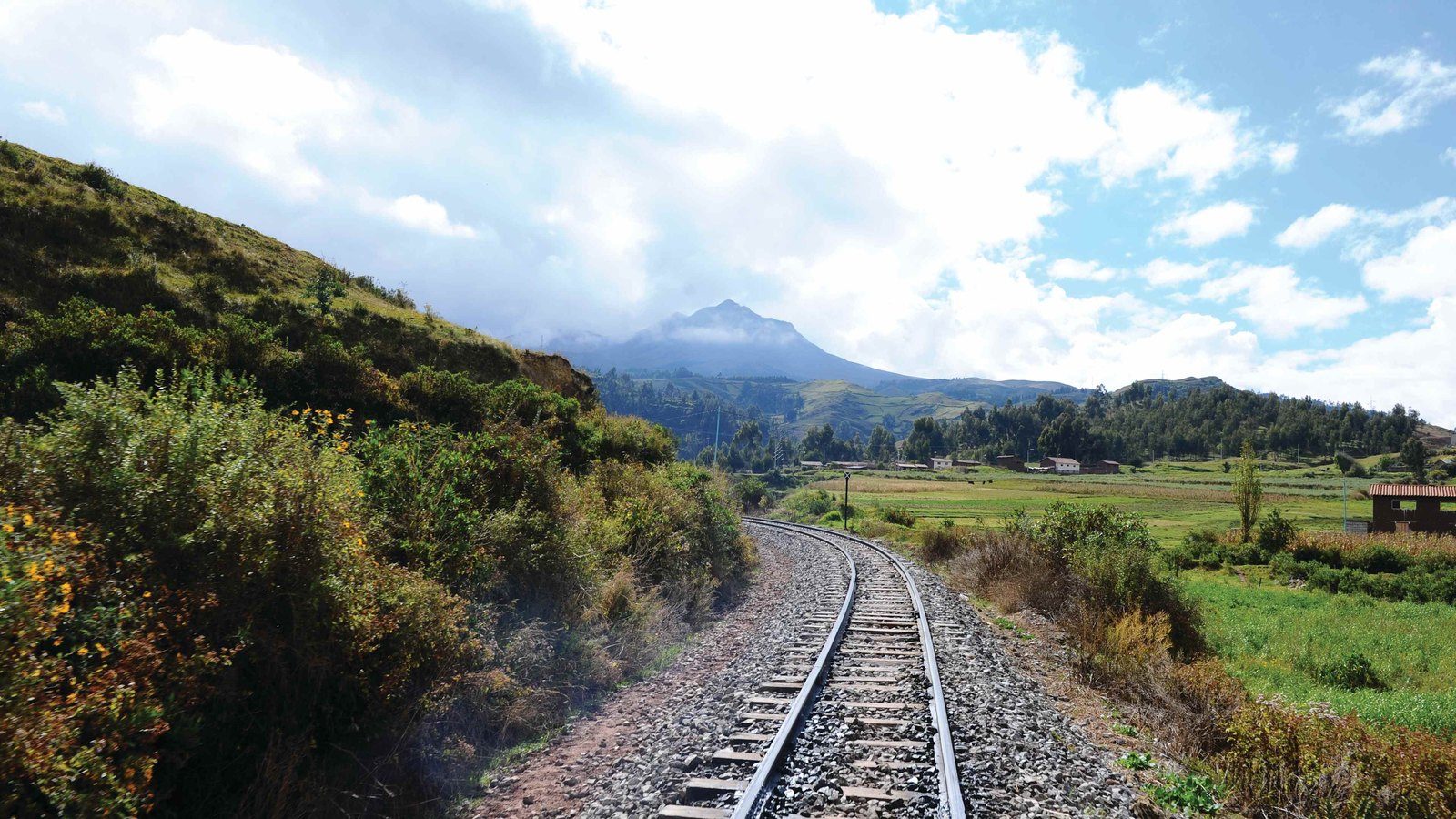
The Belmond Andean Explorer travels one of the world's highest rail routes, winding through the Peruvian Andes between the ancient Inca capital of Cusco, the shimmering shores of Lake Titicaca, and the UNESCO-listed White City of Arequipa. Impeccable service, gourmet Andean cuisine, and an open-air observation deck make every mile a highlight.
 South America · Peru
 Hiram Bingham
The Hiram Bingham is Belmond's legendary luxury train connecting Cusco to Machu Picchu, carrying fewer than 85 guests through breathtaking Andean scenery. Blue-and-gold Pullman carriages, gourmet dining, live Peruvian music and guided citadel tours create an unforgettable day journey.