Delhi is really two cities woven into one: the labyrinthine lanes of Old Delhi, laid out by the Mughal emperor Shah Jahan in the 17th century, and the broad, tree-lined avenues of New Delhi, built by the British as the capital of the Raj in the 1910s and 20s. Few cities anywhere pack so many centuries of empire — Sultanate, Mughal, colonial, and modern Indian — into a single, walkable, chaotic, endlessly rewarding metropolis.
For most travellers on a luxury rail journey through India, Delhi is the natural starting or finishing point. It is where Maharajas' Express begins many of its itineraries, where Palace on Wheels departs for its classic tour of Rajasthan, and a key gateway city for guests joining Deccan Odyssey in the west and south. A day or two in Delhi before boarding sets the stage beautifully: you see the grandeur that inspired the maharajas' own private carriages, then step aboard a train built in that very tradition.
Whether you arrive for the Mughal monuments, the markets of Chandni Chowk, or simply to acclimatise before a week of palaces and forts further afield, Delhi rewards travellers who slow down and look closely.
- ✦Mughal grandeur at the Red Fort and Humayun's Tomb
- ✦The soaring Qutub Minar
- ✦Old Delhi's Chandni Chowk market and street food
- ✦Colonial-era New Delhi around India Gate
- ✦Gateway city for Maharajas' Express and Palace on Wheels
- ✦Legendary Mughlai cuisine and butter chicken
- ✦UNESCO World Heritage monuments within a single city
Places to See in Delhi
Red Fort (Lal Qila)
Shah Jahan's massive red sandstone fortress-palace, begun in 1638, was the seat of Mughal power for two centuries and is now a UNESCO World Heritage Site. Its Diwan-i-Am and Diwan-i-Khas halls hint at the splendour of the vanished Peacock Throne.
Humayun's Tomb
Built in the 1560s for the Mughal emperor Humayun, this garden tomb of red sandstone and white marble is widely considered the direct architectural precursor to the Taj Mahal, and is itself a UNESCO World Heritage Site.
Qutub Minar
A soaring 73-metre minaret of fluted red sandstone begun in 1193, the Qutub Minar is the tallest brick minaret in the world and anchors an atmospheric complex of ruins, screens, and the famous ancient iron pillar.
Jama Masjid
India's largest mosque, completed by Shah Jahan in 1656, dominates the skyline of Old Delhi. Climb the minaret for sweeping views over the old city's rooftops and domes.
Chandni Chowk
Delhi's oldest and busiest market, laid out in the 17th century, is a sensory tangle of spice traders, jewellers, wedding-card printers, and some of the city's most legendary street food stalls.
India Gate
This 42-metre war memorial arch, designed by Edwin Lutyens and completed in 1931, honours Indian soldiers of the First World War and anchors the ceremonial heart of New Delhi.
Rashtrapati Bhavan and Rajpath
The vast presidential palace, another Lutyens masterpiece, sits at the end of the grand Rajpath boulevard alongside the North and South Secretariat buildings — the architectural heart of British-built New Delhi.
Akshardham Temple
A modern (2005) Hindu temple complex of extraordinary craftsmanship, carved from sandstone and marble by thousands of artisans, with musical fountains and exhibitions on Indian culture.
Lodhi Gardens
A leafy park scattered with 15th- and 16th-century tombs of the Lodhi and Sayyid dynasties — a favourite spot for an early morning or sunset stroll among monuments most visitors never learn the names of.
Food & Gastronomy
Delhi's food scene spans street-cart classics from the Old City to refined Mughlai court cuisine, a legacy of centuries as an imperial capital.
- Butter chicken (murgh makhani) — the tomato-and-butter curry said to have been invented at Moti Mahal in Old Delhi in the late 1940s, now a global icon of Indian food.
- Chole bhature — spiced chickpeas served with fluffy deep-fried bread, a beloved breakfast-or-anytime dish sold at stalls across the city.
- Paranthe wali gali — a narrow Chandni Chowk lane devoted almost entirely to stuffed, ghee-fried parathas, some stalls run by the same families for generations.
- Kebabs and Mughlai fare — seekh kebabs, nihari, and korma at old-city institutions reflecting the Mughal court kitchens' legacy of slow-cooked, richly spiced meat dishes.
- Chaat — the umbrella term for Delhi's tangy, spicy snack culture: golgappa (pani puri), aloo tikki, and dahi bhalla, best sampled standing at a street cart.
- Jalebi and rabri — syrup-soaked orange spirals of fried batter, often eaten warm from century-old sweet shops near Jama Masjid.
- Chai — strong, milky, spiced tea sold from countless roadside stalls, the everyday ritual that punctuates Delhi life.
For a first taste of the refinement that awaits aboard Maharajas' Express or Palace on Wheels, a dinner of Mughlai classics in one of Delhi's heritage restaurants is the perfect overture — the same royal culinary traditions are echoed in the trains' own onboard dining cars.
Luxury Trains That Visit Delhi
 Asia · India
 Deccan Odyssey
The Deccan Odyssey carries just 80 guests across India's most celebrated destinations in air-conditioned splendour, with a crew of over 30 attending to every comfort. Plush interiors that evoke a bygone maharaja era are paired with modern amenities — spa, lounge cars, and gourmet dining — for a truly immersive sub-continental adventure.
 Asia · India
 Maharajas' Express
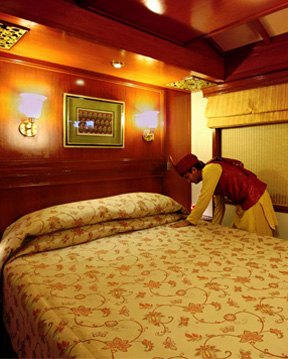
The Maharajas' Express recreates the splendour of India's royal era, whisking up to 88 guests through Rajasthan's palaces, tiger reserves and Mughal monuments in lavishly appointed suites. Four distinct itineraries fan out across the subcontinent, each delivering all-inclusive fine dining, guided excursions and 24-hour valet service.
 Asia · India
 Palace on Wheels
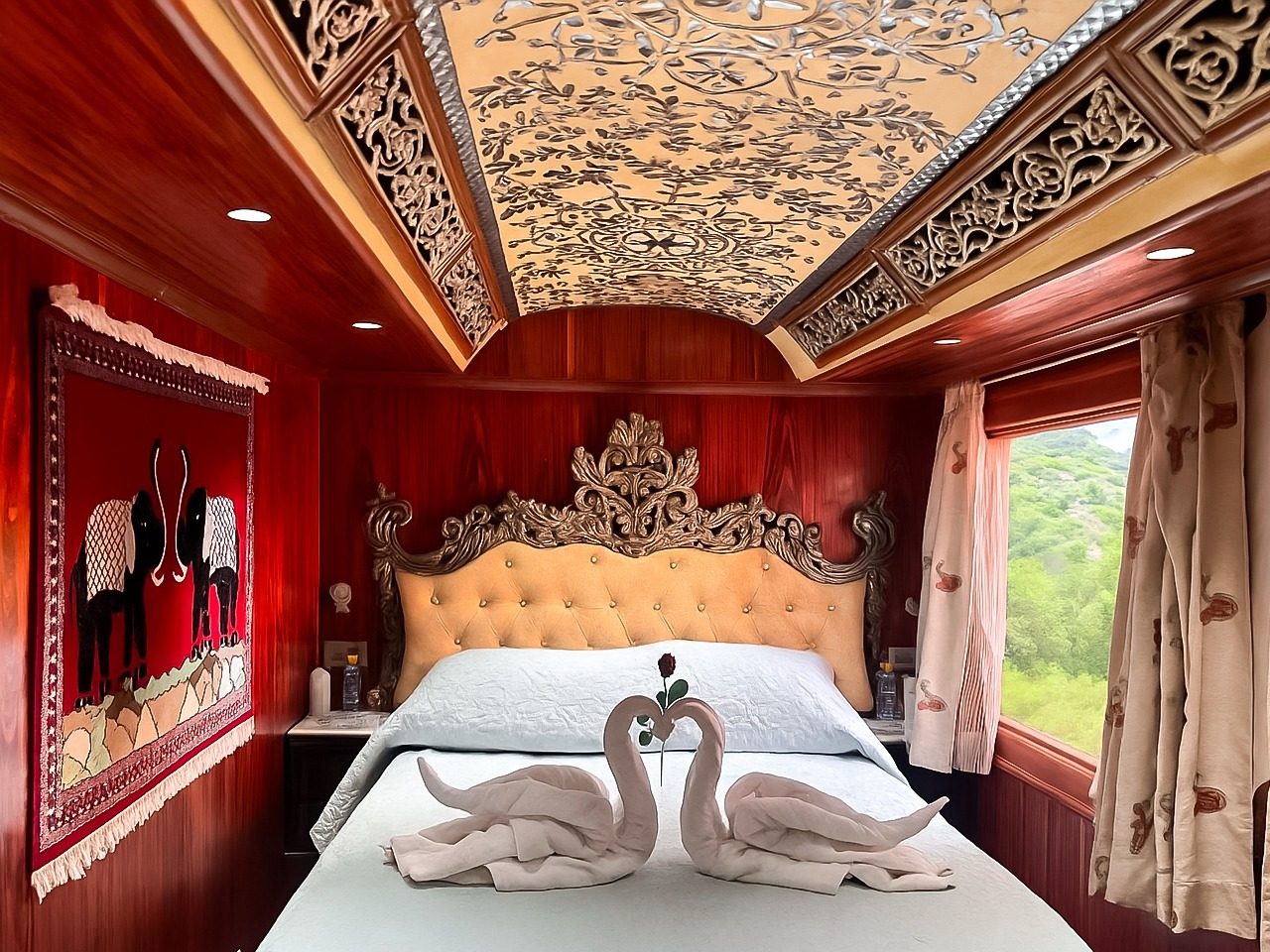
Launched in 1982, the Palace on Wheels is India's pioneering luxury train — a joint venture between RTDC and Indian Railways that whisks guests through eight regal destinations in 7 nights and 8 days. Named No. 1 in Condé Nast Traveler's 2024 Readers' Choice Awards, it remains the benchmark for royal rail travel on the subcontinent.