Durban is South Africa's subtropical playground on the Indian Ocean — a city of steamy beaches, curry houses, colonial-era architecture and a deep-rooted Zulu and Indian heritage found nowhere else in the country. It's a place of contrasts: the busiest port in Africa sits beside a Blue Flag beachfront promenade, and century-old Edwardian buildings share the skyline with the swooping stadium arch of Moses Mabhida. The pace is slower and warmer than Johannesburg or Cape Town, and the food, spiced by generations of Indian immigrants, is unlike anything else on the continent.
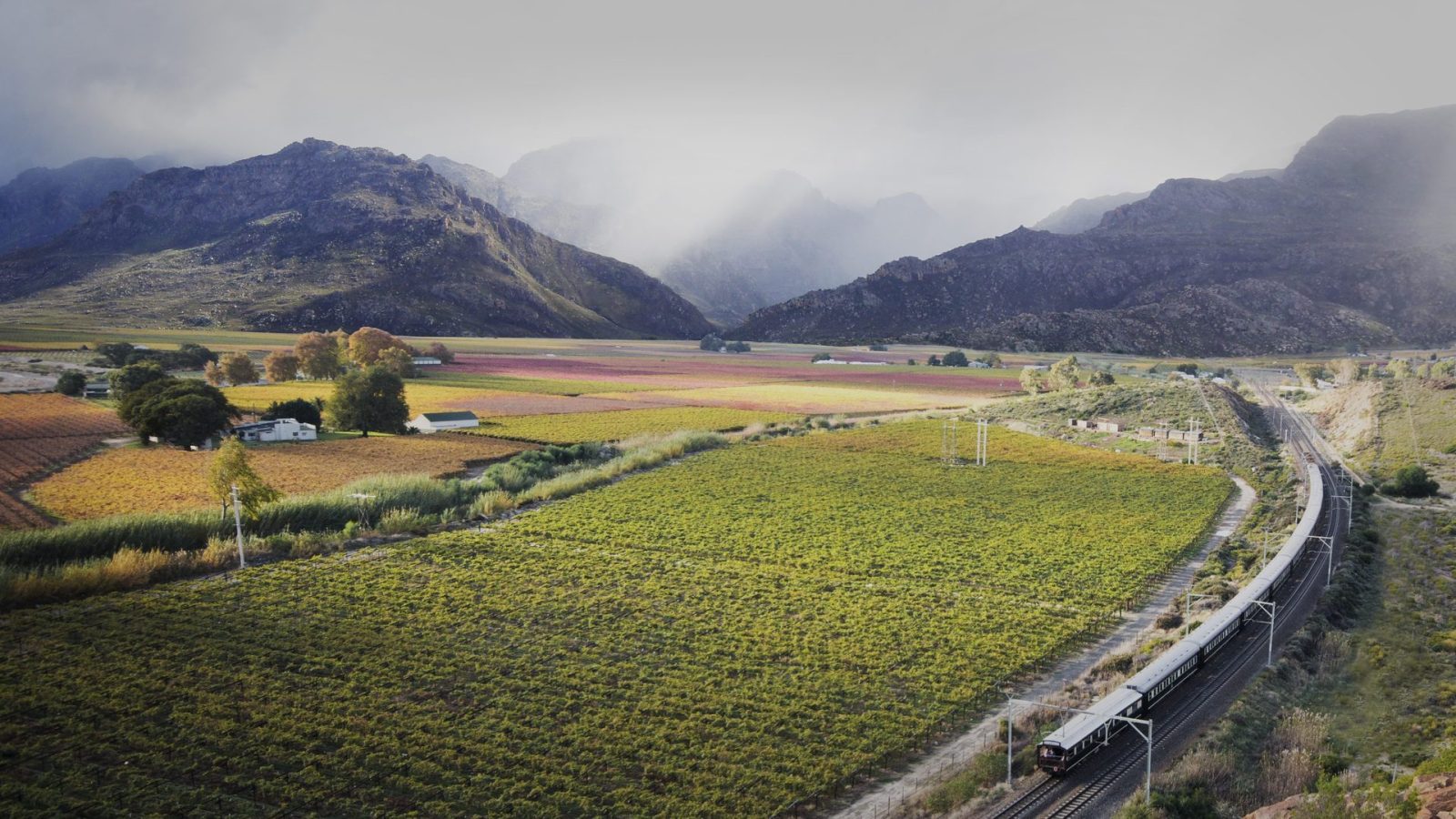
Arriving in Durban by luxury train is part of the romance. Rovos Rail's Pride of Africa runs between Pretoria and Durban, descending from the highveld through the lush Valley of a Thousand Hills, with stops that can include the historic town of Pietermaritzburg and a safari detour into the Nambiti Private Game Reserve before the train rolls into Durban's own restored 1930s station. It's an unhurried, old-world way to reach a thoroughly modern coastal city.
For travellers combining a South African rail journey with beach time, Zulu cultural encounters, or a onward safari, Durban makes an ideal bookend — a chance to trade the dry bushveld for salt air, seafood and sunshine at the end (or start) of the line.
- ✦Golden Mile beachfront on the Indian Ocean
- ✦Home of the bunny chow and Durban curry
- ✦Vibrant Zulu and Indian cultural heritage
- ✦uShaka Marine World and Moses Mabhida Stadium
- ✦Gateway from the Valley of a Thousand Hills
- ✦Reached by Rovos Rail's Pride of Africa
- ✦Easily paired with a Nambiti Game Reserve safari
Places to See in Durban
Golden Mile Beachfront
Durban's famous promenade stretches along the Indian Ocean with wide, lifeguard-patrolled beaches, surf schools, paddling pools and a lively boardwalk lined with vendors, cafes and the iconic red-and-white striped lighthouse.
uShaka Marine World
One of the largest marine theme parks in the world, built around a beached-ship theme, with an aquarium, dolphinarium, water park and views straight onto the beachfront.
Moses Mabhida Stadium
Built for the 2010 FIFA World Cup, this stadium's soaring arch can be crossed by cable car (the SkyCar) or climbed via the Big Rush Big Swing, with panoramic views over the city and coastline.
Victoria Street Market
A bustling covered market in the heart of the Indian district, piled high with spices, incense, saris and curios — the best place to feel Durban's Indian Ocean trading heritage.
Durban Botanic Gardens
Established in 1849, Africa's oldest surviving botanical garden holds an outstanding orchid house, a cycad collection and shaded lawns in the middle of the city.
KwaMuhle Museum
A compact but powerful museum documenting Durban's apartheid-era urban history and the Zulu and Indian communities who shaped the city.
Umgeni River Bird Park
A lush riverside park with towering walk-through aviaries housing hundreds of bird species from across the world, set into a dramatic gorge.
Valley of a Thousand Hills
Just outside the city, this dramatic rolling landscape carved by the Umgeni River is dotted with Zulu villages and craft studios, and is often glimpsed from the train on the approach to Durban.
Ardmore Ceramic Art
In the KwaZulu-Natal Midlands en route to Durban, this renowned studio produces vividly painted, Zulu-inspired ceramics celebrated in galleries worldwide — a favourite stop for Rovos Rail travellers.
Food & Gastronomy
Durban's food is defined by more than a century of Indian immigration layered onto Zulu and colonial British traditions, giving South Africa its spiciest, most distinctive regional cuisine.
- Bunny chow — Durban's most famous invention: a hollowed-out quarter, half or full loaf of white bread filled with fragrant mutton, chicken, bean or vegetable curry, eaten by hand.
- Durban curry — hotter and more richly spiced than curries elsewhere in South Africa, reflecting the city's large Indian community; found everywhere from street stalls to fine dining rooms.
- Bobotie — a Cape Malay-influenced baked curried mince dish topped with an egg custard, popular across the country and often found on Durban menus.
- Prawns and Indian Ocean seafood — line fish, langoustines and prawns, often served peri-peri style, reflect Durban's identity as a major fishing and trading port.
- Samoosas and chilli bites — ubiquitous spicy snacks sold from Indian delis and street vendors across the city.
- Braai — the South African barbecue tradition, enjoyed on Durban's beachfront and in its parks as much as anywhere in the country.
The Victoria Street Market and the stalls of the Indian district are the best places to sample authentic curries and spice blends, while beachfront restaurants along the Golden Mile serve fresh seafood with an ocean view. Aboard the Pride of Africa, onboard dining brings South African and continental cuisine paired with regional wines, so the culinary journey continues even before you reach the platform.