Istanbul is the only city in the world that spans two continents, its skyline of minarets and domes rising over the strait that divides Europe from Asia. Once Byzantium, then Constantinople, and for centuries the seat of the Ottoman sultans, the city wears its layered history openly: a Byzantine cathedral turned mosque stands across the square from an imperial palace, while ferries thread between fishing boats and container ships on the Bosphorus below.
For rail travellers, Istanbul is a fitting grand finale or opening chapter. The legendary Venice Simplon-Orient-Express has long made Istanbul its storied eastern terminus, retracing the route immortalised by Agatha Christie and generations of diplomats, spies, and aristocrats. The Danube Express Golden Eagle also threads through the Balkans en route to the city, giving guests a slow, scenic approach through Central and Eastern Europe before the Bosphorus comes into view.
Arriving by luxury train sets exactly the right tone for a city built on the romance of crossroads — you step off the carriage and straight into the Grand Bazaar's covered alleys, the call to prayer echoing from the Blue Mosque, and the scent of grilled fish along the Golden Horn.
- ✦Hagia Sophia and the Blue Mosque
- ✦Topkapi Palace and its Treasury
- ✦Grand Bazaar and Spice Bazaar
- ✦Bosphorus cruise between two continents
- ✦Basilica Cistern's underground columns
- ✦Orient-Express eastern terminus
- ✦Meyhane dining in Beyoğlu
Places to See in Istanbul
Hagia Sophia
Built as a cathedral in 537 AD, converted to a mosque under the Ottomans, briefly a museum, and now once again a working mosque, Hagia Sophia's vast dome and shimmering gold mosaics make it one of the most important buildings in world architecture.
Sultanahmet (Blue Mosque)
Facing Hagia Sophia across Sultanahmet Square, the Sultan Ahmed Mosque takes its nickname from the 20,000 handmade blue Iznik tiles lining its interior beneath six soaring minarets.
Topkapi Palace
Home to Ottoman sultans for nearly 400 years, this sprawling palace complex houses the Imperial Harem, the Treasury with its 86-carat Spoonmaker's Diamond, and courtyards with sweeping views over the Bosphorus.
Grand Bazaar
One of the world's oldest and largest covered markets, with more than 4,000 shops along 60-odd streets selling carpets, gold, ceramics, and spices beneath ornately painted vaulted ceilings.
Basilica Cistern
An eerie, atmospheric underground reservoir built in the 6th century, its forest of 336 marble columns — including two carved with Medusa heads — lit dramatically for visitors.
Spice Bazaar (Egyptian Bazaar)
A fragrant, colour-saturated market near the Golden Horn selling Turkish delight, saffron, sumac, and dried fruits since the 1660s.
Bosphorus Cruise
A boat trip along the strait separating Europe and Asia reveals Ottoman waterfront mansions (yalis), the Dolmabahçe Palace, and the fortresses of Rumeli Hisarı and Anadolu Hisarı.
Süleymaniye Mosque
Architect Sinan's masterpiece, this 16th-century mosque crowns one of Istanbul's seven hills with commanding views and a serene, monumental interior.
Galata Tower and Istiklal Avenue
The medieval Genoese watchtower offers panoramic city views, while the pedestrian Istiklal Avenue below buzzes with a vintage tram, boutiques, and the historic Çiçek Pasajı arcade.
Food & Gastronomy
Istanbul's food culture blends Ottoman court cooking with Anatolian, Balkan, and Mediterranean influences, and eating well here means grazing across markets, meyhanes (taverns), and street stalls as much as sitting down to formal meals.
- Köfte — grilled Turkish meatballs, often served with rice pilaf, grilled peppers, and a side of yogurt.
- Balık ekmek — grilled fish sandwiches sold from boats bobbing along the Eminönü waterfront, a beloved Istanbul street-food ritual.
- Meze and rakı — a spread of small cold and hot dishes — hummus, ezme, stuffed vine leaves (dolma), fried calamari — traditionally paired with rakı, the aniseed national spirit, at a meyhane.
- Künefe — a warm, syrup-soaked dessert of shredded pastry layered with cheese, served bubbling hot.
- Baklava — flaky, honey- or syrup-soaked pastry layered with crushed pistachios, at its best from the city's century-old baklava houses.
- Turkish delight (lokum) and Turkish coffee — the classic pairing, with coffee traditionally brewed slowly in a cezve and served with a glass of water.
- Simit — a sesame-crusted bread ring sold from street carts, Istanbul's answer to the bagel and a favourite breakfast on the go.
- Lahmacun and pide — thin, crisp Turkish flatbreads topped with minced meat and herbs, or boat-shaped flatbreads layered with cheese, egg, or meat.
The Spice Bazaar and the surrounding streets of Eminönü remain the best places to shop for saffron, sumac, dried apricots, and Turkish delight to bring home, while the meyhanes of Beyoğlu offer the fullest expression of Istanbul's long, convivial dining tradition.
Luxury Trains That Visit Istanbul
 Europe · Central Europe · Eastern Europe · Balkans
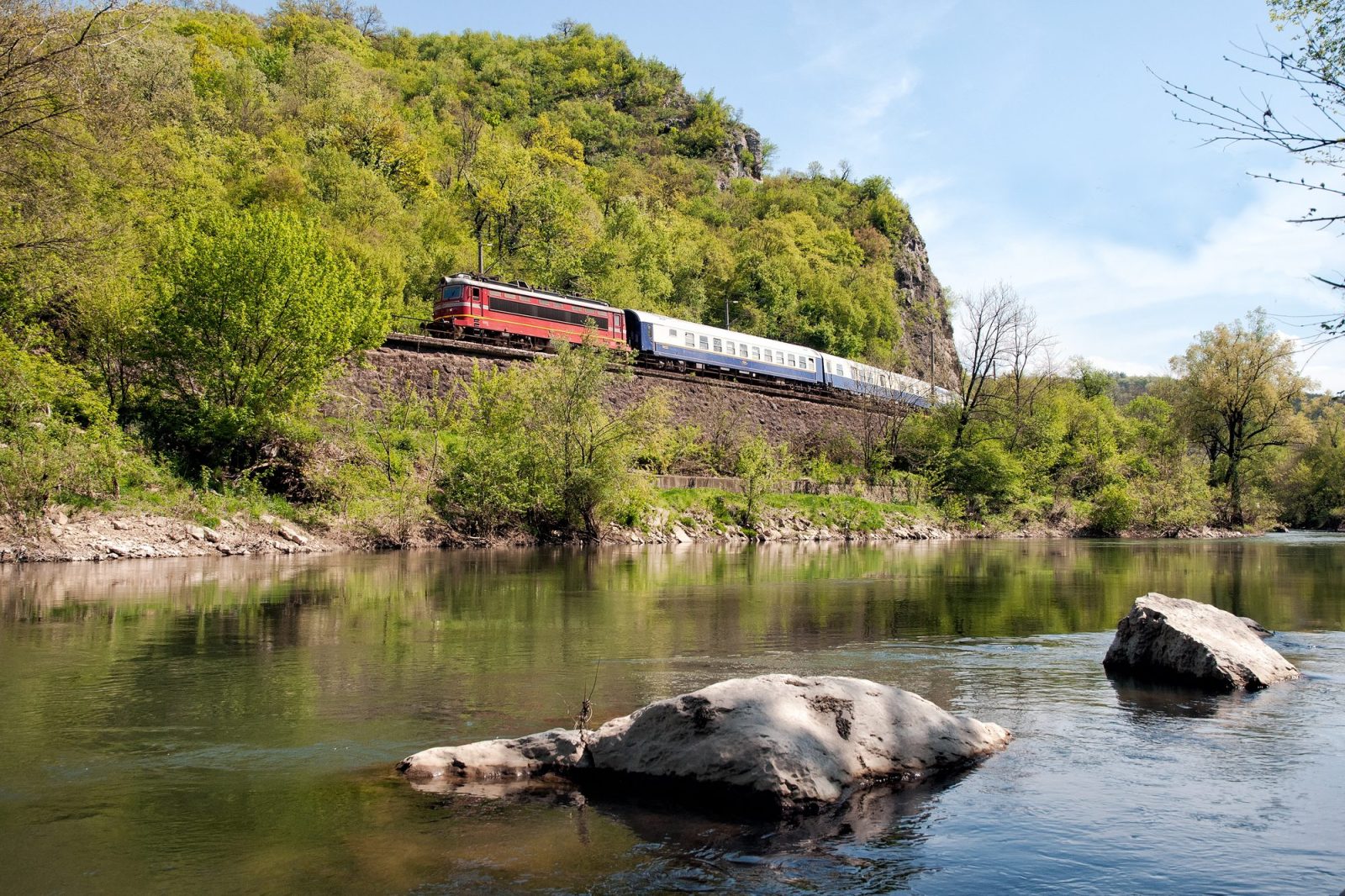
 Danube Express Golden Eagle
The Danube Express carries just 50 passengers through the heart of Central and Eastern Europe, combining elegant cabin accommodation, freshly prepared regional cuisine, and expert-guided excursions into some of the continent's most storied cities and landscapes.
 France · Italy · Austria · Germany · Belgium · England · Hungary · Romania · Turkey · Europe
 Venice Simplon-Orient-Express
Step aboard the Venice Simplon-Orient-Express and enter a living legend — a lovingly restored Art Deco masterpiece gliding between Europe's greatest cities. From Paris to Venice, Budapest to Istanbul, each journey is a celebration of the golden age of rail travel.