
Founded in 1727 by the astronomer-king Sawai Jai Singh II, Jaipur is India's first planned city and the beating heart of Rajasthan. Its Old City, ringed by crenellated walls and painted a uniform terracotta pink in 1876 to honour a royal visit, has earned it the enduring nickname "the Pink City." Wide avenues, ornate havelis, bustling bazaars and a skyline of domes and cusped arches make it one of India's most photographed destinations — and the third corner of the classic Golden Triangle alongside Delhi and Agra.
Jaipur is also where the romance of Indian rail travel reaches its peak. Both the Maharajas' Express and the Palace on Wheels — two of India's most celebrated luxury trains — build their itineraries around the city, delivering guests directly into Rajasthan's royal heartland with a private, curated tour of its forts and palaces. Stepping off either train here feels like an extension of the journey itself: staterooms give way to marble courtyards, and dining cars give way to feasts served beneath frescoed ceilings.
Beyond the postcard views, Jaipur rewards slower exploration: artisans still hand-block-print textiles and set gemstones in workshops tucked behind the main streets, and the city's cuisine, markets and festivals reflect centuries of Rajput courtly tradition layered with everyday bazaar life.
- ✦Amber Fort's mirrored Sheesh Mahal
- ✦The pink sandstone facade of Hawa Mahal
- ✦Royal City Palace complex
- ✦UNESCO-listed Jantar Mantar observatory
- ✦Gemstone and textile bazaars
- ✦Rajasthani royal cuisine like dal baati churma
- ✦A signature stop on the Maharajas' Express and Palace on Wheels
Places to See in Jaipur
Amber Fort (Amer Fort)
Perched on a ridge above Maota Lake, this honey-and-cream sandstone fort-palace was the seat of Rajput rulers for over six centuries. Its Sheesh Mahal (Mirror Palace), whose walls are inlaid with thousands of tiny mirrored glass pieces, and the elephant-path approach are highlights.
City Palace
Still home to Jaipur's former royal family, this sprawling complex in the heart of the Old City mixes Rajasthani and Mughal architecture. Highlights include the Chandra Mahal, the Mubarak Mahal textile museum, and the Diwan-i-Khas courtyard with its two giant silver urns.
Hawa Mahal
The five-story "Palace of the Winds," built in 1799 of pink sandstone, is Jaipur's most iconic facade — its 953 small latticed windows (jharokhas) let royal women observe street life unseen.
Jantar Mantar
A UNESCO World Heritage astronomical observatory built by Jai Singh II in the 1730s, featuring the world's largest stone sundial and a collection of instruments still used to track celestial movements with remarkable accuracy.
Jaigarh and Nahargarh Forts
Overlooking Amber, Jaigarh Fort guards the massive Jaivana cannon, once the largest wheeled cannon in the world, while nearby Nahargarh Fort offers sweeping sunset views over the Pink City.
Johari Bazaar and Bapu Bazaar
Jaipur's historic markets are famed for gemstones and jewellery, block-printed textiles, leather juttis (shoes), and traditional Rajasthani handicrafts — a living extension of the city's artisan heritage.
Albert Hall Museum
Set in the Ram Niwas Garden, this Indo-Saracenic building houses Rajasthan's oldest museum, with collections spanning miniature paintings, metalwork, and an Egyptian mummy.
Jal Mahal
The "Water Palace" appears to float in the middle of Man Sagar Lake, its lower floors submerged, best admired from the lakeside road en route to Amber Fort.
Food & Gastronomy
Jaipur's cuisine reflects the resourcefulness of a desert-edge kingdom, favouring grains, lentils and preserved vegetables alongside rich, ghee-laden royal dishes inherited from the Rajput courts. Meals here are meant to be shared, eaten with the hands, and finished with something sweet.
- Dal Baati Churma — Rajasthan's signature dish: hard-baked wheat rolls (baati) cracked open and doused in ghee, served with spiced lentils (dal) and a sweet crumbled wheat-and-jaggery churma.
- Laal Maas — a fiery mutton curry cooked with Mathania red chillies, a legacy of royal hunting feasts.
- Gatte ki Sabzi — gram-flour dumplings simmered in a tangy yogurt-based curry, a clever vegetarian dish born of the region's scarce fresh produce.
- Ker Sangri — a distinctive desert-bean and caper-berry preparation unique to Rajasthani cooking.
- Pyaaz Kachori — flaky, onion-stuffed fried pastries sold hot at street stalls, especially around Chandpole and the old city lanes.
- Ghewar — a disc-shaped, syrup-soaked sweet associated with Jaipur's Teej and Gangaur festivals.
- Lassi — thick, chilled yogurt drinks, with the kulhad (clay-cup) lassi from stalls near Johari Bazaar a local institution.
Onboard the Maharajas' Express and Palace on Wheels, chefs often present a curated Rajasthani thali alongside international menus, giving guests a taste of these royal flavours in the same spirit of old-world hospitality found in Jaipur's palace dining halls.
Luxury Trains That Visit Jaipur
 Asia · India
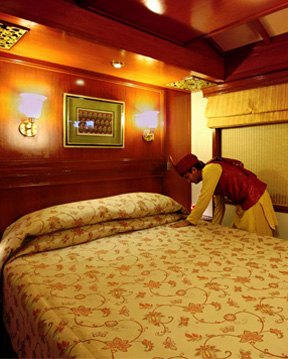
 Maharajas' Express
The Maharajas' Express recreates the splendour of India's royal era, whisking up to 88 guests through Rajasthan's palaces, tiger reserves and Mughal monuments in lavishly appointed suites. Four distinct itineraries fan out across the subcontinent, each delivering all-inclusive fine dining, guided excursions and 24-hour valet service.
 Asia · India
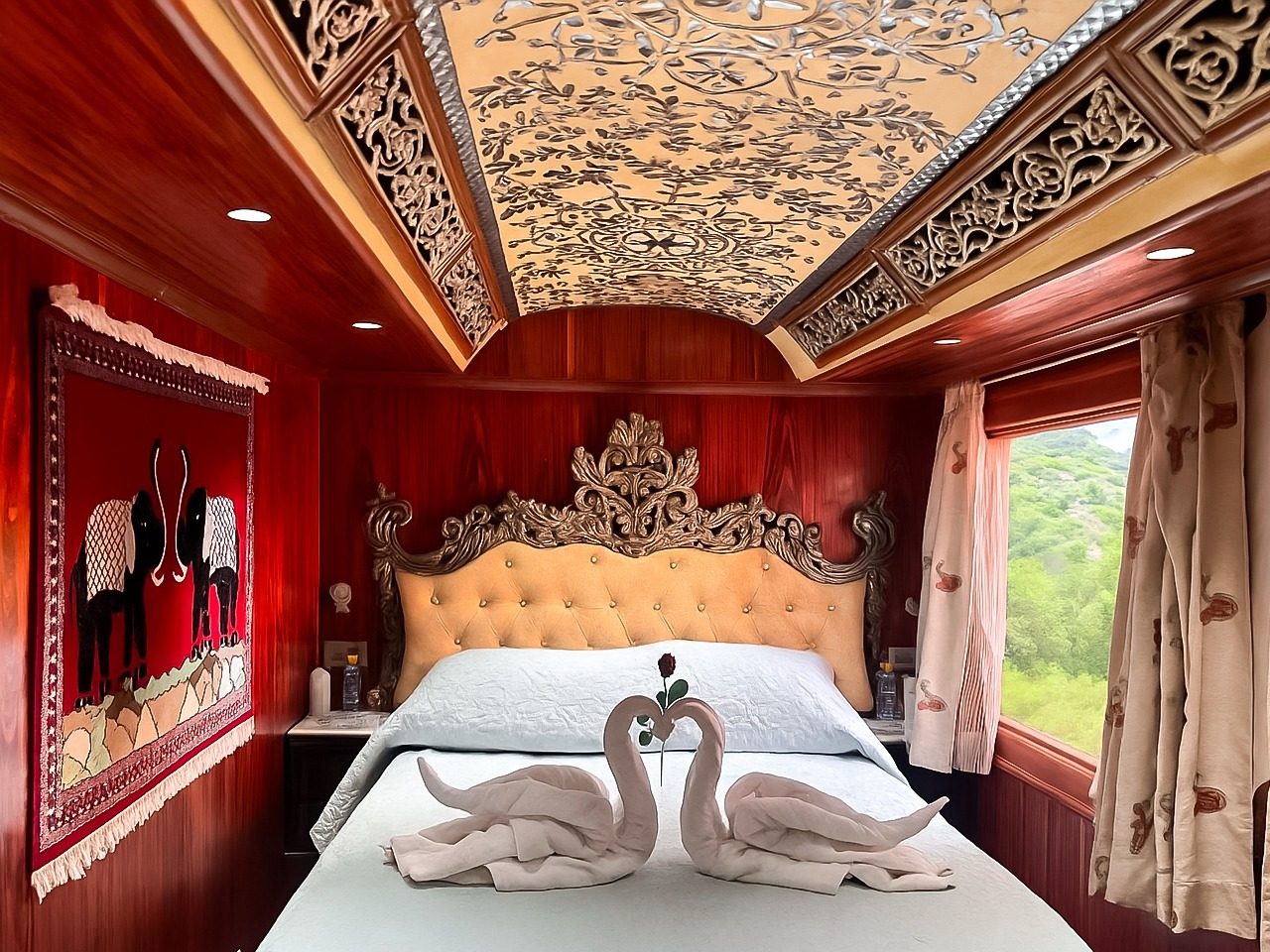
 Palace on Wheels
Launched in 1982, the Palace on Wheels is India's pioneering luxury train — a joint venture between RTDC and Indian Railways that whisks guests through eight regal destinations in 7 nights and 8 days. Named No. 1 in Condé Nast Traveler's 2024 Readers' Choice Awards, it remains the benchmark for royal rail travel on the subcontinent.