
Jodhpur, the "Blue City" of Rajasthan, spreads out beneath the towering walls of Mehrangarh Fort in a haze of indigo-tinted houses that once marked the homes of Brahmin families. Founded in 1459 by Rao Jodha as the capital of the Marwar kingdom, it grew rich on the caravan trade in opium, silk, sandalwood, dates and copper that passed through the Thar Desert, and that history is written into its bazaars, havelis and palaces today.
This is a city of striking contrasts: the raw, sunbaked immensity of the fort above and the labyrinthine blue lanes of the old walled city below, with the pale marble domes of Jaswant Thada and the honey-gold Umaid Bhawan Palace punctuating the skyline. It rewards slow exploration on foot as much as it does a grand arrival by rail.
Jodhpur is one of the signature stops for India's two great luxury trains, the Maharajas' Express and the Palace on Wheels, both of which include the city on their Rajasthan itineraries. Arriving into the desert capital by private train, with turbaned welcomes and a private coach as your base, is one of the most atmospheric ways to experience this Marwar stronghold.
- ✦Mehrangarh Fort's towering ramparts
- ✦The indigo lanes of the Blue City
- ✦Marble cenotaph of Jaswant Thada
- ✦Art Deco grandeur of Umaid Bhawan Palace
- ✦Clock Tower bazaars and street food
- ✦Dal baati churma, Jodhpur's signature dish
- ✦A stop on the Maharajas' Express and Palace on Wheels
Places to See in Jodhpur
Mehrangarh Fort
One of the largest and best-preserved forts in India, Mehrangarh rises nearly 400 feet above the city on a rocky outcrop. Inside its imposing walls are ornately carved palace quarters — the Moti Mahal, Phool Mahal and Sheesh Mahal — along with a museum of royal palanquins, armour, miniature paintings and the elephant howdahs once used by the Maharajas of Marwar.
Jaswant Thada
A cenotaph of intricately carved white marble built in 1899 in memory of Maharaja Jaswant Singh II, set beside a small lake just below the fort. Its thin marble sheets glow almost translucent in sunlight, and the surrounding gardens offer some of the finest views back up to Mehrangarh.
Umaid Bhawan Palace
Built between 1929 and 1943 as a famine-relief project, this vast Art Deco palace of golden Chittar sandstone is still home to Jodhpur's royal family, with one wing operating as a heritage hotel and another as a museum of vintage cars, clocks and royal memorabilia.
Clock Tower and Sardar Market
The bustling heart of the old city, where the Ghanta Ghar clock tower overlooks a maze of stalls selling spices, textiles, silver jewellery, antiques and Jodhpur's famous mojari leather shoes. It's the best place to feel the everyday rhythm of the Blue City.
The Blue City lanes
The old town's indigo-washed houses, originally coloured to repel heat and insects and to signal Brahmin residences, form a photogenic tangle of narrow lanes beneath the fort walls, best explored on a walking tour with rooftop cafés offering sweeping views.
Mandore Gardens
A short drive north of the city, these gardens hold the ornate cenotaphs of former Marwar rulers, carved in a distinctive temple-like style, along with a rock garden and the Hall of Heroes with its painted figures.
Rao Jodha Desert Rock Park
A restored scrubland ecosystem spread across the rocky slopes below Mehrangarh Fort, with walking trails through native desert flora — a quiet counterpoint to the city's monuments and forts.
Food & Gastronomy
Jodhpur's cuisine reflects its desert setting, built around hardy lentils, grains and dairy that keep well in the arid Marwar climate, alongside a famously fiery streak of spice. Meals here are a highlight of any Rajasthan journey, whether taken in a haveli courtyard or aboard the dining cars of the Maharajas' Express or Palace on Wheels.
- Dal Baati Churma — Jodhpur and Marwar's signature dish: hard baked wheat balls (baati) cracked open and doused in ghee, served with spiced lentils (dal) and a sweet crumbled wheat-and-jaggery churma.
- Mirchi Bada — a Jodhpur street-food classic, large green chillies stuffed with spiced potato and deep-fried in gram-flour batter, sold at stalls around the Clock Tower.
- Makhaniya Lassi — a thick, saffron-scented, cream-topped yoghurt lassi, with the stalls near the old city among the most famous in Rajasthan for the drink.
- Pyaaz Kachori — flaky pastry stuffed with spiced onion, a favourite Jodhpuri breakfast served with tangy tamarind and mint chutneys.
- Mawa Kachori — a sweet counterpart filled with a rich mixture of khoya (reduced milk), nuts and dried fruit, syrup-soaked and considered a Jodhpur speciality.
- Ker Sangri — a distinctive Marwari dry vegetable dish made from desert beans (sangri) and berries (ker), a dish born of the region's arid ecology.
The old city's bazaars, particularly around the Clock Tower and Sardar Market, are the best places to sample these dishes at their source, while the region's Marwari thali — a full spread of dal, baati, churma, vegetables, chutneys and papad — remains the essential Jodhpur meal.
Luxury Trains That Visit Jodhpur
 Asia · India
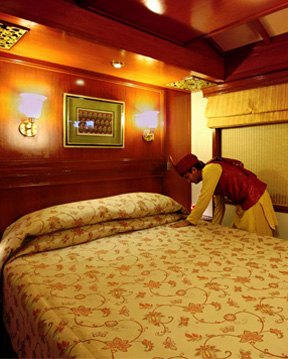
 Maharajas' Express
The Maharajas' Express recreates the splendour of India's royal era, whisking up to 88 guests through Rajasthan's palaces, tiger reserves and Mughal monuments in lavishly appointed suites. Four distinct itineraries fan out across the subcontinent, each delivering all-inclusive fine dining, guided excursions and 24-hour valet service.
 Asia · India
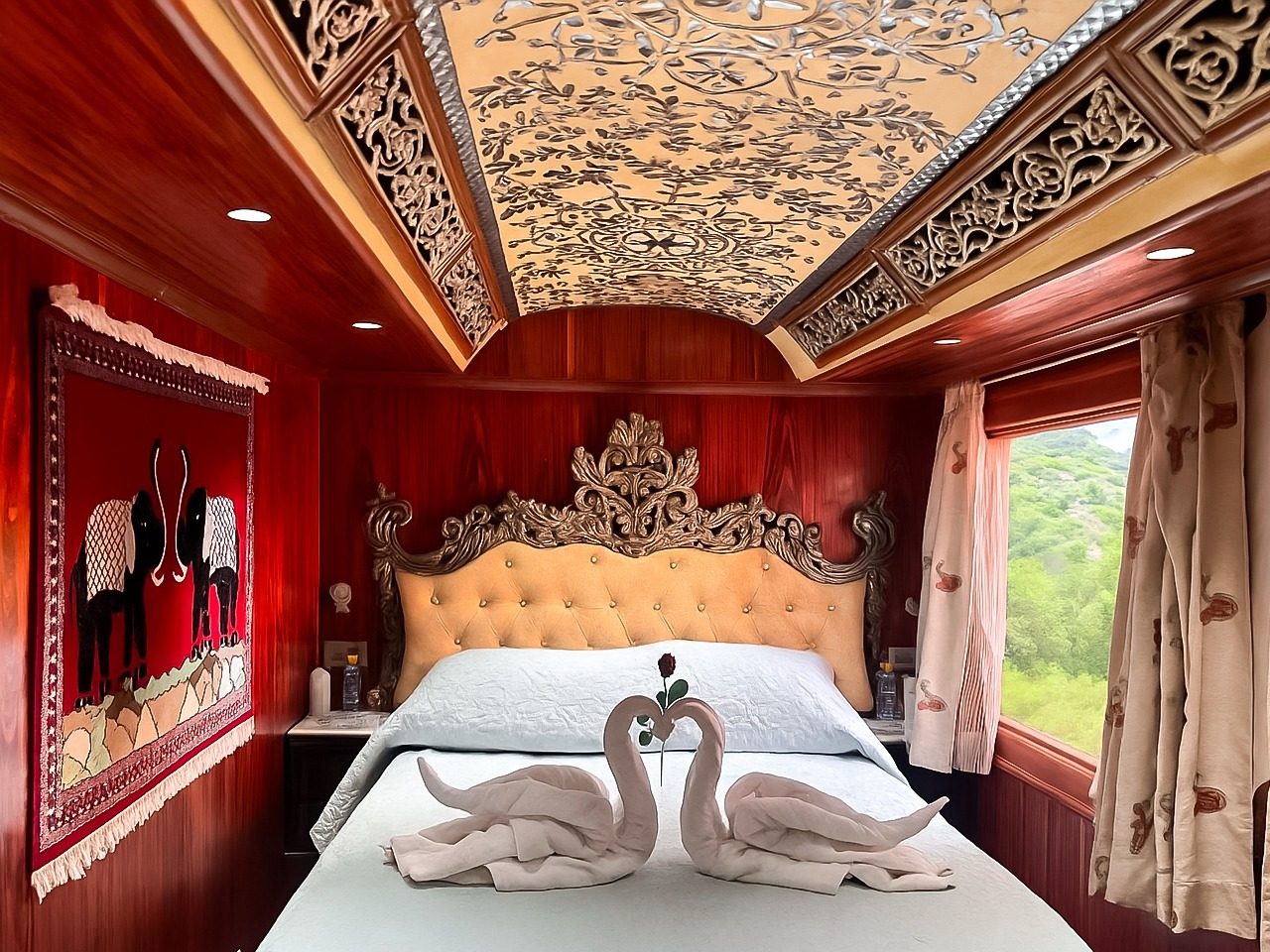
 Palace on Wheels
Launched in 1982, the Palace on Wheels is India's pioneering luxury train — a joint venture between RTDC and Indian Railways that whisks guests through eight regal destinations in 7 nights and 8 days. Named No. 1 in Condé Nast Traveler's 2024 Readers' Choice Awards, it remains the benchmark for royal rail travel on the subcontinent.