León rose to prominence as the capital of an early medieval Christian kingdom, and it still wears that history proudly: a soaring Gothic cathedral filled with stained glass, a Romanesque basilica guarding the tombs of kings, and a warren of taverns in the old quarter that has made León the undisputed capital of the free tapa. Walking the honey-coloured streets of the Barrio Húmedo and the Barrio Romántico, it is easy to see why the city is one of the great waypoints on the Camino de Santiago, drawing pilgrims and travellers alike for well over a thousand years.
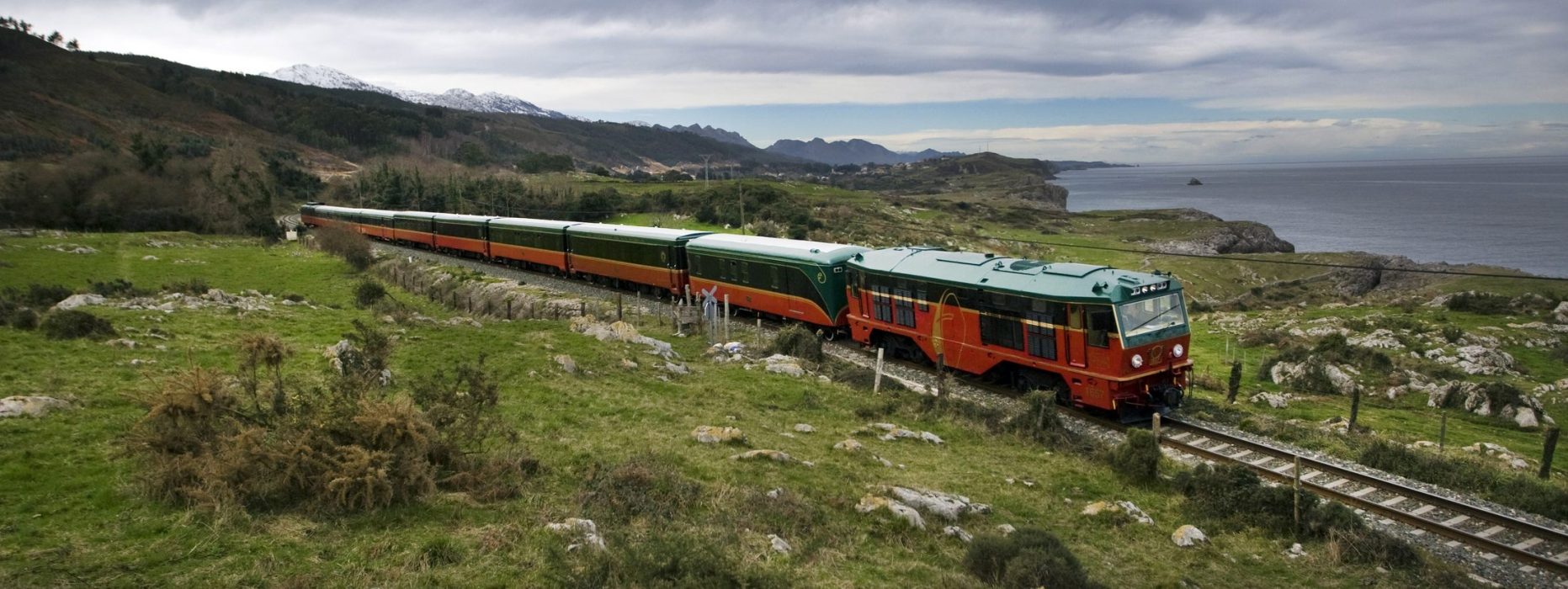
León is also a highlight destination for El Expreso de la Robla, the luxury sleeper train that traces the historic mining railway once used to haul coal from La Robla to Bilbao. Rolling through the green valleys of Castilla y León and the Basque foothills in vintage-style sleeper cabins, the train brings guests into León to explore its cathedral, its Romanesque treasures and its celebrated tapas scene as part of a slow, scenic rail journey between Bilbao and León.
Because the city sits at a crossroads of pilgrim route, historic railway and regional cuisine, a visit rewards travellers who want atmosphere as much as sightseeing — grand monuments by day, and lively bar-hopping by night, all within easy walking distance of the station.
- ✦Gothic cathedral with 1,800 sq metres of stained glass
- ✦Romanesque royal tombs and frescoes at San Isidoro
- ✦Gaudí's Casa Botines
- ✦Barrio Húmedo's free-tapa bar crawl
- ✦Historic waypoint on the Camino de Santiago
- ✦Reached aboard El Expreso de la Robla sleeper train
- ✦Grand Parador de San Marcos facade
Places to See in León
León Cathedral (Santa María de León)
Known as the "Pulcra Leonina," this 13th-century Gothic cathedral is famed for its extraordinary stained glass — around 1,800 square metres of medieval and Renaissance windows that flood the nave with colour. Its twin-towered facade and rose window are among the finest examples of French-influenced Gothic architecture in Spain.
Basilica of San Isidoro
This Romanesque basilica houses the Royal Pantheon, the burial place of medieval kings and nobles of the Kingdom of León, beneath a ceiling of remarkably preserved 12th-century frescoes so vivid and complete that art historians call it the "Sistine Chapel of Romanesque art."
Casa Botines
One of only three buildings Antoni Gaudí built outside Catalonia, this castle-like modernist structure from 1891 was originally a textile warehouse and residence. It now houses a museum on Gaudí's work along with an art collection including pieces by Dalí and Goya.
Barrio Húmedo
The atmospheric "Wet Quarter" of the old town is the beating heart of León's legendary tapas culture, its narrow lanes packed with bars where every drink arrives with a free, often inventive, tapa.
Barrio Romántico and the Plaza Mayor
León's other historic quarter is a maze of medieval streets, porticoed squares and centuries-old facades, anchored by the arcaded Plaza Mayor, still home to a traditional Wednesday and Saturday market.
Parador de San Marcos
A former 16th-century monastery and pilgrim hospital on the Camino de Santiago, its magnificent plateresque facade is one of the most photographed sights in the city, now operating as one of Spain's grandest paradores.
MUSAC (Museo de Arte Contemporáneo de Castilla y León)
A striking, brightly coloured contemporary art museum housed in a building whose stained-glass-inspired facade nods to the city's Gothic cathedral, showcasing Spanish and international modern art.
Roman Walls and Puerta Castillo
Sections of León's Roman and medieval fortifications still ring parts of the old town, a reminder that the city began as a legionary fortress founded to guard Rome's northern mining routes.
Food & Gastronomy
León's dining culture is built around one irresistible custom: order a drink in the Barrio Húmedo and a free tapa arrives with it, often substantial enough that a round of drinks can amount to an entire meal. The tradition has made León one of Spain's great tapas cities, with bars competing to offer the most inventive bite.
- Cecina de León — air-cured, smoked beef from mountain cattle, sliced paper-thin and served simply with olive oil; it holds a Protected Geographical Indication and is one of the region's signature products.
- Botillo del Bierzo — a hearty smoked sausage of seasoned pork ribs and offcuts from the Bierzo district, traditionally simmered and served with potatoes, chorizo and cabbage.
- Morcilla de León — the local blood sausage, made with onion, lard and spices rather than rice, giving it a soft, richly flavoured texture; typically fried or spread on toasted bread.
- Trucha a la leonesa — river trout from the region's mountain streams, pan-fried with cured ham.
- Cocido maragato — a robust chickpea-and-meat stew from the Maragatería district, famously eaten in reverse order: meats first, then vegetables, and soup last.
Wash it all down with a glass of vermut or a wine from the nearby Bierzo denomination, and finish, if you have room, with pastries from León's historic convents — a sweet coda to an evening spent hopping between the bars of the old town.