Machu Picchu is the crown jewel of South American travel: a 15th-century Inca citadel perched on a forested ridge 2,430 metres above the Urubamba River, wrapped in mist and framed by the jagged peaks of Huayna Picchu and Machu Picchu Mountain. Built by the Inca emperor Pachacuti and abandoned within a century, it lay hidden from the outside world until the American explorer Hiram Bingham brought it to global attention in 1911. Today it is a UNESCO World Heritage Site and one of the New Seven Wonders of the World, drawing travellers for its extraordinary stonework, its dramatic setting, and the sense of discovery that still lingers among its temples and terraces.
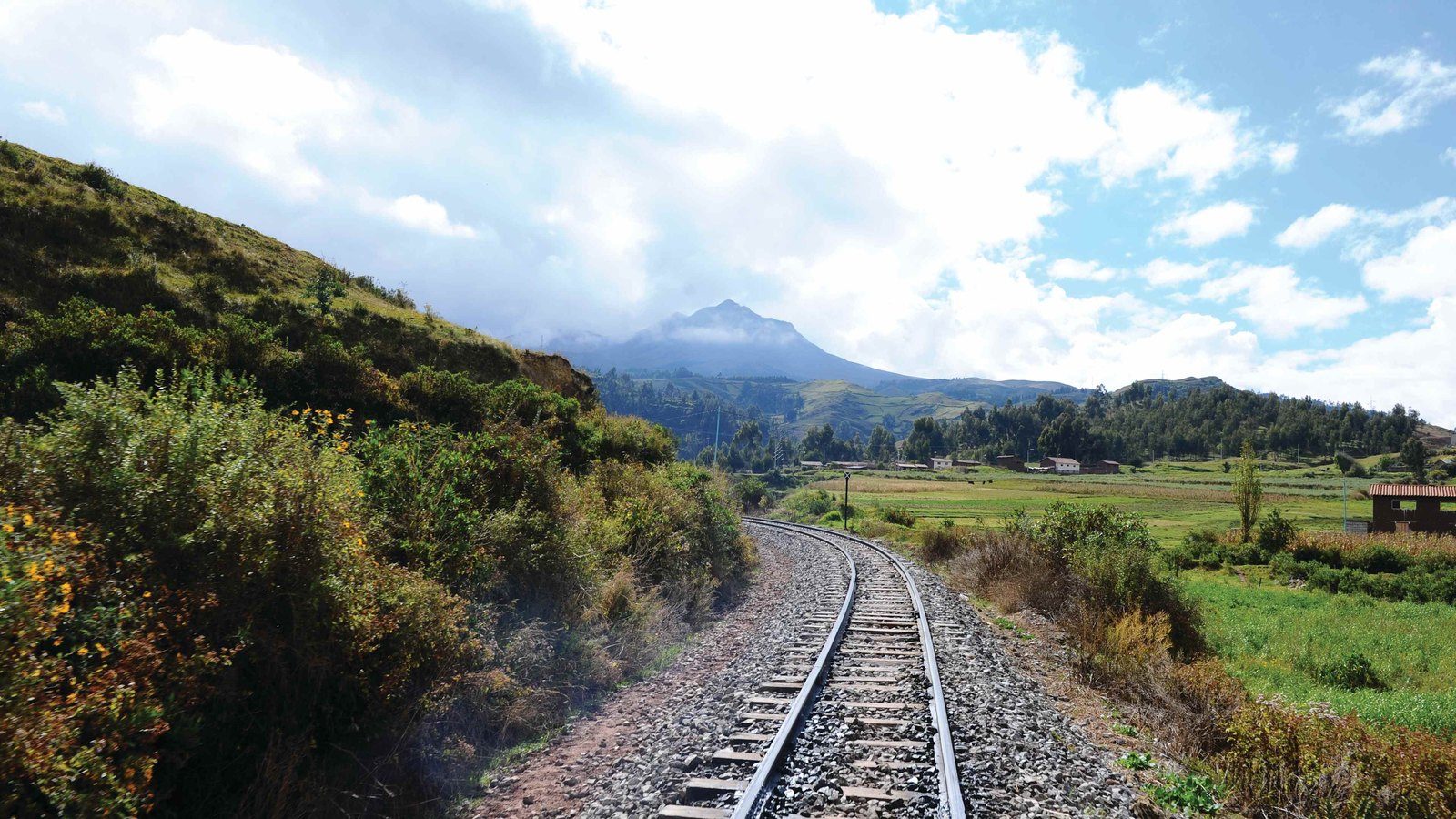
There is no road to Machu Picchu, which is part of its magic — the only way in is on foot along the Inca Trail or by rail, and the most memorable way to arrive is aboard the Hiram Bingham, the region's signature luxury train. Named for the man who rediscovered the ruins, this Pullman-style train departs the Sacred Valley near Cusco and winds down through the Andes alongside the Urubamba River to Aguas Calientes, the gateway town below the citadel, so that the journey itself becomes part of the destination.
Beyond the ruins themselves, the surrounding Sacred Valley offers Inca fortresses, colonial towns, and Andean markets, making Machu Picchu the highlight of a broader rail adventure through Peru's highlands rather than a single stop on a map.
- ✦Inca citadel above the clouds
- ✦UNESCO World Heritage Site
- ✦Journey aboard the Hiram Bingham luxury train
- ✦Sacred Valley of the Incas
- ✦Precision Inca stonework and temples
- ✦Peruvian cuisine and pisco sours onboard
- ✦Gateway town of Aguas Calientes
Places to See in Machu Picchu
Machu Picchu Citadel
The main archaeological complex, divided into an agricultural sector of terraced fields and an urban sector of temples, plazas and residences, all built from precisely cut granite blocks fitted without mortar.
Intihuatana Stone
A carved ritual stone believed to have served as an astronomical calendar for the Inca priesthood, one of the few such stones to survive Spanish colonisation intact.
Temple of the Sun
A curved, finely masoned tower thought to have been used for solar observations tied to the June solstice, built directly over a natural rock formation.
Huayna Picchu
The steep peak that rises behind the citadel in every classic photograph; a permitted, limited-capacity hike leads to Inca terraces and the Temple of the Moon near its summit.
Intipunku (Sun Gate)
The original entrance to Machu Picchu for those arriving on the Inca Trail, offering the classic panoramic view down over the entire citadel.
Sacred Valley of the Incas
The fertile valley between Cusco and Machu Picchu, home to the Inca fortress of Ollantaytambo and the market town of Pisac, both easily combined with a rail trip.
Cusco's Plaza de Armas
The colonial heart of the former Inca capital, where the Hiram Bingham journey typically begins, ringed by the Cusco Cathedral and the Church of the Society of Jesus.
Qorikancha (Temple of the Sun, Cusco)
Once the most important temple in the Inca Empire, its precision-cut stone walls now form the foundation of the colonial Santo Domingo convent.
Aguas Calientes (Machu Picchu Pueblo)
The riverside town at the base of the mountain, named for its natural hot springs and serving as the final rail stop before the bus ascent to the ruins.
Food & Gastronomy
Peruvian cuisine is one of the world's most celebrated, and the Cusco region serves up hearty Andean classics alongside refined contemporary plates. Onboard the Hiram Bingham, brunch and a multi-course dinner are prepared with Peruvian ingredients and served with pisco cocktails in a Pullman dining car, turning the journey itself into a tasting of the region.
- Cuy (guinea pig) — a traditional Andean delicacy, typically roasted or fried whole and served on festive occasions.
- Alpaca steak — a lean, tender Andean meat often grilled and served with quinoa or native potatoes.
- Lomo saltado — Peru's signature stir-fry of beef, onions, tomatoes and soy sauce, served with fries and rice, reflecting the country's Chinese-Peruvian heritage.
- Ceviche — Peru's national dish, fresh fish cured in lime juice with chili and onion, found on menus throughout Cusco despite the city's mountain location.
- Papa a la huancaína — boiled native potatoes bathed in a creamy, spicy cheese and aji amarillo sauce.
- Chicha morada — a sweet, non-alcoholic drink made from purple corn, cinnamon and cloves.
- Pisco sour — Peru's national cocktail, made with pisco brandy, lime, egg white and bitters.
- Quinoa soup and Andean corn — staples of the high-altitude diet, served in countless variations across Cusco's markets and restaurants.
In Cusco, the San Pedro Market is the best place to sample fresh juices, local cheeses and street food, while the city's growing fine-dining scene reinterprets these same Andean ingredients for contemporary palates.