Madrid is a city of wide boulevards, golden-lit plazas, and some of the finest art museums on earth, all wrapped in the unhurried rhythm of late lunches and even later dinners. As Spain's political and cultural capital since the 16th century, it blends Habsburg-era streets around the Plaza Mayor with the elegant 19th-century avenues of the Paseo del Prado, home to an unrivalled concentration of masterpieces. It is a city that rewards wandering, from tapas bars tucked into medieval alleys to the manicured paths of El Retiro Park.
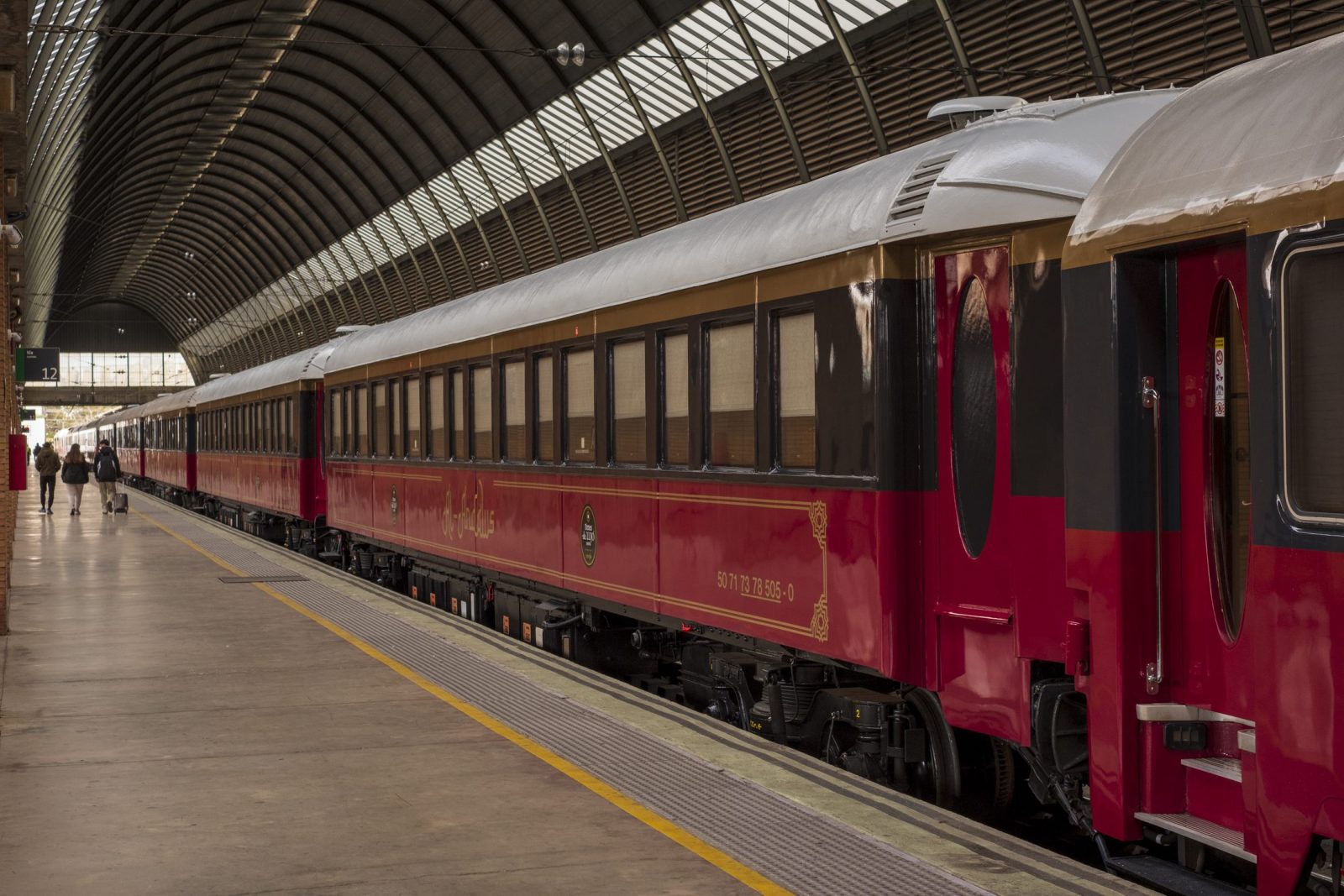
For travellers aboard the Al Andalus, Madrid is the classic gateway to the journey south. The historic train departs from the capital and threads through Toledo, Córdoba, Seville, Granada, and Jerez before returning, meaning a stay in Madrid is the natural bookend to an Andalusian rail adventure. Spending a night or two in the capital before boarding allows time to see the Prado's greatest works or wander the Royal Palace before settling into the train's vintage 1920s-style carriages.
Whether arriving for the art, the food, or simply to soak up the atmosphere of a great European capital, Madrid offers an ideal counterpoint to the smaller, more intimate cities of the south that the Al Andalus visits en route.
- ✦Museo del Prado's world-class masterpieces
- ✦The opulent Royal Palace of Madrid
- ✦Historic Plaza Mayor and the old town
- ✦Picasso's Guernica at the Reina Sofía
- ✦Tapas crawls through La Latina and Huertas
- ✦Gateway city for the Al Andalus luxury train
- ✦Sunset views from the Templo de Debod
Places to See in Madrid
Museo del Prado
One of the world's greatest art museums, home to masterpieces by Velázquez, Goya, and El Bosco (Hieronymus Bosch), including Velázquez's Las Meninas and Goya's The Third of May 1808.
Royal Palace of Madrid (Palacio Real)
The official residence of the Spanish royal family, though used today only for state ceremonies. Its opulent state rooms, Royal Armoury, and porcelain-lined salons make it one of the largest and most lavish palaces in Europe.
Plaza Mayor
The grand, arcaded square at the heart of old Madrid, built in the early 17th century and long used for markets, bullfights, and royal celebrations. Today it is ringed with cafés and is a natural starting point for exploring the historic centre.
Museo Reina Sofía
Spain's premier modern and contemporary art museum, most famous as the home of Picasso's monumental Guernica, alongside works by Dalí and Miró.
Retiro Park (Parque del Buen Retiro)
A vast 19th-century royal park with a boating lake, the ornate glass-and-iron Crystal Palace (Palacio de Cristal), and the Rose Garden, popular with madrileños for a stroll or a picnic.
Gran Vía
Madrid's grand early-20th-century thoroughfare, lined with theatres, department stores, and striking Beaux-Arts and Art Deco architecture, best appreciated on a walk from Calle de Alcalá toward Plaza de España.
Mercado de San Miguel
A beautifully restored early-1900s iron-and-glass market hall near Plaza Mayor, now a lively gourmet food market for tapas, cured ham, and local wine.
Puerta del Sol
The symbolic centre of Spain, marked by the Kilometre Zero plaque, the statue of the bear and the strawberry tree (El Oso y El Madroño), and the clock that rings in the New Year live on Spanish television.
Templo de Debod
An authentic 2nd-century BC Egyptian temple, gifted to Spain and reassembled in a park near Plaza de España, offering one of the city's best sunset views.
Food & Gastronomy
Madrid's cuisine draws on traditions from across Spain, but it has its own hearty, unpretentious specialities built for long days and later dinners. The signature dish is cocido madrileño, a slow-simmered chickpea stew with meats and vegetables traditionally served in courses: broth first, then chickpeas and vegetables, then the meats. Equally iconic is callos a la madrileña, tripe stewed with chorizo and paprika, a staple of old-school taverns.
Street food culture centres on bocadillo de calamares, a simple roll stuffed with fried squid rings, best eaten near Plaza Mayor, and churros con chocolate, crisp fried dough dipped in thick hot chocolate, classically enjoyed at Chocolatería San Ginés at any hour of day or night. Tapas bars throughout the city serve patatas bravas, croquetas, and jamón ibérico carved to order.
Madrid's tapas culture is best explored in the barrios of La Latina and Huertas, where locals hop from bar to bar with a small plate and a glass of vermouth (vermut) or a caña of beer at each stop. For a more formal meal, the city's mesones and centuries-old restaurants near Plaza Mayor still serve roast specialities such as cochinillo asado (roast suckling pig) and cordero asado (roast lamb), cooked in wood-fired ovens.
- Cocido madrileño — chickpea and meat stew, Madrid's signature dish
- Callos a la madrileña — paprika-spiced tripe stew
- Bocadillo de calamares — fried squid sandwich
- Churros con chocolate — fried dough with thick hot chocolate
- Cochinillo asado — traditional roast suckling pig
- Torrijas — Spanish-style bread pudding, especially around Easter