Pretoria is South Africa's administrative capital, a stately city of purple jacaranda blossoms, sandstone architecture and layered history that sits just north of Johannesburg on the Highveld plateau. Known locally as the "Jacaranda City" for the tens of thousands of jacaranda trees that turn its avenues violet each spring, Pretoria blends colonial-era grandeur with the political weight of a nation that reinvented itself, from the seat of apartheid-era government to the site of Nelson Mandela's presidential inauguration.
For travellers arriving by rail, Pretoria is a natural extension of a Johannesburg luxury train journey. The legendary Blue Train and Rovos Rail's Pride of Africa both depart from and return to Pretoria's historic station, making the city the true gateway to South Africa's golden age of rail travel rather than a mere side trip from Johannesburg.
A day or two in Pretoria rewards visitors with monumental architecture, world-class museums and a slower, greener pace than its bustling neighbour — an elegant bookend to a rail journey across the South African interior.
- ✦Home terminus of the Blue Train and Pride of Africa
- ✦Union Buildings and Nelson Mandela statue
- ✦Monumental Voortrekker Monument and Hall of Heroes
- ✦Freedom Park's //hapo Museum of South African history
- ✦Famous jacaranda-blossom streets each spring
- ✦Historic Church Square and Melrose House
- ✦Gateway city pairing easily with Johannesburg
Places to See in Pretoria
Union Buildings
Sir Herbert Baker's sweeping sandstone masterpiece crowns Meintjieskop and has housed the offices of the South African government since 1913. Its terraced gardens hold a nine-metre bronze statue of Nelson Mandela, marking the spot where he was inaugurated as president in 1994.
Voortrekker Monument
This massive granite monument honours the Voortrekkers of the Great Trek (1835–1854). Inside, the Hall of Heroes displays a marble frieze of 27 relief panels, and a shaft of sunlight famously illuminates the Cenotaph at noon on 16 December each year.
Freedom Park
Facing the Voortrekker Monument across the valley, this heritage site and //hapo Museum trace South African history across seven epochs, from geological origins through precolonial life, colonialism and apartheid to democracy — a powerful counterpoint to its neighbour.
Church Square
The historic heart of Pretoria, ringed by Edwardian and Victorian-era buildings including the Old Raadsaal and Palace of Justice, with a central statue of Boer statesman Paul Kruger.
Ditsong National Museum of Natural History and Pretoria Zoo
Pretoria's excellent natural history museum and its large National Zoological Garden (one of the biggest zoos in the world) sit close to the city centre, popular for families and wildlife lovers.
Melrose House
A beautifully restored Victorian villa where the Treaty of Vereeniging was signed in 1902, ending the Second Boer War — now a museum of period furnishings and colonial history.
Union Buildings Jacaranda Walks
Herbert Baker Street, Jacaran Street and the avenues around the university are among the best places to experience Pretoria's famous jacaranda bloom in October and November, when entire streets turn a hazy purple.
Pretoria National Botanical Garden
A large indigenous garden showcasing South Africa's plant diversity, from Highveld grassland to succulent karoo species, with walking trails and birdwatching.
Food & Gastronomy
Pretoria's food culture reflects the wider South African table: hearty, meat-forward and shaped by Cape Malay, Afrikaner and indigenous African traditions. The city's restaurants and markets are an excellent introduction to dishes travellers will also encounter aboard the Blue Train and Pride of Africa, both renowned for showcasing South African cuisine at white-tablecloth standard.
- Bobotie — widely considered South Africa's national dish: spiced, curried minced meat baked under a golden egg custard topping, traditionally served with yellow turmeric rice, chutney and sambals.
- Boerewors — a coiled, spiced farmer's sausage (legally required to be at least 90% meat) that is the centrepiece of any braai, South Africa's beloved barbecue tradition.
- Potjiekos — a slow-cooked stew of meat and vegetables simmered for hours in a round, three-legged cast-iron pot over open coals, developing deep, rich flavour.
- Biltong and droëwors — air-dried, spiced cured meats snacked on everywhere from farm stalls to city delis, a legacy of Voortrekker preservation methods.
- Malva pudding — a warm, spongey apricot-jam pudding served with custard or cream, a staple dessert of Afrikaner home cooking.
- Pap and chakalaka — maize porridge served with a spicy vegetable and bean relish, a everyday staple across South African communities.
For a taste of the city itself, the Hazel Food Market and the restaurants around Hatfield and Menlyn offer relaxed sampling of these dishes alongside South African wines from the nearby Cape winelands, often poured on board the luxury trains as well.
Luxury Trains That Visit Pretoria
 South Africa · Africa
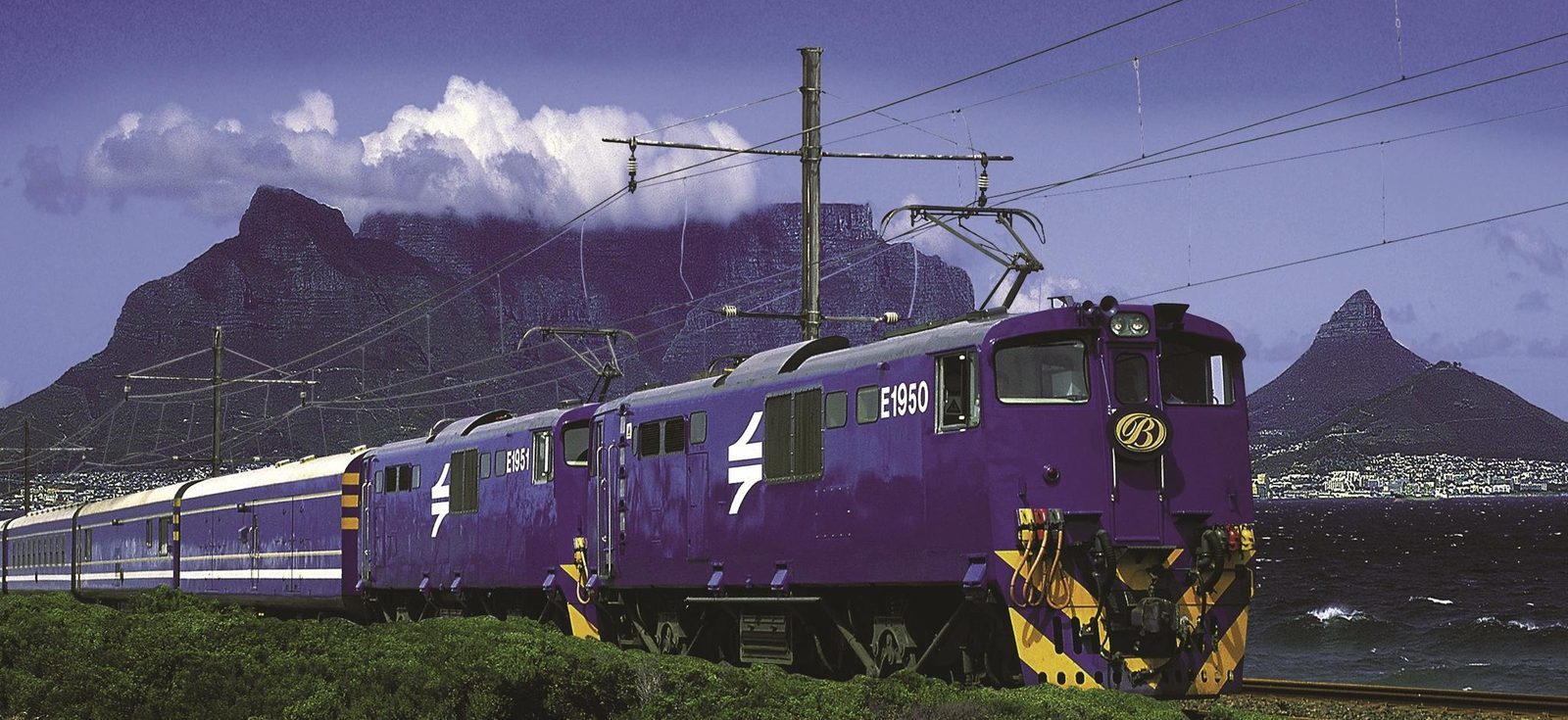
 Blue Train
The Blue Train has been synonymous with luxury and hospitality since 1946, tracing spectacular routes across the South African sub-continent. Private suites, silver-service dining and a dedicated butler make every mile an experience in itself.
 Africa · South Africa · Botswana · Zimbabwe · Zambia · Tanzania · Namibia · Angola · Swaziland
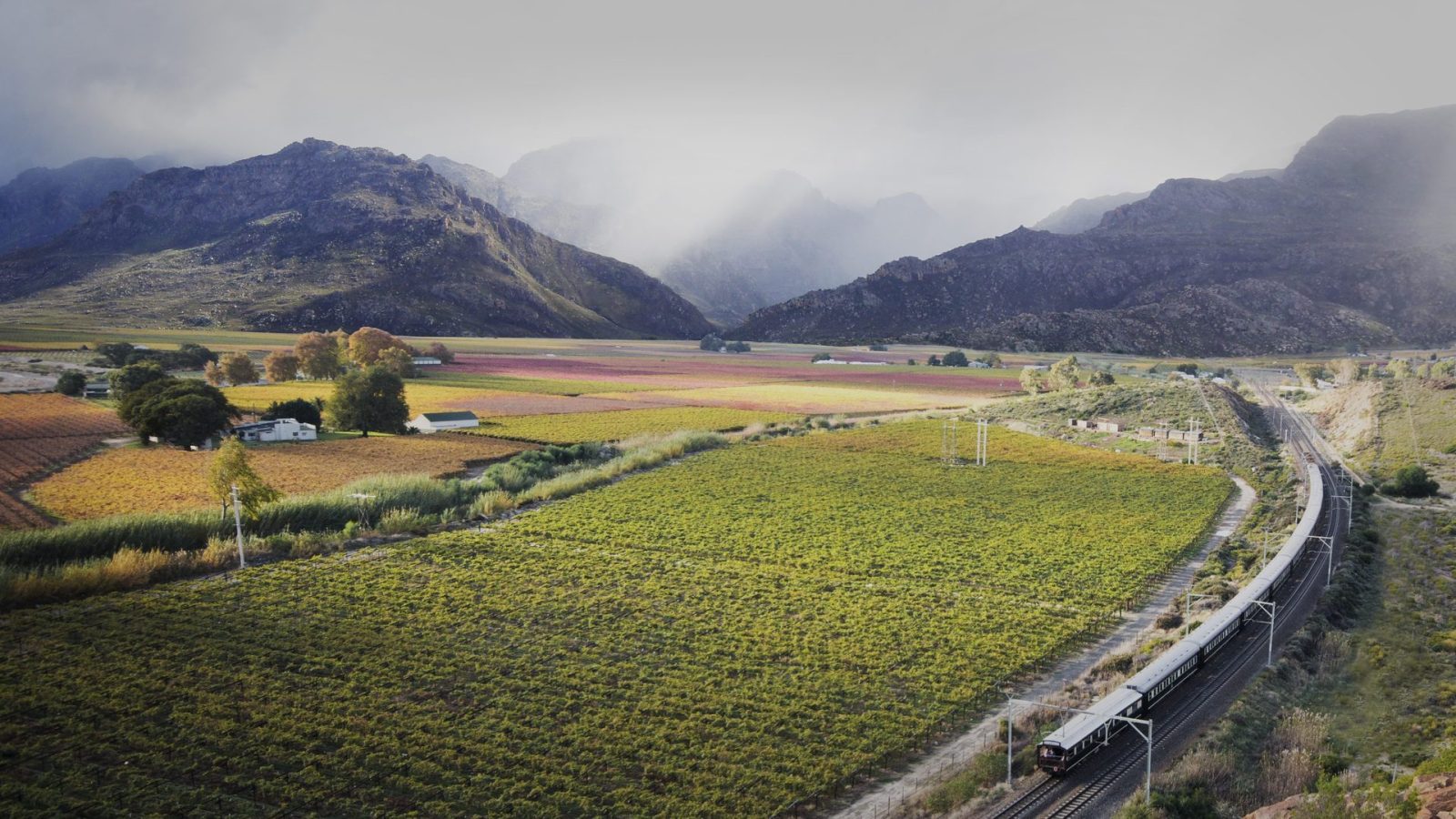
 Pride of Africa — Rovos Rail
Rovos Rail's Pride of Africa combines the golden age of rail travel with lavish Edwardian elegance, carrying guests across the magnificent landscapes of southern and eastern Africa. From the Great Karoo to the Namib Desert, from Victoria Falls to the shores of the Indian Ocean, every journey is an unhurried adventure in supreme comfort.