
Ranthambore is India's most storied tiger destination — a rugged expanse of dry deciduous forest, lakes, and ravines in eastern Rajasthan where the Bengal tiger reigns as top predator in plain daylight. Once the private hunting ground of the Maharajas of Jaipur, it was declared a national park in 1980 and remains one of the best places on earth to see a wild tiger, often padding along a dusty trail or cooling off beside a lily-covered lake with a 10th-century fort rising in the background.
Beyond the tigers, Ranthambore rewards travellers with layered history and dramatic scenery: a hilltop fortress older than most European cathedrals, crumbling hunting pavilions reclaimed by jungle, and a landscape that shifts from golden grassland to lake-fed wetland within a few kilometres. It is a rare corner of India where wilderness and heritage sit side by side.
For guests travelling with Palace Trains, Ranthambore is a signature stop on both the Maharajas' Express and the Palace on Wheels, two of India's most celebrated luxury trains. Each brings guests by private rail to nearby Sawai Madhopur station, from where a short transfer delivers them into the park for guided safari drives — trading the chaos of the road for the romance of the rails en route to the jungle.
- ✦Wild Bengal tiger safaris in open-top vehicles
- ✦UNESCO-listed Ranthambore Fort
- ✦Lotus-covered Padam Talao lake
- ✦Raj Bagh's jungle-swallowed royal ruins
- ✦Birdwatching at Surwal Lake
- ✦Fiery Rajasthani cuisine like laal maas
- ✦Arrival via the Maharajas' Express or Palace on Wheels
Places to See in Ranthambore
Ranthambore National Park Safari Zones
The park is divided into numbered safari zones (1 through 10), each offering a different mix of terrain — from the lake-studded core zones favoured for tiger sightings to the quieter buffer zones rich in birdlife and other wildlife. Morning and afternoon game drives in open-top Gypsies or larger Canters are the classic way to explore.
Ranthambore Fort
A UNESCO World Heritage Site (as part of the Hill Forts of Rajasthan) perched atop a rocky outcrop within the park, this 10th-century fort offers sweeping views over the reserve. Inside its walls are the Ganesh Temple, several ruined palaces, and stepwells — many now used as resting spots by leopards and langurs as much as by visitors.
Padam Talao and Jogi Mahal
The park's largest lake, Padam Talao, is famous for its carpet of lotus blossoms and its backdrop of the fort. On its bank stands the atmospheric Jogi Mahal, a former royal hunting lodge, near one of the largest banyan trees in India.
Raj Bagh Ruins
Elegant arched pavilions and domed chhatris from a former royal residence stand half-submerged in vegetation beside Raj Bagh Talao lake — one of the most photographed spots in the park, particularly when tigers are seen resting among the ruins.
Ranthambore School of Art
This gallery and studio near the park entrance showcases the distinctive Ranthambore style of wildlife painting, developed by local artists trained to capture the park's tigers and birdlife in miniature-inspired detail.
Surwal Lake
A wetland area on the park's periphery, popular with birdwatchers for sightings of flamingos, painted storks, cranes and migratory waterfowl, especially in the cooler months.
Chauth Mata Temple
A hilltop temple dedicated to a local goddess, reached via a steep climb near Ranthambore Fort, drawing pilgrims and offering panoramic views over the surrounding forest.
Kachida Valley
A rocky valley just outside the core park, good for spotting leopards, sloth bears and Indian wolves away from the main tiger safari crowds.
Food & Gastronomy
Ranthambore sits in Rajasthan's Hadoti-Dhundhar culinary belt, and dining here — whether at a jungle-view lodge or aboard the train itself — leans into robust, spice-forward Rajasthani cooking built to sustain a desert and forest climate.
- Laal Maas — a fiery Rajasthani mutton curry simmered in a deep red gravy of Mathania chillies and yogurt, traditionally a royal hunting-camp dish.
- Dal Baati Churma — Rajasthan's iconic trio of baked wheat rolls (baati), spiced lentils (dal), and a sweet crumbled wheat-and-jaggery dessert (churma), usually finished with a generous ladle of ghee.
- Gatte ki Sabzi — gram-flour dumplings simmered in a tangy yogurt-based curry, a Marwari specialty born of Rajasthan's arid, vegetable-scarce terrain.
- Ker Sangri — a distinctive desert dish of dried ker berries and sangri beans, tempered with mango powder and spices.
- Bajre ki Roti — hearty pearl-millet flatbread, a staple accompaniment often paired with garlic chutney or ghee.
- Ghevar and Malpua — classic Rajasthani sweets, the honeycombed disc-shaped ghevar and the syrup-soaked malpua pancake, both popular festive treats in the region.
- Masala Chai — spiced tea served throughout the day at forest lodges and safari stops, a welcome warmer on cool early-morning game drives.
Onboard the Maharajas' Express and Palace on Wheels, guests also enjoy multi-course Indian and continental menus prepared by onboard chefs, giving a refined counterpoint to the earthy, spice-rich food of the surrounding countryside.
Luxury Trains That Visit Ranthambore
 Asia · India
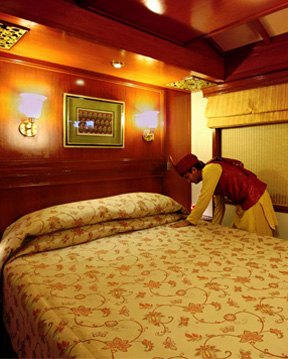
 Maharajas' Express
The Maharajas' Express recreates the splendour of India's royal era, whisking up to 88 guests through Rajasthan's palaces, tiger reserves and Mughal monuments in lavishly appointed suites. Four distinct itineraries fan out across the subcontinent, each delivering all-inclusive fine dining, guided excursions and 24-hour valet service.
 Asia · India
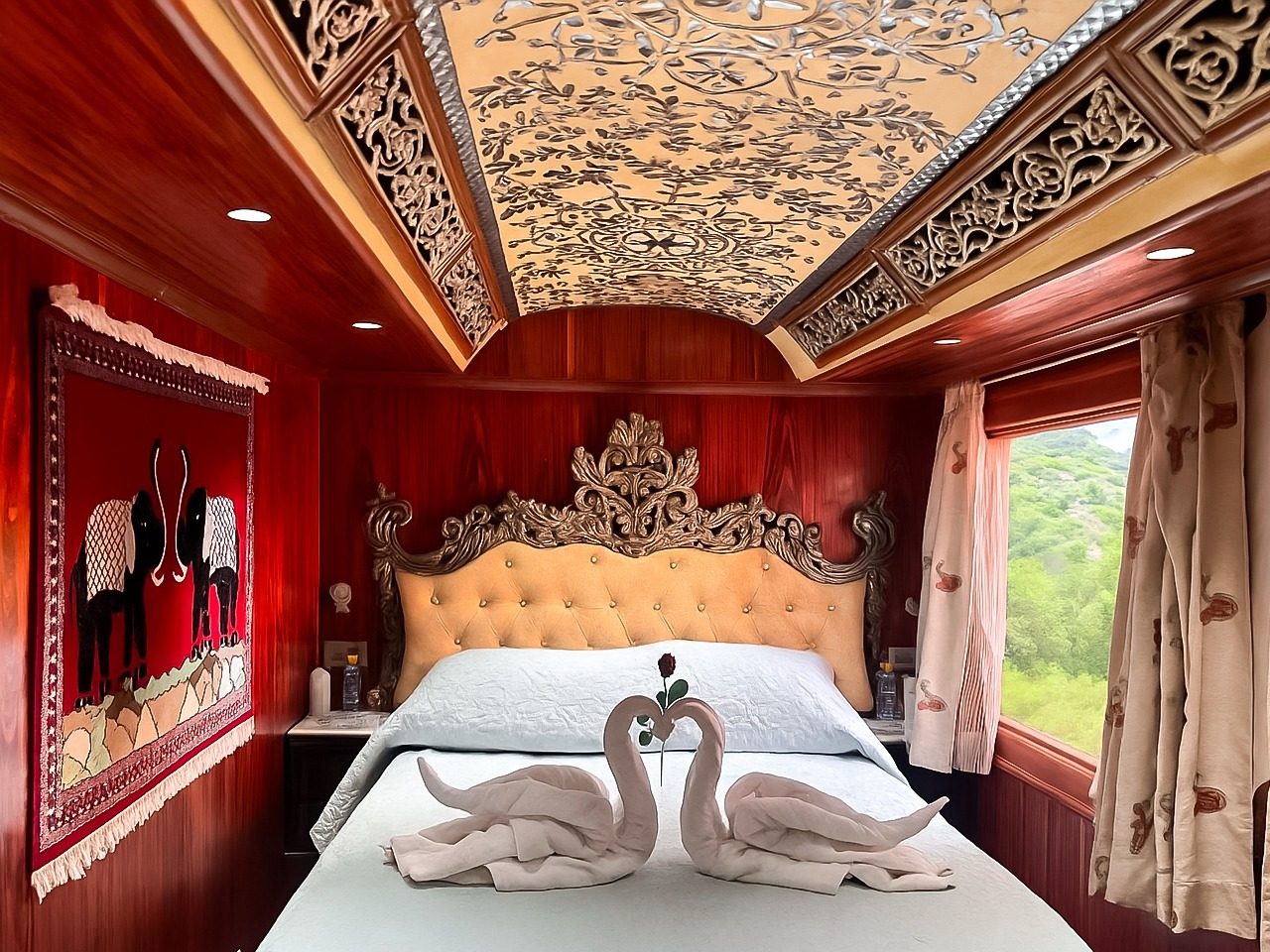
 Palace on Wheels
Launched in 1982, the Palace on Wheels is India's pioneering luxury train — a joint venture between RTDC and Indian Railways that whisks guests through eight regal destinations in 7 nights and 8 days. Named No. 1 in Condé Nast Traveler's 2024 Readers' Choice Awards, it remains the benchmark for royal rail travel on the subcontinent.