Curved around the scalloped sweep of La Concha Bay and framed by two green hills, San Sebastián (Donostia in Basque) is one of Europe's most beautiful coastal cities — and, dish for dish, one of its finest tables. Belle Époque mansions, a wide crescent of golden sand, and a tangle of pintxos bars in the Parte Vieja give the city a split personality: genteel seaside resort by day, boisterous gastronomic capital by night.
San Sebastián has been a magnet for royalty, artists and food lovers since Queen Isabel II took her doctor's advice and began summering here in the 1840s, and its reputation has only grown since — the city now holds more Michelin stars per resident than almost anywhere in the world. Yet it remains intimate and walkable, a place best absorbed slowly, glass of txakoli in hand.
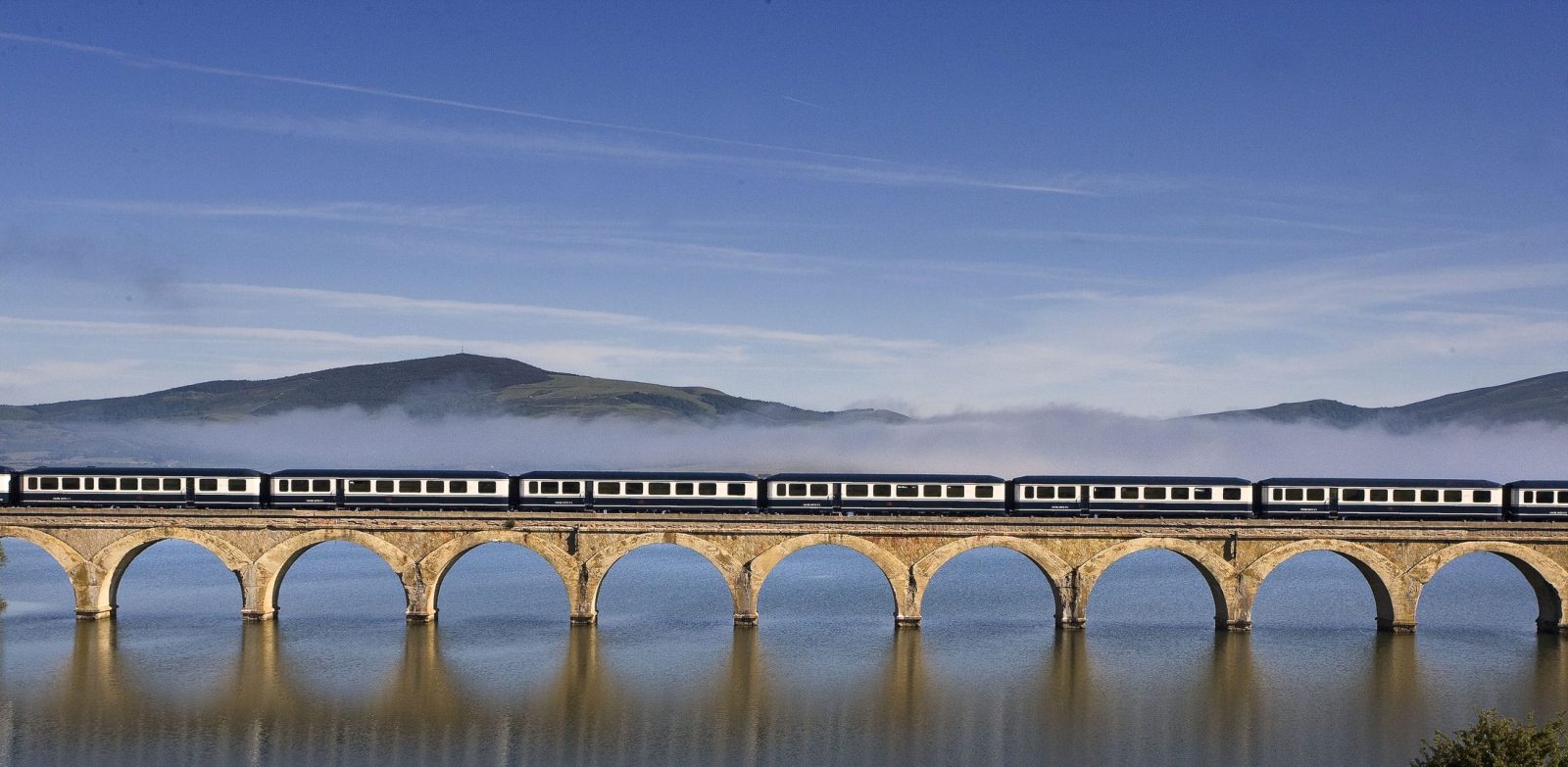
Travellers exploring Spain's northern coast reach San Sebastián as a highlight aboard El Transcantábrico Gran Lujo, the luxury train that threads along the Cantabrian coast between the Basque Country, Cantabria, Asturias and Galicia. Arriving this way means the city's dramatic approach — mountains dropping to the sea — becomes part of the journey itself.
- ✦Shell-shaped La Concha Bay and promenade
- ✦World-class pintxos bars in the Parte Vieja
- ✦Michelin-starred dining, including Arzak and Akelare
- ✦Monte Igueldo funicular views
- ✦Chillida's Peine del Viento sculptures
- ✦Basque burnt cheesecake, born in San Sebastián
- ✦A signature stop on El Transcantábrico Gran Lujo
Places to See in San Sebastián
La Concha Bay and Promenade
The city's signature sight: a perfect shell-shaped bay lined by a wide sandy beach and an elegant iron-railed promenade, best walked at sunset toward Monte Igueldo.
Parte Vieja (Old Town)
A dense grid of narrow streets packed with pintxos bars, the Baroque Basilica of Santa María del Coro, and the lively fishermen's quarter around the port — the beating heart of Donostia life.
Monte Igueldo
A funicular railway, in operation since 1912, climbs this hill for sweeping views over La Concha, Isla de Santa Clara and the Bay of Biscay.
Monte Urgull
The old town's guardian hill, topped by the Castillo de la Mota and a giant statue of the Sacred Heart, with shaded paths and cannon-lined ramparts overlooking the sea.
San Telmo Museoa
The Basque Country's oldest museum, housed in a former Dominican convent with a striking modern extension, tracing Basque history, art and identity.
Kursaal Palace
Rafael Moneo's two glass cubes on the Urumea estuary house San Sebastián's convention and concert halls and anchor the city's famous international film festival each September.
Playa de la Zurriola
The city's surf beach on the Gros side of the Urumea river, backed by a laid-back, youthful neighbourhood of bars and surf shops.
Peine del Viento (Comb of the Wind)
Eduardo Chillida's iconic iron sculptures embedded in the rocks at the western end of La Concha, where waves crash through carved blowholes.
Palacio de Miramar
The former royal family's summer residence, an English-style manor set in gardens overlooking the bay, built for Queen María Cristina in the 1890s.
Food & Gastronomy
San Sebastián's food culture operates on two levels, and both are essential. At street level, the Parte Vieja's pintxos bars — Ganbara, La Cuchara de San Telmo, Bar Nestor, Borda Berri — turn tapas into an art form, with bar tops crowded by gilda (the original pintxo: anchovy, olive and guindilla pepper on a skewer), txangurro (spider crab, often served baked in its shell), and hot txistorra sausage or seared foie gras plates ordered fresh from the kitchen rather than picked cold off the counter.
At the other extreme, Donostia is a temple of haute Basque cuisine, home to some of the most decorated restaurants on the planet, including Arzak and Akelare, both multiple Michelin-starred kitchens run by pioneers of modern Basque gastronomy. Between these two worlds sits a rich tradition of seafood: fresh-grilled turbot and hake (merluza) in green parsley sauce, baby squid in their own ink (chipirones en su tinta), and grilled sardines eaten straight off paper plates during summer festivals.
- Bacalao al pil-pil — salt cod slow-emulsified in its own gelatin and olive oil into a golden, garlicky sauce.
- Idiazábal cheese — a smoky, sheep's-milk cheese from the nearby Basque mountains, often served with quince paste.
- Txakoli — a crisp, slightly sparkling young white wine, traditionally poured from a height to aerate it.
- Cheesecake, Basque-style — the original burnt Basque cheesecake, invented at La Viña bar in the old town and now famous worldwide.
- Sidra (cider) — best sampled in the sagardotegis (cider houses) of the surrounding hills, poured straight from the barrel with grilled steak and cod omelette.
The daily fish and produce market at La Bretxa, tucked partly underground beneath the old town, is worth a browse even outside mealtimes for a sense of the ingredients driving all this culinary ambition.