Seville is the soul of Andalusia — a city where Roman, Moorish, and Christian layers of history meet in a single skyline of minarets-turned-bell-towers, whitewashed courtyards, and Baroque facades. It is the birthplace of flamenco and tapas, a city that lives outdoors on sun-drenched plazas well into the night, and the setting for centuries of art, empire, and legend, from Don Juan to Carmen.
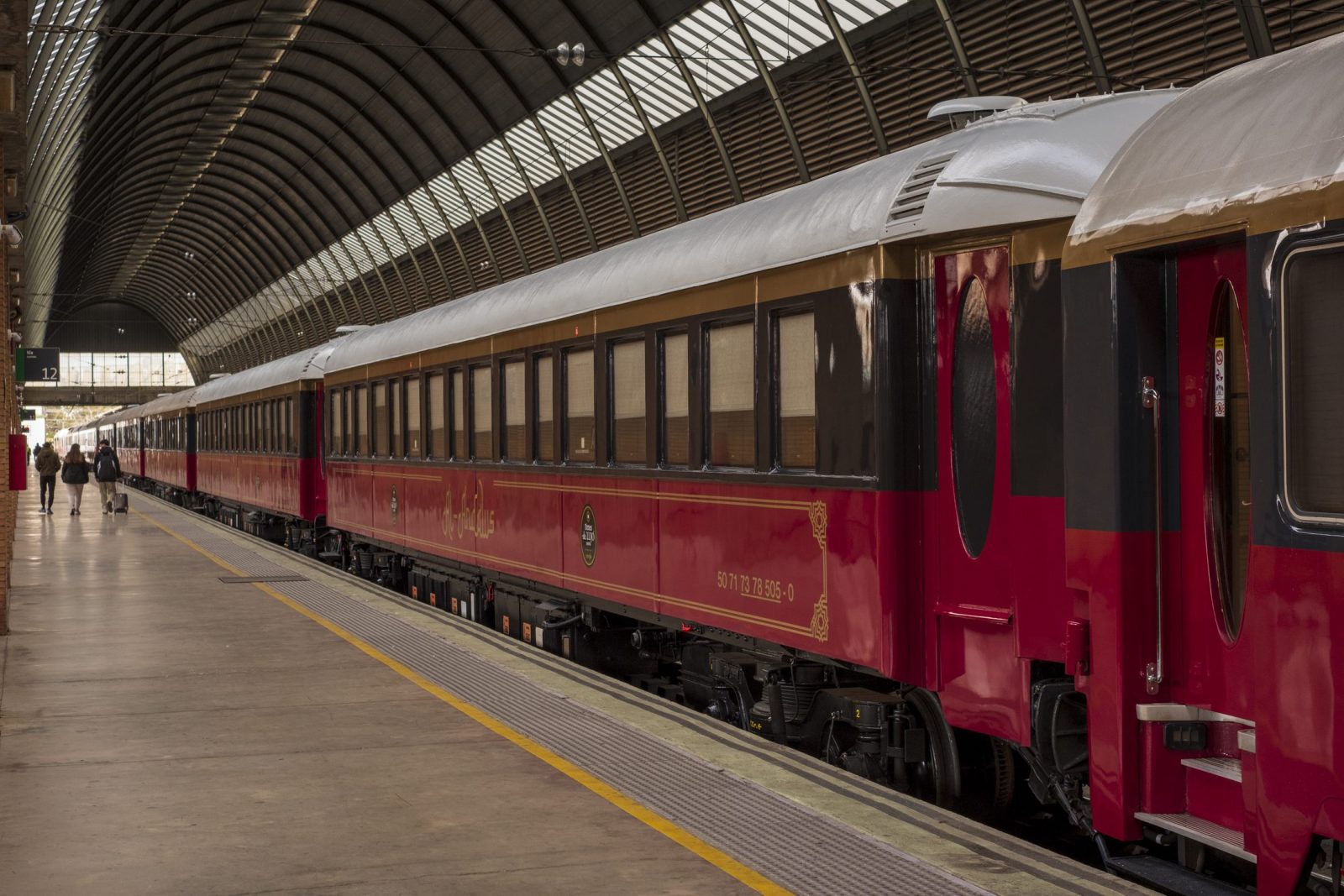
Seville is one of the signature stops on the Al Andalus luxury train, Palace Trains' vintage rail journey through southern Spain. Arriving by private train rather than airport transfer sets the tone for the city itself: unhurried, romantic, and steeped in history, with guests able to step off the restored 1920s carriages directly into the heart of old Seville.
Whether it is your first glimpse of the Giralda tower at sunset or a late-night sherry beside the Guadalquivir River, Seville rewards travellers who take their time — exactly the philosophy behind a luxury train journey through Spain.
- ✦Real Alcázar's Moorish royal palace and gardens
- ✦Seville Cathedral and the iconic Giralda tower
- ✦Flamenco born in the streets of Triana and Santa Cruz
- ✦Tapas culture centered on salmorejo, jamón, and sherry
- ✦Plaza de España's grand riverside architecture
- ✦A stop on the Al Andalus luxury train through southern Spain
- ✦Whitewashed lanes and orange-tree courtyards of the old town
Places to See in Seville
Seville Cathedral & the Giralda
The largest Gothic cathedral in the world, built atop a 12th-century mosque, houses Christopher Columbus's tomb and treasures in gold and silver. Climb the Giralda, the former minaret turned bell tower, for panoramic views over the city's terracotta rooftops.
Real Alcázar of Seville
A dazzling royal palace complex combining Mudéjar, Gothic, and Renaissance architecture, still used by the Spanish royal family today. Its intricate tilework, carved ceilings, and lush gardens made it a filming location for HBO's Game of Thrones.
Plaza de España
A monumental semicircular plaza built for the 1929 Ibero-American Exposition, ringed by a canal, ornate bridges, and painted ceramic alcoves representing each Spanish province.
Barrio Santa Cruz
Seville's former Jewish quarter, a labyrinth of narrow whitewashed lanes, hidden courtyards, orange trees, and wrought-iron balconies — perfect for aimless wandering between tapas stops.
Plaza de Toros de la Real Maestranza
One of Spain's oldest and most beautiful bullrings, an 18th-century landmark that offers museum tours even outside the bullfighting season.
Metropol Parasol (Las Setas)
A striking contemporary wooden structure in La Encarnación square, nicknamed "the mushrooms," with a rooftop walkway offering sweeping city views and, beneath it, Roman ruins on display.
Triana Neighbourhood
Across the river from the old town, the traditional home of Seville's ceramics workshops and flamenco culture, with a lively riverside market and authentic tablaos.
Casa de Pilatos
A 16th-century noble palace blending Spanish Mudéjar and Italian Renaissance styles, considered one of the finest examples of Andalusian aristocratic architecture.
Flamenco in Seville
As the art form's spiritual home, Seville offers intimate flamenco performances in traditional tablaos throughout the Santa Cruz and Triana districts, an essential cultural experience for every visitor.
Food & Gastronomy
Seville practically invented the modern tapas crawl, and its bars overflow with small plates meant for sharing over unhurried conversation. Wandering from bar to bar, ordering one or two dishes and a glass of local wine at each, is the quintessential Seville evening.
- Jamón ibérico — thinly sliced cured ham from acorn-fed Iberian pigs, served simply on its own or over toasted bread.
- Salmorejo — a thick, chilled tomato and bread soup, richer and creamier than gazpacho, typically garnished with hard-boiled egg and more jamón.
- Espinacas con garbanzos — a beloved Sevillian tapa of spinach stewed with chickpeas, cumin, and paprika, reflecting the city's Moorish culinary heritage.
- Cola de toro — slow-braised oxtail stew, a rich, deeply savory dish with roots in the city's bullfighting tradition.
- Pescaíto frito — an assortment of small fish and seafood lightly battered and fried, best enjoyed with a squeeze of lemon at a riverside bar.
- Sherry (Jerez wines) — from crisp, dry fino to sweet Pedro Ximénez, sherry from nearby Jerez de la Frontera is the traditional accompaniment to tapas.
- Torrijas — Seville's take on French toast, soaked in milk or wine, fried, and dusted with cinnamon sugar, especially popular around Easter.
For an immersive food experience, the Triana and Feria markets showcase Seville's produce, cured meats, and seafood, while the many terrace bars around the Alameda de Hércules and Plaza del Salvador fill up nightly with locals enjoying the mild Andalusian evenings.