Vienna is Europe's great imperial capital, a city where Baroque palaces, gilded opera houses, and centuries-old coffeehouses sit alongside the Danube in effortless elegance. For nearly a thousand years the seat of the Habsburg dynasty, Vienna carries its history lightly, wearing it in gracious boulevards, world-class museums, and a musical heritage that produced Mozart, Beethoven, and Strauss. It remains one of the most liveable cities on earth, compact enough to explore on foot yet layered with enough art, architecture, and cake shops to fill a week.
Arriving by luxury train only heightens the romance. The Danube Express Golden Eagle threads through Central Europe with Vienna as one of its signature stops, while the legendary Venice Simplon-Orient-Express counts the Austrian capital among the great cities on its classic Paris–Venice and Vienna routings, delivering guests in polished 1920s and '30s carriages to a city built for grand entrances. Stepping off the train into Vienna's ornate stations and onward to the Ringstrasse feels like continuing a journey that began in the golden age of European rail travel.
Whether it is a stop on a longer Central European itinerary or the highlight of a journey along the Danube, Vienna rewards travellers with imperial history, exceptional music, and a gastronomic culture built on coffee, pastry, and hearty Austro-Hungarian classics.
- ✦Schönbrunn Palace and its imperial gardens
- ✦St. Stephen's Cathedral in the historic centre
- ✦World-class opera at the Vienna State Opera
- ✦Klimt's The Kiss at Belvedere Palace
- ✦UNESCO-listed coffeehouse culture
- ✦Wiener Schnitzel and Sachertorte
- ✦Stop on the Danube Express Golden Eagle and Venice Simplon-Orient-Express
Places to See in Vienna
Schönbrunn Palace
The Habsburgs' vast summer residence, with 1,441 rooms, sweeping formal gardens, the Gloriette hilltop folly, and Europe's oldest zoo on its grounds. A UNESCO World Heritage Site and Vienna's most visited attraction.
Hofburg Palace
The former winter residence of the Habsburg emperors in the heart of the city, now home to the Imperial Apartments, the Sisi Museum, the Austrian National Library's ornate State Hall, and the Spanish Riding School.
St. Stephen's Cathedral (Stephansdom)
Vienna's Gothic centrepiece, instantly recognisable by its patterned tile roof and soaring south tower, standing at the symbolic heart of the old city.
Vienna State Opera (Wiener Staatsoper)
One of the world's leading opera houses, staging a different production almost every night of the season in a lavishly restored 19th-century auditorium.
Belvedere Palace
A Baroque palace complex housing Austria's finest art collection, including Gustav Klimt's iconic painting The Kiss, set among manicured gardens overlooking the city skyline.
Kunsthistorisches Museum
One of the great art museums of the world, with masterworks by Bruegel, Vermeer, Titian, and Raphael displayed inside a palatial 19th-century building.
Prater and the Wiener Riesenrad
Vienna's beloved public park, home to the historic 1897 Ferris wheel that has featured in films for decades and offers panoramic views over the city.
The Ringstrasse and Innere Stadt
The grand boulevard encircling Vienna's historic centre, lined with monumental 19th-century buildings including the Parliament, City Hall (Rathaus), and Burgtheater — best explored on foot or by vintage tram.
Naschmarkt
Vienna's liveliest market, stretching for half a mile with fresh produce, spices, street food stalls, and a lively weekend flea market.
Food & Gastronomy
Vienna's food culture runs on coffeehouse ritual and Austro-Hungarian comfort cooking. The Viennese coffeehouse, a UNESCO-recognised cultural institution, is where locals linger for hours over a Melange or Einspänner alongside a slice of cake and a newspaper — historic houses like Café Central, Café Sacher, and Café Demel are as much a sight as a meal.
The city's signature dish is the Wiener Schnitzel, a thin breaded and pan-fried veal cutlet served with parsley potatoes or potato salad, found on menus from humble Beisl taverns to grand dining rooms. Equally iconic is the Sachertorte, the dense chocolate cake layered with apricot jam that originated at the Hotel Sacher in 1832 and remains fiercely guarded by its original recipe.
- Tafelspitz — boiled beef simmered with root vegetables, a favourite of Emperor Franz Joseph, served with apple-horseradish and chive sauce.
- Kaiserschmarrn — a fluffy shredded pancake dusted with sugar and served with plum compote or stewed apple.
- Apfelstrudel — paper-thin pastry wrapped around spiced apples, raisins, and cinnamon, a Viennese classic since the Habsburg era.
- Wiener Würstchen — the classic Vienna sausage, best sampled at one of the city's late-night Würstelstand street stalls.
- Gulasch — a paprika-rich beef stew reflecting Vienna's deep culinary ties to Hungary and the wider Austro-Hungarian Empire.
Beyond the plate, Vienna is also a wine city: the Heurigen taverns of Grinzing and Nussdorf on the city's edge pour young local wine straight from the barrel alongside buffet-style Austrian fare, a tradition dating back centuries.
Luxury Trains That Visit Vienna
 Europe · Central Europe · Eastern Europe · Balkans
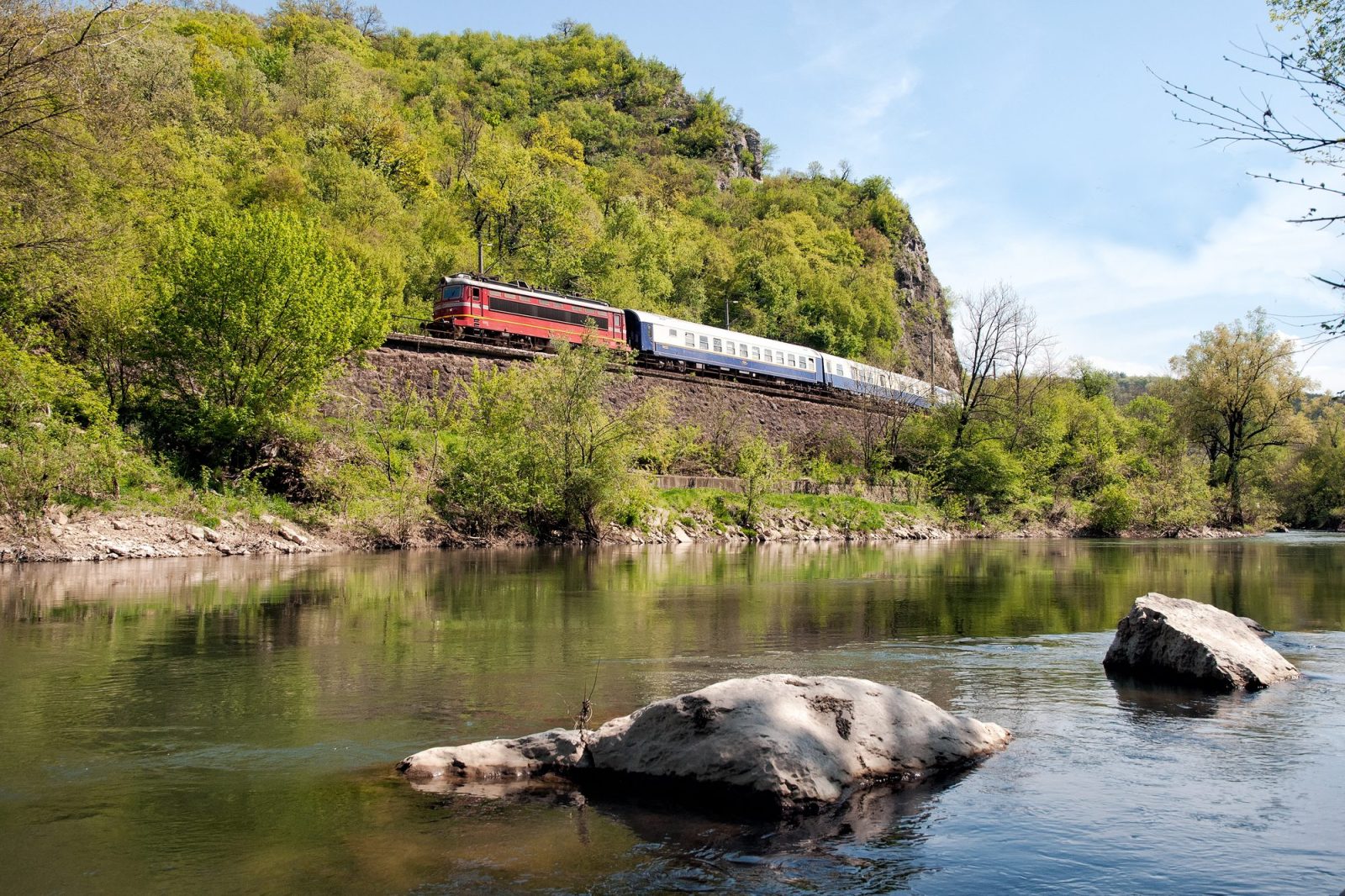
 Danube Express Golden Eagle
The Danube Express carries just 50 passengers through the heart of Central and Eastern Europe, combining elegant cabin accommodation, freshly prepared regional cuisine, and expert-guided excursions into some of the continent's most storied cities and landscapes.
 France · Italy · Austria · Germany · Belgium · England · Hungary · Romania · Turkey · Europe
 Venice Simplon-Orient-Express
Step aboard the Venice Simplon-Orient-Express and enter a living legend — a lovingly restored Art Deco masterpiece gliding between Europe's greatest cities. From Paris to Venice, Budapest to Istanbul, each journey is a celebration of the golden age of rail travel.