For most of the first century after it opened, the only railway between Tyrol and Vorarlberg ran through a single bore under the Arlberg massif, and the first locomotives that hauled trains through it filled that bore with sulphuric acid vapour. Enginemen were reported to lie on the cab floor to find air they could breathe. The tunnel opened in September 1884 at 10,216 metres, and it was the longest railway tunnel in Austria for more than a century.
The Arlberg line is a useful case study because its difficulties were not only mechanical. It took a parliamentary fight of roughly a decade to approve, it cost the lives of workers whose numbers reshaped the villages around the portals, and it was still being corrected more than a century later. Read closely, it shows how a railway through the Alps was actually made, and why the air inside a tunnel mattered as much as the rails.
A railway argued over for decades
The idea of a railway over the Arlberg is older than the trains that eventually ran on it. Regional histories place the first plans in the 1840s, when Carl Ganahl, an industrialist from Feldkirch who was president of the chamber of commerce, began pressing for a line linking Vorarlberg with Tyrol. Concrete planning of the route began only in the 1860s, helped by the completion of the Vorarlberg Railway from Lindau to Bludenz. What followed was a parliamentary struggle of about eight years in which one route after another was proposed and dropped before engineers settled on a tunnel between Langen and St. Anton.
The sources do not agree on the exact date of the final authorisation. Wikipedia gives 16 May 1880 as the day construction was authorised, while another summary of the process gives 7 May for the Emperor's signature. Both put the approval in 1880, and work began at both ends of the summit section in June of that year.
Why a tunnel and not a pass
The Arlberg railway runs 136.6 kilometres from Innsbruck to Bludenz, and it breaks down into four very different engineering problems. There is a 72.8-kilometre valley section from Innsbruck to Landeck, a 27.7-kilometre eastern ramp climbing from Landeck to St. Anton, a 10.3-kilometre summit section between St. Anton and Langen, and a 25.8-kilometre western ramp down to Bludenz. The tunnel is the summit section, the point where the railway stops going over the mountain and goes through it. Everything else in the design exists to bring trains up to the portals and send them down the far side.
The engineer who did not see the finish
The construction director was Julius Lott, born in Vienna in 1836. He died in 1883, about a year and a half before the work was complete. Regional sources record that he died of tuberculosis. A suicide story is often repeated in accounts of the line, and the record does not support it. The pilot tunnel broke through on 19 November 1883, well ahead of the planned schedule, so the project was moving faster than its troubles might suggest even as the man in charge of it was ill.
Building under the mountain
Construction reshaped the valleys around it. Regional records put the peak workforce on the Langen side of the tunnel at 2,689 men in October 1883, and 4,829 men on the western ramp between Langen and Bludenz in June 1884. The village of Klösterle had 526 residents in 1869, a decade before work began. A separate workers' settlement of residential buildings and barracks went up at Langen, and in Stuben, Klösterle and Danöfen whole families of workers were housed in private accommodation. The tunnel itself is built of natural stone masonry, using limestone, gneiss and mica schist from the massif. The line was costed at 35.5 million gulden.
The problem of the air
The most instructive part of the Arlberg story begins after the first trains ran. The tunnel had been built with room for a second track, because its engineers expected heavier traffic than a single line could carry. The traffic arrived quickly, and the second track was operating by 15 July 1885. The bigger problem was the air. Steam locomotives working in a long bore with little ventilation filled the upper part of the tunnel with sulphuric acid vapour, and crews learned to lie on the floor to breathe. Protective equipment was issued, but the problem was not properly resolved until electric traction arrived in the 1920s. For some four decades, then, the line's most serious operating hazard was not the mountain or the snow but the locomotives themselves.
A tunnel that outlasted its first design
For more than a century the Arlberg Tunnel was the only railway connection between the two Austrian provinces of Tyrol and Vorarlberg. By 2009 as many as 90 trains a day used the route on busy days, and several million tonnes of freight passed through in a year. The speed limit inside the tunnel is 100 kilometres per hour. In the 1970s a road tunnel was built alongside it, with a minimum of 150 metres between the two busy bores. In 2001 a new station at St. Anton opened and the rail tunnel was extended by 434 metres to the east. A safety programme costing 210 million euros followed in the 2000s. It added seven escape passages linking the rail tunnel to the road tunnel, a water supply for firefighting, emergency telephones and radio, and lowered track bed to expand the loading gauge. The renovated tunnel returned to service in late 2010.
The key dates, in order:
- 1840s: the first plans for a railway across the Arlberg are drawn up, with Carl Ganahl among the most vocal supporters.
- 1880: imperial approval is given for the Innsbruck to Bludenz line, and work starts at both ends of the summit section in June.
- 19 November 1883: the pilot tunnel breaks through, earlier than planned.
- 20 September 1884: Emperor Franz Joseph takes the ceremonial inaugural ride.
- 21 September 1884: regular services begin.
- 15 July 1885: the second track is operational.
- 1920s: electric traction ends the sulphur-vapour problem.
- Late 2010: the renovated tunnel returns to service.
Where to see Alpine rail engineering today
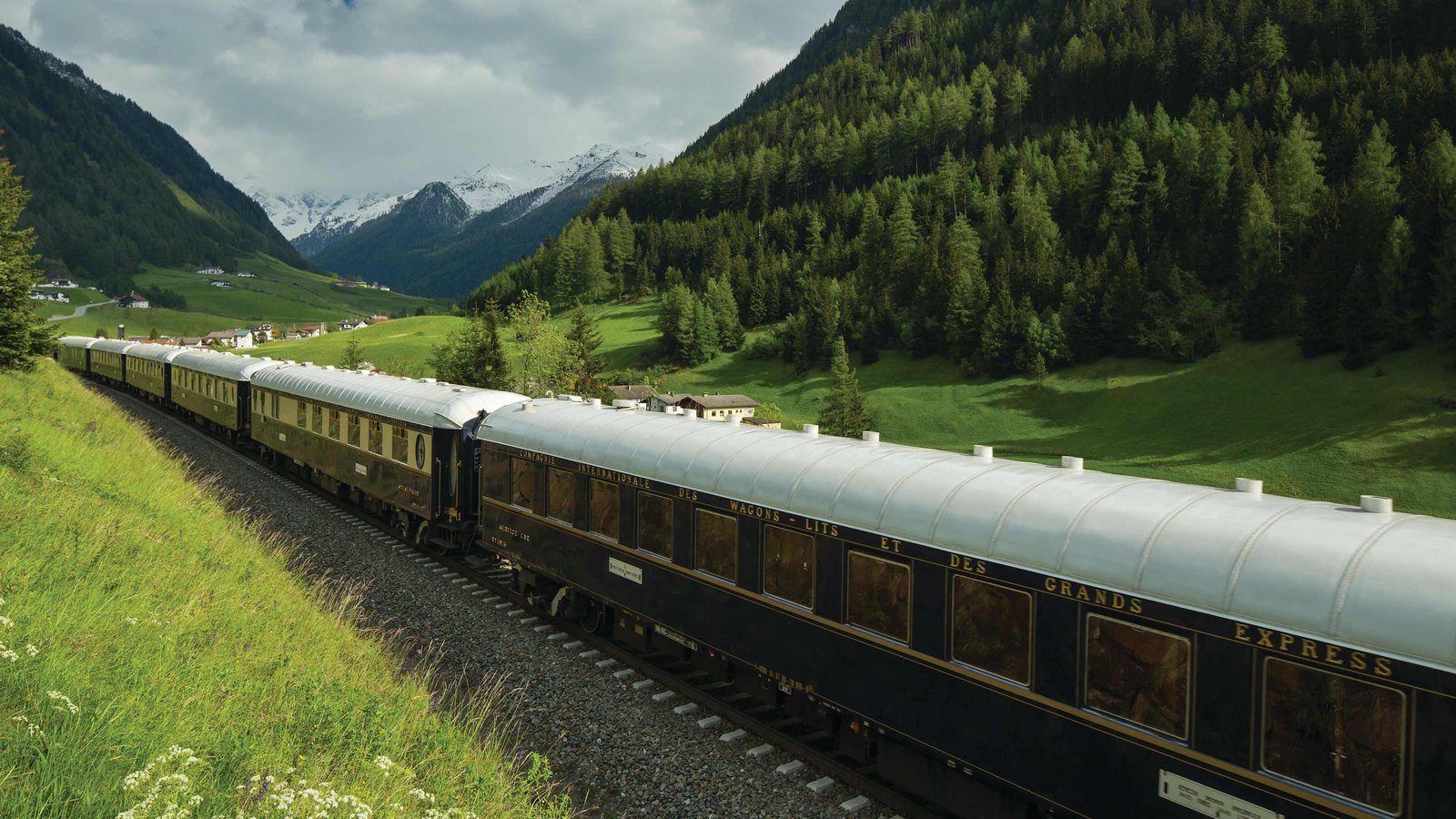
The Arlberg is a working railway, and its story is best read as a piece of infrastructure history rather than as a guide to the luxury trains that now run through central Europe. Readers who want to understand how mountain railways were engineered at the same period should start with the Simplon Tunnel and the Orient Express route, which tells a parallel story of a different Alpine crossing. The Golden Eagle Danube Express covers the central European corridor that the Habsburg railways were built to serve, and Vienna, the imperial capital whose parliament approved the Arlberg line, is a natural place to begin. For a different kind of high-altitude railway, the railway at 4,000 metres in the Peruvian Andes shows the same tension between engineering ambition and the people who had to build it. For a broader view of how these trains are chosen, the Palace Tours journal and the full train collection are the places to continue.