Caspian Odyssey
Yerevan - Lake Sevan - Tbilisi - Gori - Uplistsikhe - Mtskheta - Baku - Khiva - Bukhara - Samarkand - Tashkent - Lake Issyk-Kul - Almaty
The Caspian Odyssey takes the long way into Central Asia, and is the better for it. It opens in Armenia, among churches cut into the rock and a pagan temple above a gorge, crosses into Georgia for its wine estates, its cave city and its polyphonic song, and spends three nights beside the Caspian in Baku before a private flight carries the group east to Khiva.
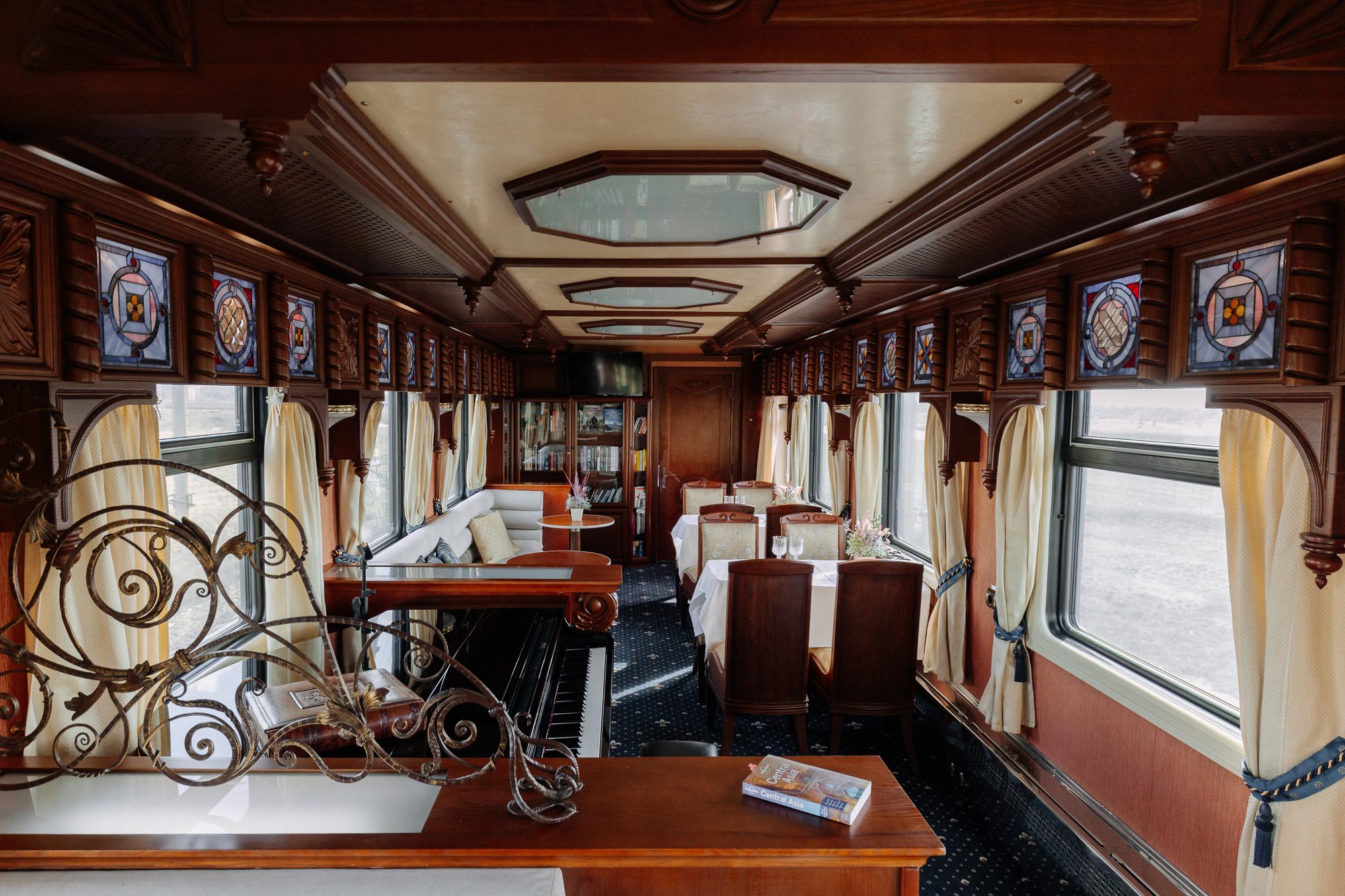
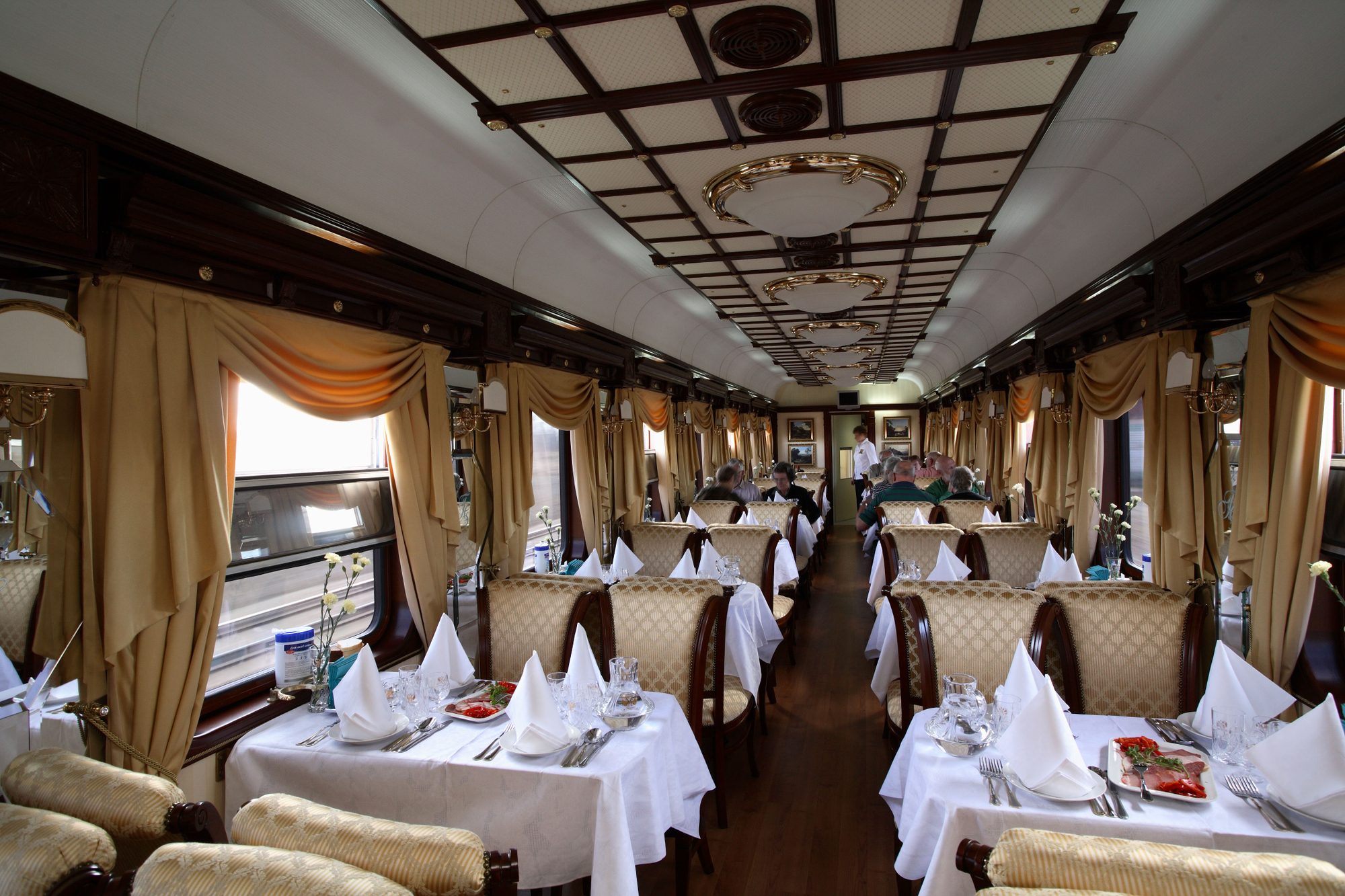
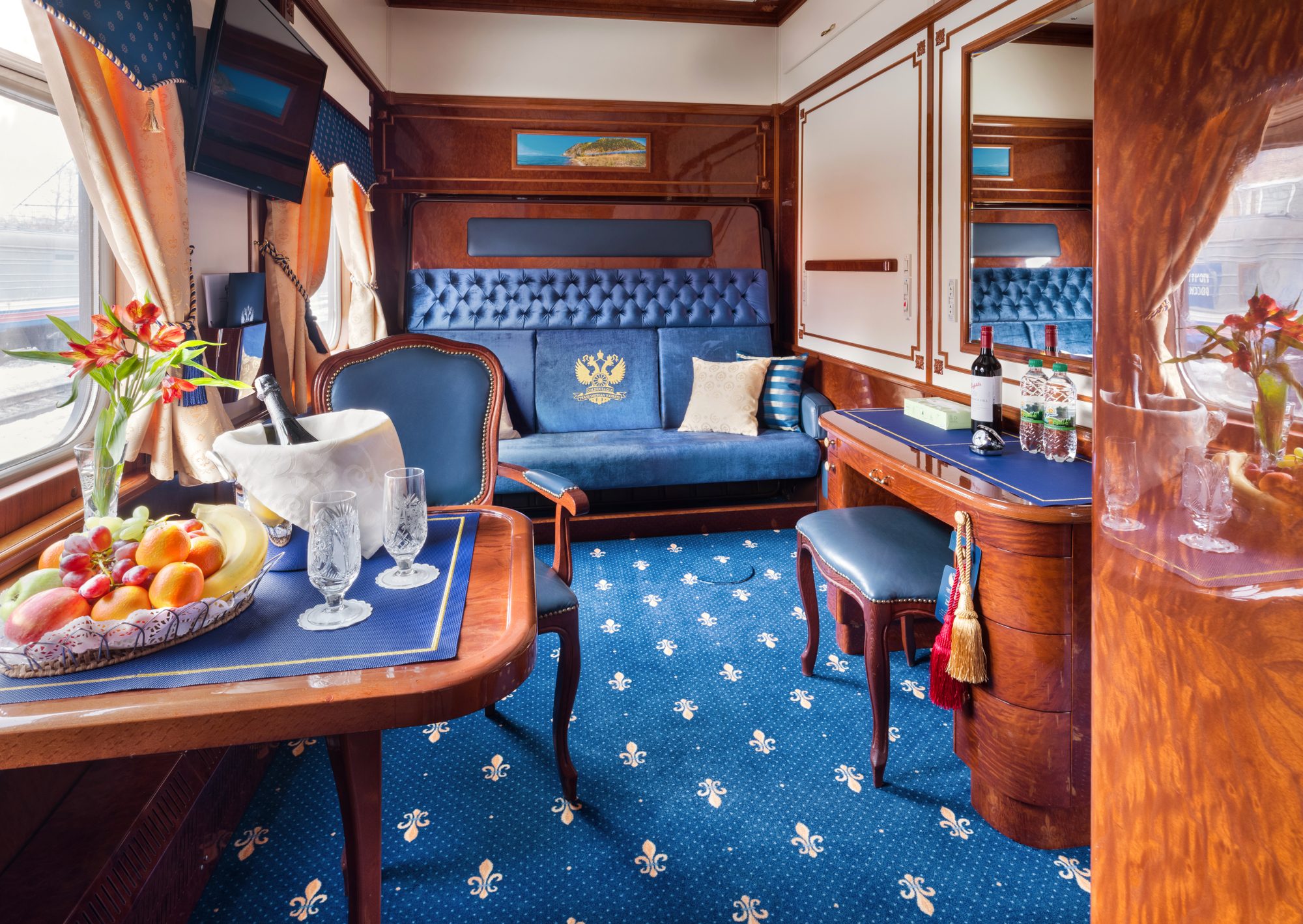
From there the Golden Eagle takes over. Bukhara, Samarkand and Tashkent follow one after another, then a slower day on board through the Uzbek countryside into Kyrgyzstan, a private festival of nomad games on the shore of Lake Issyk-Kul, and a last morning in Almaty. Six countries in sixteen days sounds like a rush; the balance between hotel nights and train nights is what keeps it from being one.
- ✦Geghard Monastery and the temple at Garni
- ✦A private performance of Georgian polyphonic singing
- ✦Dinner at Villa Petrolea, the Nobel brothers' Baku mansion
- ✦Registan Square after dark for the light show
- ✦A private nomad games festival at Lake Issyk-Kul
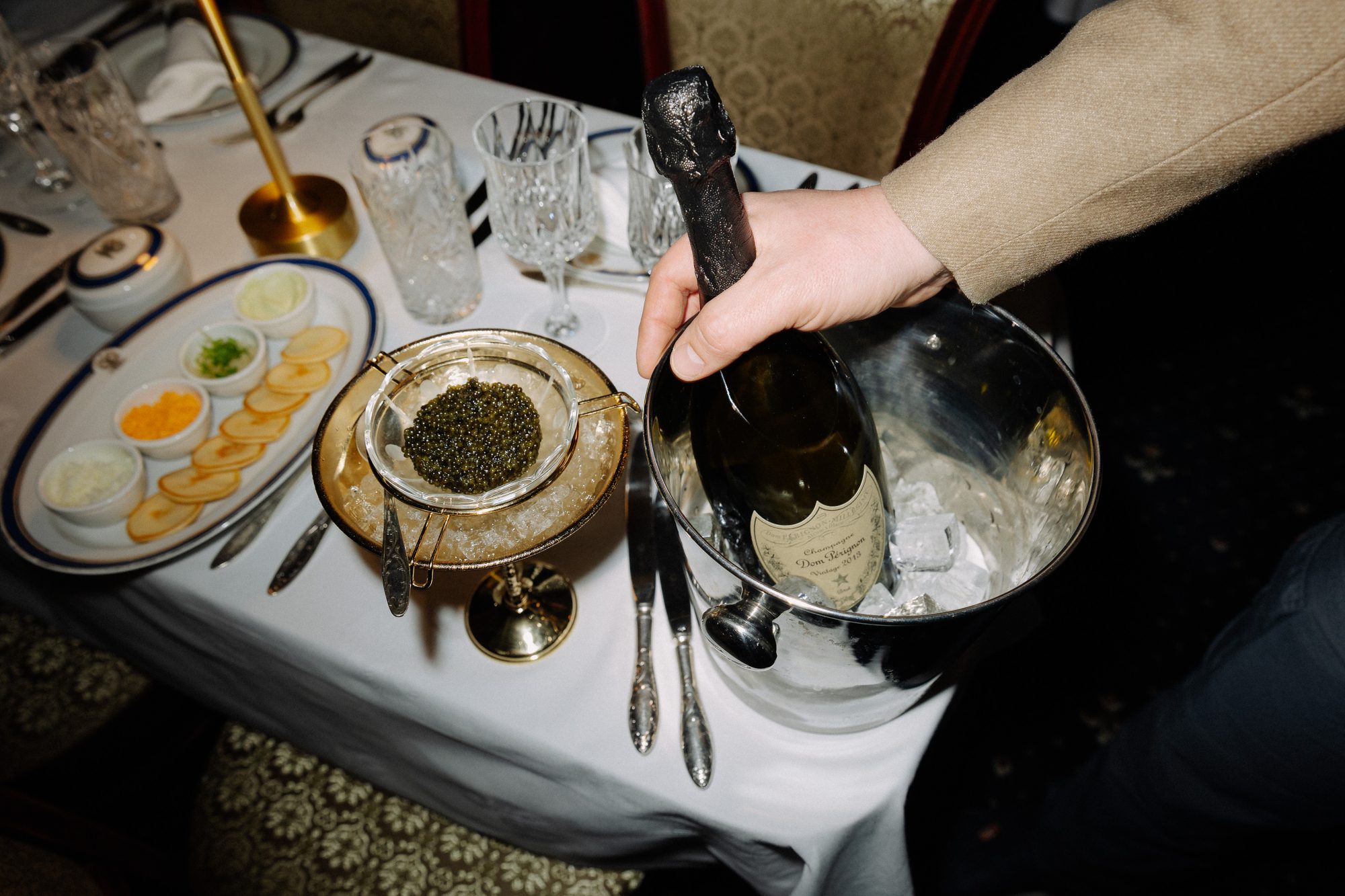
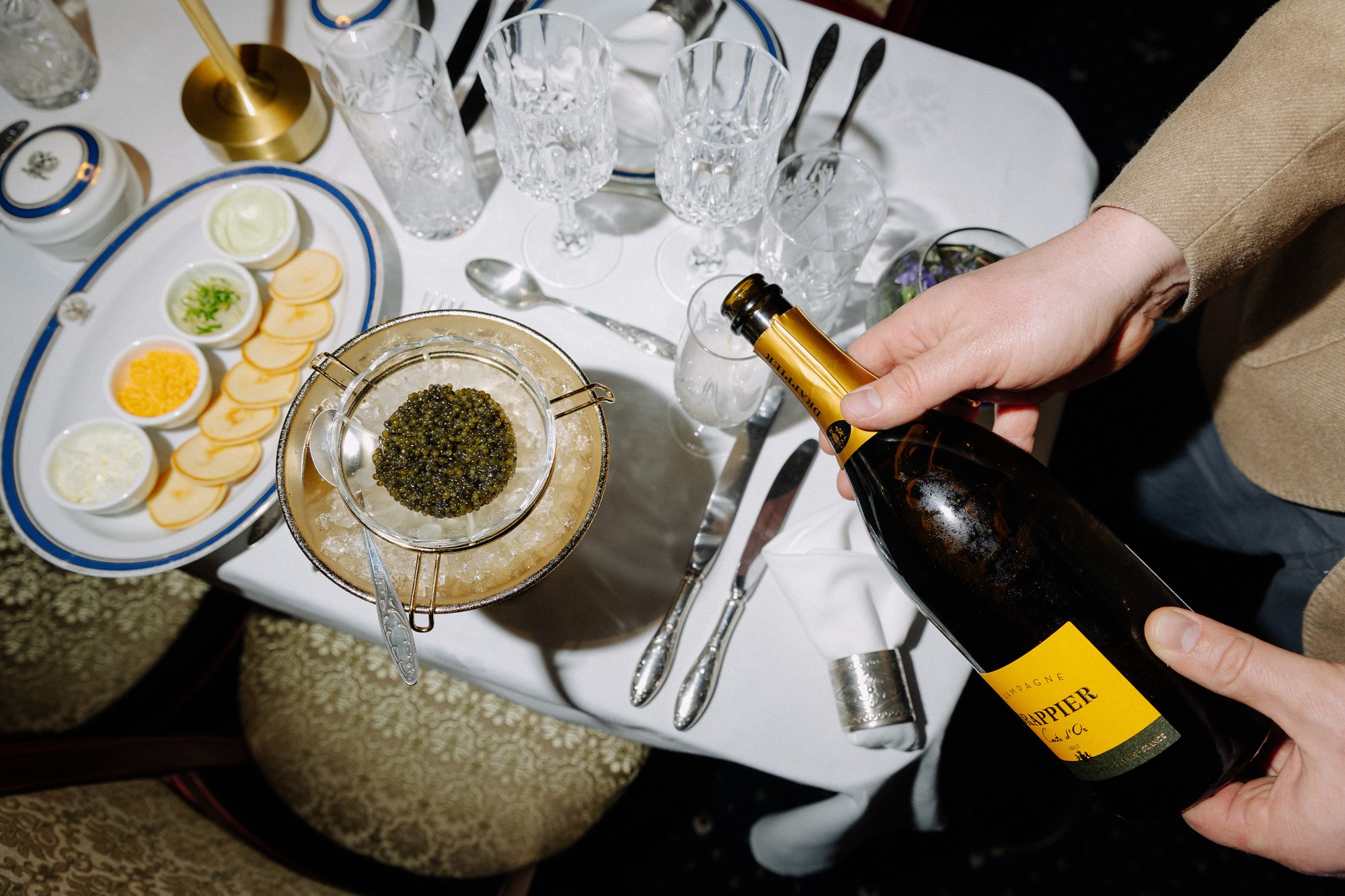
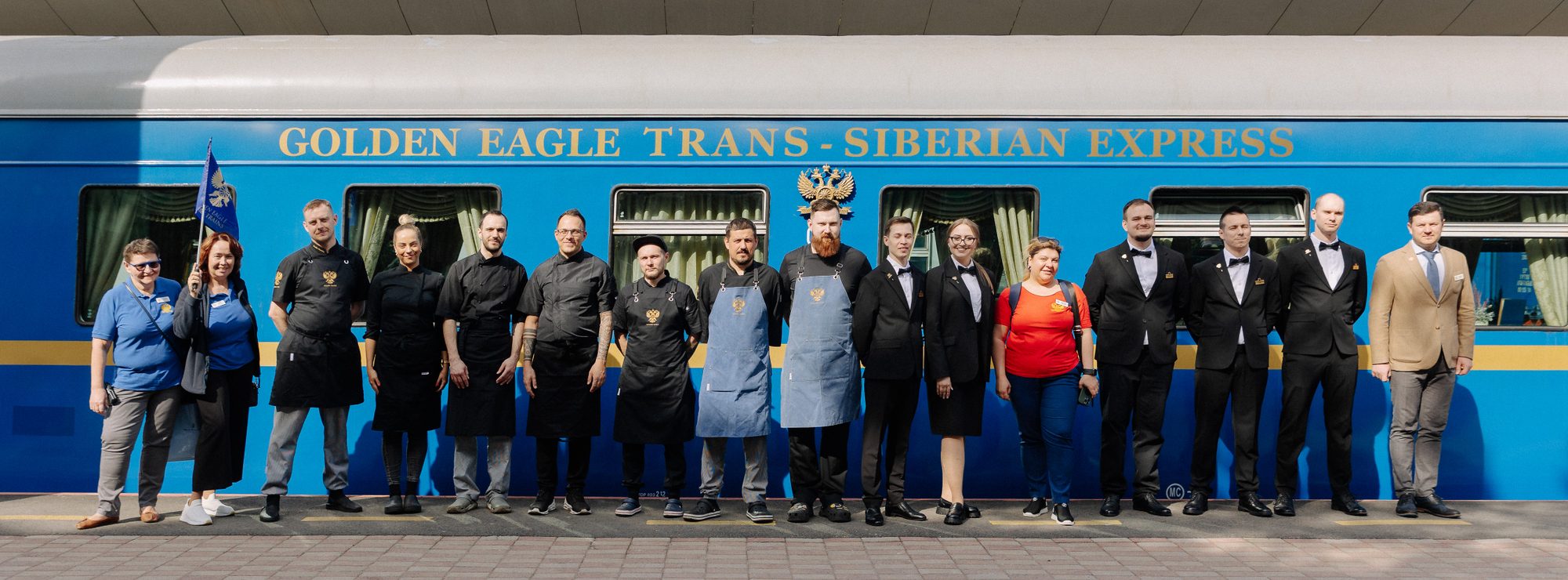
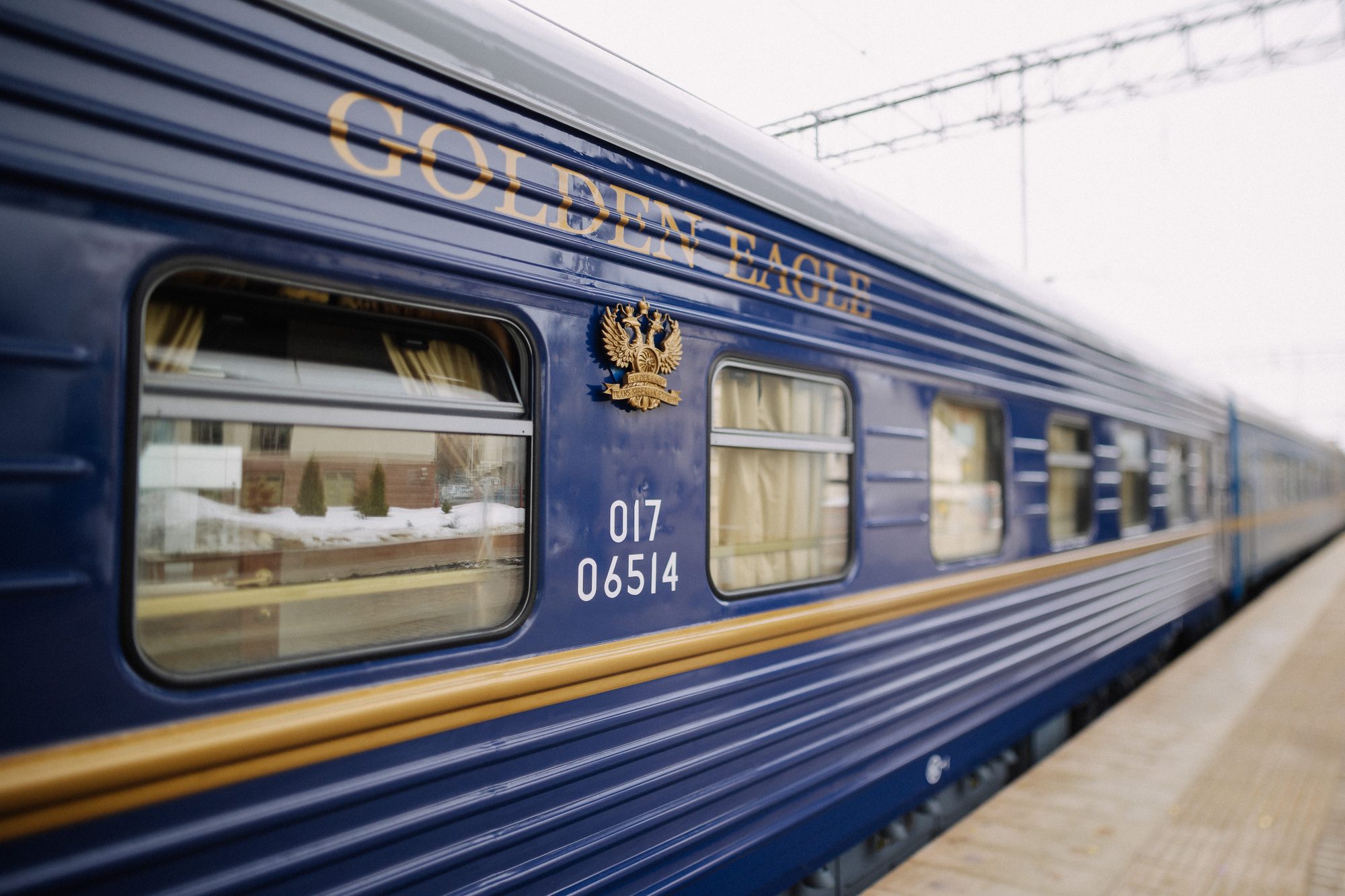
Scenes from the Journey
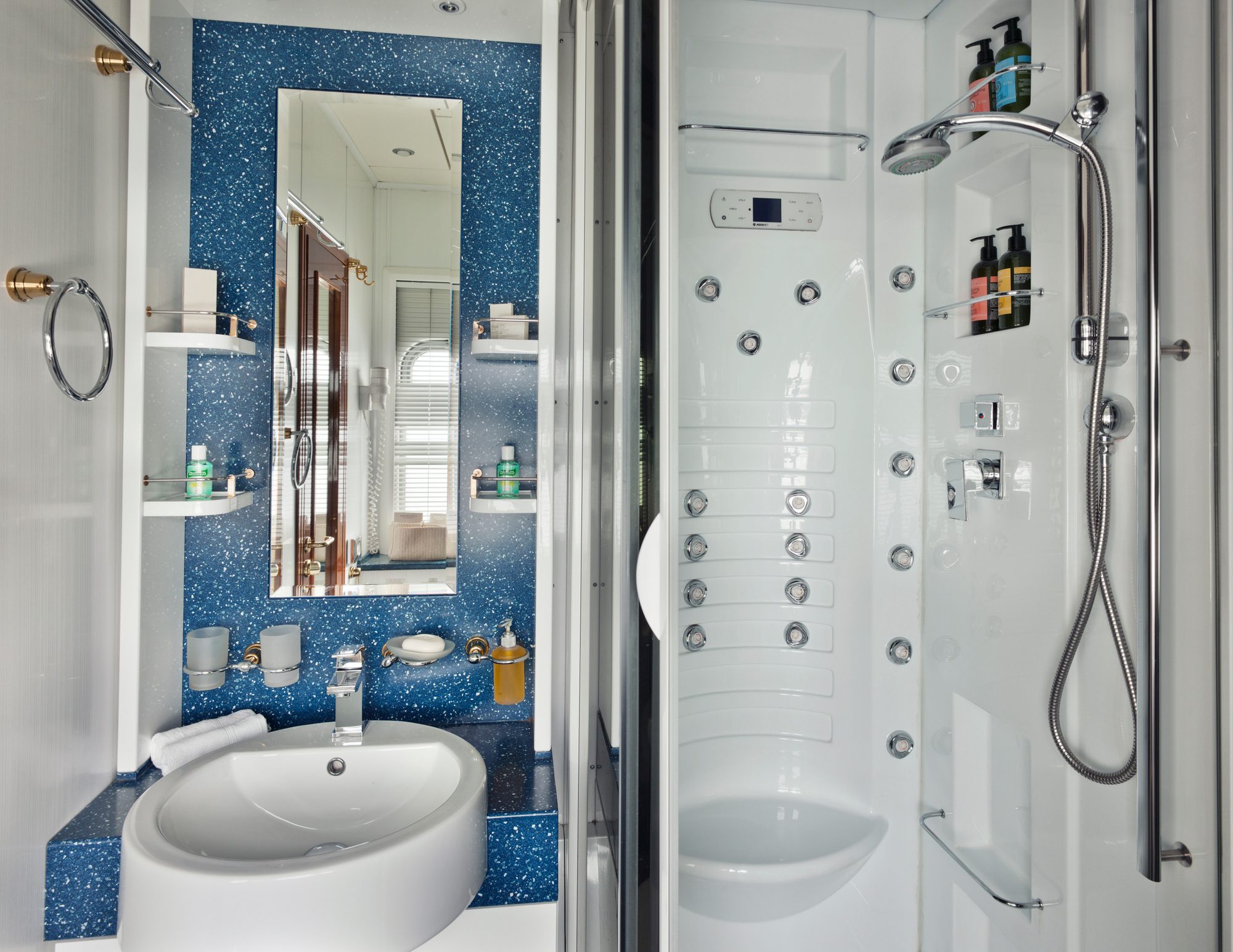
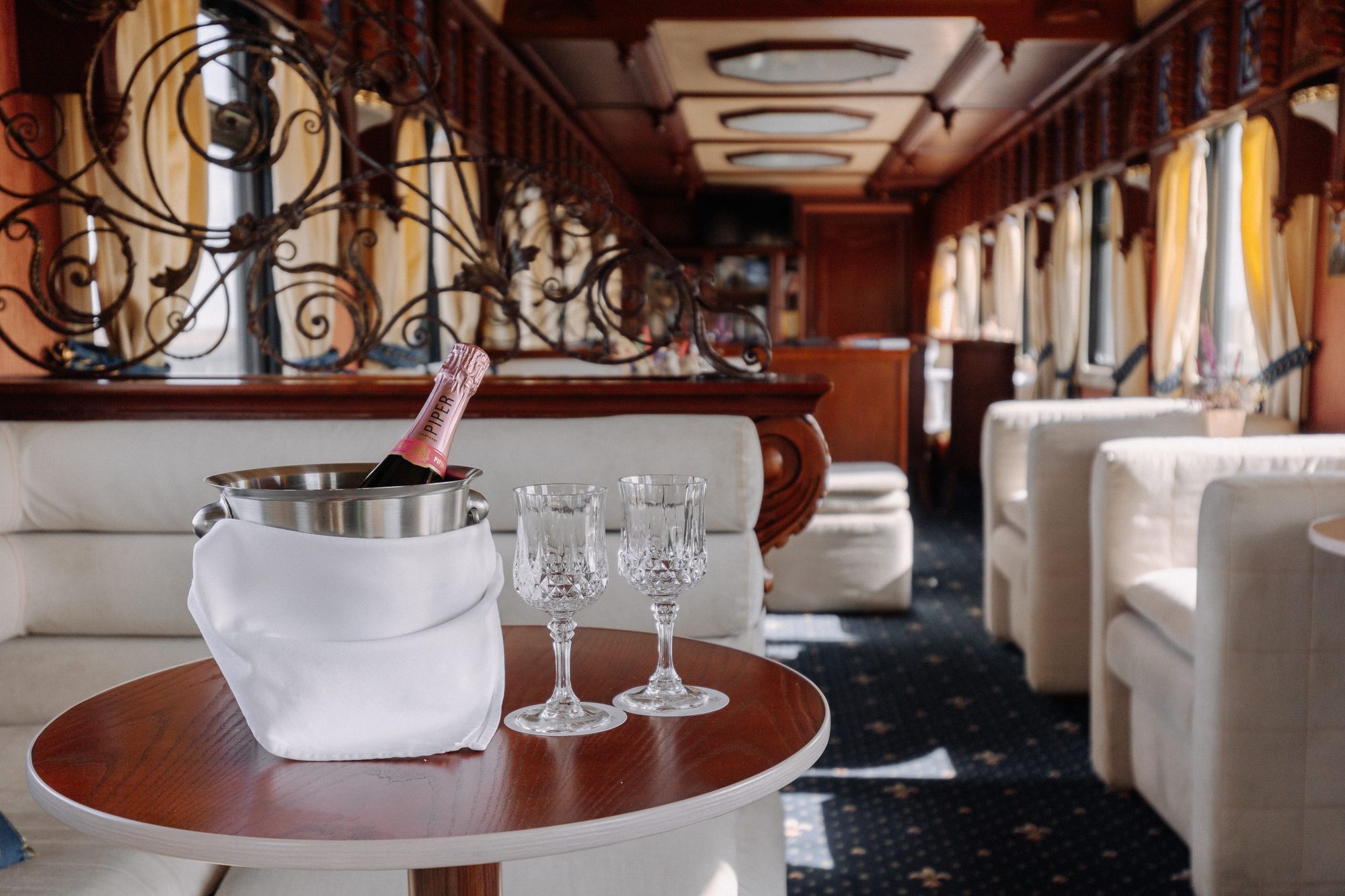
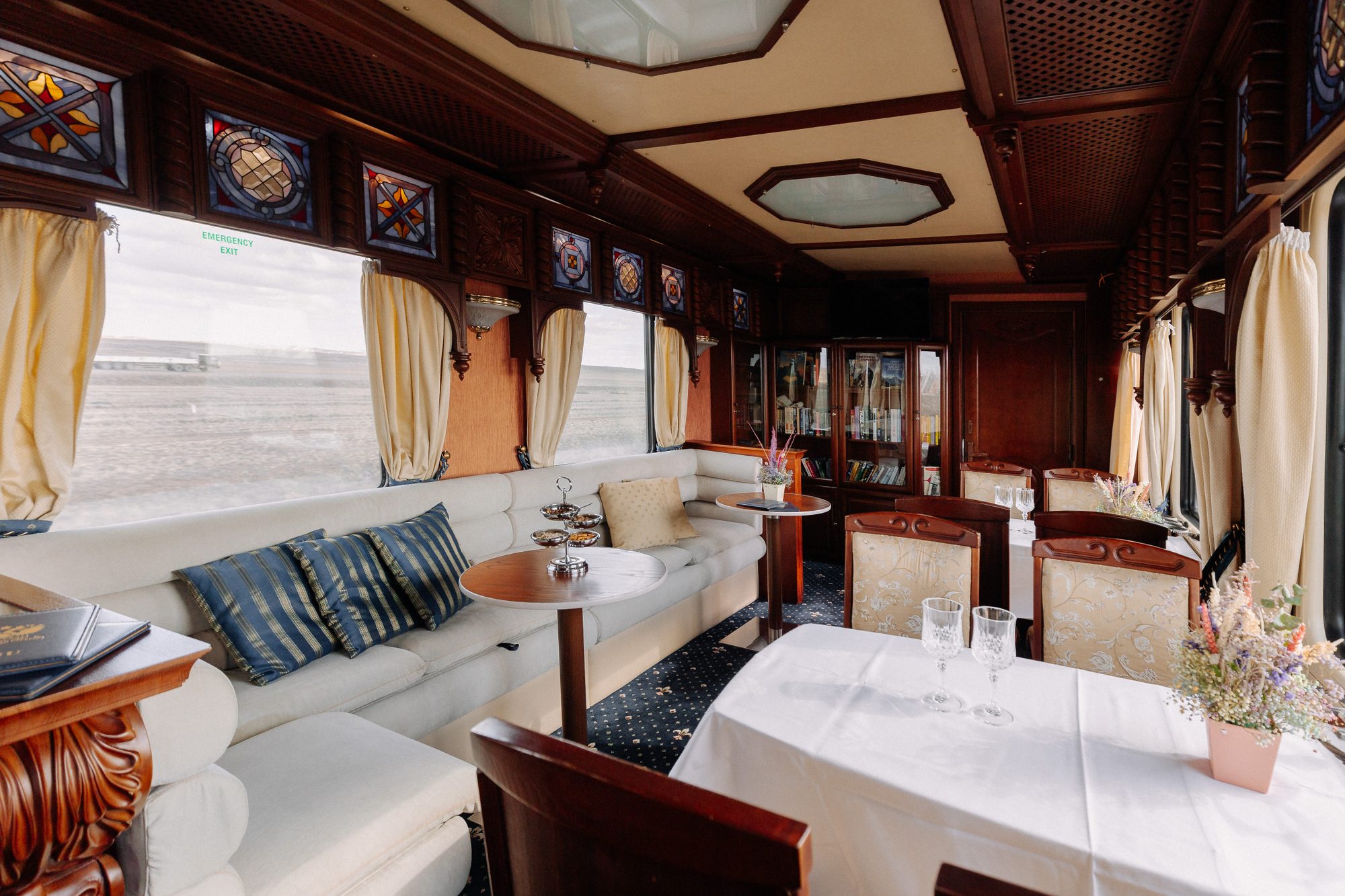
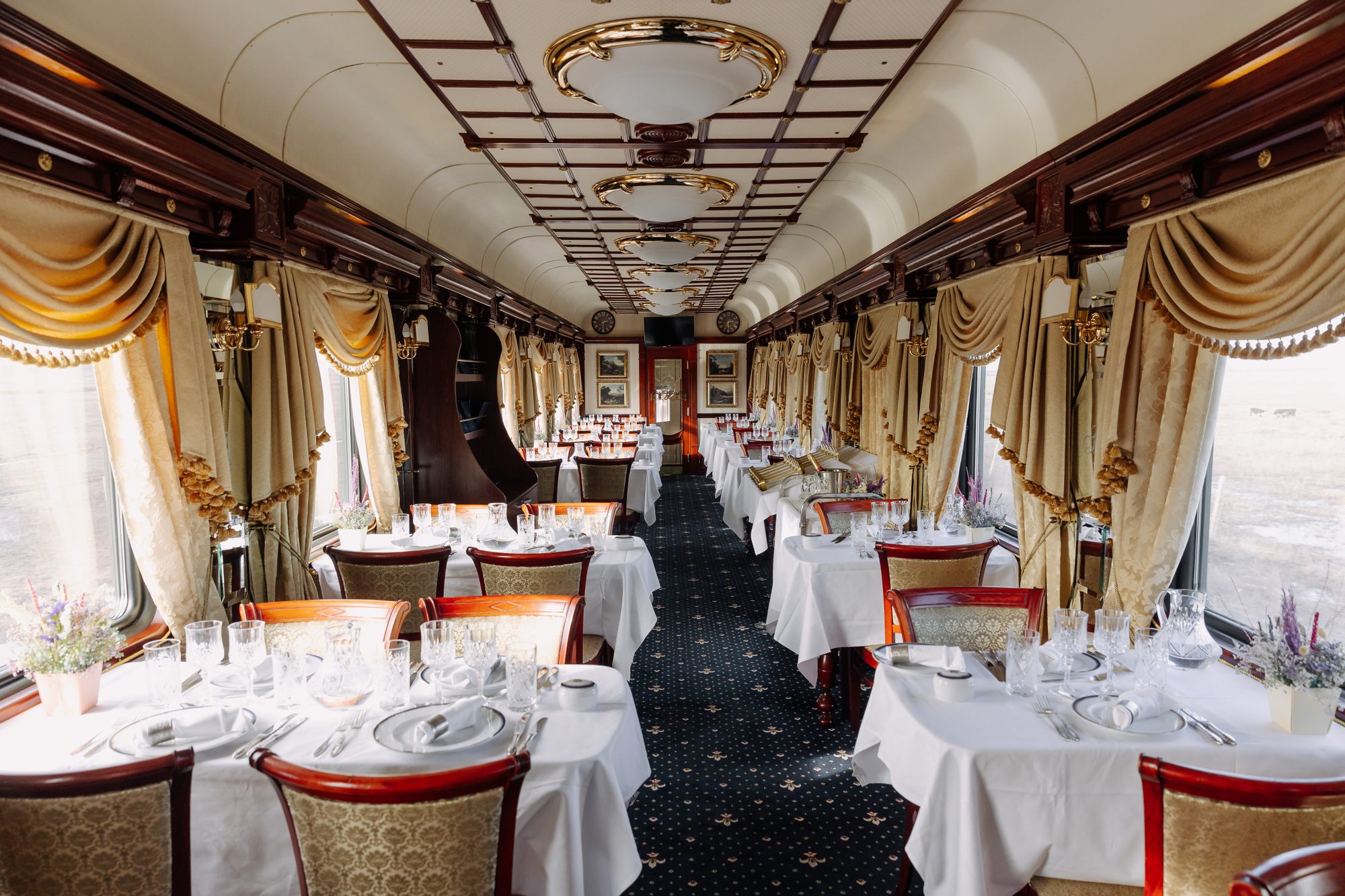
Day-by-Day Itinerary
Day 1 — Yerevan, Armenia
You are met at Yerevan International Airport and driven to the five-star Alexander Hotel, a Luxury Collection property in the historic quarter whose facade goes back to the 18th century; it is home for two nights. If you arrive early, an afternoon Freedom of Choice visit goes to Etchmiadzin, mother church of the Armenian Apostolic Church, built in 301 AD and considered the oldest cathedral in the world. Its Treasury Museum keeps relics that include pieces of the True Cross, a fragment of Noah's Ark and the Holy Spear. The afternoon continues to Zvartnots, a 7th-century cathedral of unusual circular plan and a UNESCO World Heritage Site, and to the Tsitsernakaberd Memorial, completed in 1967 in memory of the 1.5 million Armenians killed in the genocide. In the evening the group meets over a welcome dinner in a local restaurant.
Day 2 — Yerevan: Geghard and Garni
Mount Ararat, across the border in Turkey, fills the horizon over Yerevan. The city was settled as early as 6,000 BC, the fortress of Erebuni was raised here in the 8th century BC, and after centuries of changing hands between Turks and Persians it passed to Russia in 1827, becoming capital of Soviet Armenia in 1920 and, once the Soviet Union had gone, of independent Armenia. Today's touring heads 37 km (23 miles) out of the city to Geghard Monastery, a group of churches and tombs partly carved into the rock beneath the cliffs at the head of the Azat Valley. Then Garni, a 1st-century temple to the sun god Mitra, with the remains of a fortress, palace and baths around it; lunch is taken there. In the evening the Armenia Wine Company, close to Yerevan, opens its cellars and museum for a walk through the country's winemaking history, a tasting of its premium wines and dinner.
Day 3 — Yerevan, Lake Sevan and Tbilisi
The morning starts at The Cascade, a vast limestone stairway with open views over central Yerevan to Ararat, and a short visit to the Cafesjian Museum of Modern Art inside it. Then the road leaves the city for Lake Sevan and lunch by the water. With Lake Van and Lake Urmia it was one of the three great lakes of historic Armenia, the Seas of Armenia, and it is the only one inside the modern republic. The afternoon drive runs through Dilijan, a spa town known for its forests and mineral water, with a coffee and brandy stop at the Avan Dzoraget Hotel in the wooded hills of the Caucasus, before crossing into Georgia at Bagratashen. You reach Tbilisi in the evening and check in to the Paragraph Freedom Square, a Luxury Collection Hotel, for three nights.
Day 4 — Tbilisi, Georgia
Tbilisi runs for 27 km (17 miles) along the River Kura, hemmed in by the Surami Range, and for all the wars and fires it has survived, the old town keeps its original web of narrow, winding lanes. The touring takes in the 13th-century Metekhi church, part of the old royal residence, and Sioni Cathedral, Tbilisi's principal church, founded in the 5th century, before a walk through the Old Town. Lunch is at the Chateau Mukhrani wine estate, with the afternoon given to tasting its wines. Dinner tonight is in a local restaurant, with a performance of traditional Georgian dance.
Day 5 — Gori, Uplistsikhe and Mtskheta
Gori, founded in the 7th century AD as Tontio, is best known as Stalin's birthplace; the small house where he was born in 1879 stands under a canopy beside the columned museum built in his name, with his private railway carriage alongside. If you would rather not, a local ceramics museum devoted to the potter George Tatulashvili is the alternative. Uplistsikhe is older by far: a cave city from the 6th century BC, carved into a rock plateau above the Mtkvari, with great halls, street-like corridors, pagan shrines and the remains of Georgia's oldest theatre. It held out until the 13th century, when the forces of Khulagu, son of Genghis Khan, finally took it and its 5,000 inhabitants were lost. The day includes a private performance of Georgian polyphonic singing, and ends at Mtskheta, the old capital, a UNESCO World Heritage Site since 1994.
Day 6 — Tbilisi to Baku, Azerbaijan
A morning at the Janashia State Museum of Georgia, whose gold filigree work goes back to the 6th century BC, then more of the Old Town: Gabriadze's Clock Tower, Baratashvili Street and the Anchiskhati Basilica. After lunch in a local restaurant, a private jet makes the short flight to Baku, where you stay three nights at the Four Seasons.
Day 7 — Baku
Baku curves around its bay on the western shore of the Caspian, sheltered by the islands of the Baku Archipelago and the Apsheron Peninsula, and its wealth has long come from oil. Its heart is the walled Old Town, Icheri Sheher, whose walls were strengthened after the Russian conquest of 1806. Inside are the 27 m (90 ft) Maiden Tower of the 12th century, the Palace of the Shirvanshahs, now a museum with parts dating from the 11th century, and the Synyk-Kala minaret and mosque of 1078-79. You see them first by coach, then on foot. After lunch the afternoon is free — the Carpet Museum and the National Museum are both close by. In the evening, Villa Petrolea: the mansion the Nobel brothers built in the early 1880s during Baku's first oil boom, now a museum, with a guided tour followed by champagne, canapes and dinner inside.
Day 8 — Baku: Gobustan
This morning goes 64 km (40 miles) down the Caspian shore to Gobustan, a UNESCO-listed landscape of more than 6,000 prehistoric rock engravings, with the remains of inhabited caves, settlements and burials. Lunch looks out over the sea. Back in the city, the afternoon is free, or you can visit a Zoroastrian temple, before dinner at the Four Seasons.
Day 9 — Khiva, Uzbekistan
After breakfast a private plane crosses the Caspian to Urgench, for Khiva. Founded some 2,500 years ago where the routes from Mongolia, Russia, China and Persia met, Khiva became one of the most important trading posts on the Silk Road and is now a World Heritage Site. It rises out of the desert as a walled city, with its mosques, madrassas, bazaars and minarets packed inside the walls.
Day 10 — Bukhara
Bukhara was largely restored with UNESCO support for its 2,500th anniversary in 1999. The centrepiece is The Ark, the fortress-residence of the Emirs who ruled here, harshly, until Soviet times. Then Poi-Kalyan Square and the Kalyan Mosque, with its pillared, domed galleries and deep niches, the covered Trading Domes, and Lyabi-Hauz Square, gathered round its pool under the mulberry trees and tea rooms. Weather permitting, the evening ends with a barbecue on the station platform before the train pulls out.
Day 11 — Samarkand
Samarkand was founded in the 6th century BC and reached its height between the 14th and 17th centuries as the capital of Timur and his successors, which is the architecture you come to see. The touring covers Registan Square, the Bibi Khanum Mosque and the Ulugh Beg observatory of 1428, one of the earliest in the Islamic world. After dark you return to the illuminated Registan for a light show on the city's history, watched from front-row seats.
Day 12 — Tashkent
Uzbekistan's capital was rebuilt after the earthquake of 1966, and much of it is Soviet in style. The Old Town still has its narrow streets of traditional houses and religious buildings, and in a small library there you are shown one of Islam's most sacred relics — the world's oldest Koran. The day ends at the Museum of Applied Arts.
Day 13 — On board the Golden Eagle
A slower day as the train crosses the Uzbek countryside and the border into Kyrgyzstan. Your Tour Leader hosts a question-and-answer session on the region, and the culinary team runs a masterclass on the cooking you have been eating.
Day 14 — Lake Issyk-Kul, Kyrgyzstan
An extended visit to Issyk-Kul, the second largest alpine lake in the world, ringed by snow-capped peaks. Its name means warm lake, because its depth, its minerals and geothermal activity beneath it stop it from freezing. On the shore a cultural festival is arranged for the group alone: steppe sports and games passed down through generations — archery, horseback wrestling, hunting with golden eagles and ordo, a strategy game played with animal bones — with music, dance, costume and craft demonstrations. There is an optional visit to the open-air Museum of Petroglyphs afterwards, then the farewell dinner on board as the train travels overnight to Almaty.
Day 15 — Almaty, Kazakhstan
The train reaches Almaty in the morning and you leave the Golden Eagle. A tour of the city includes Panfilov Park at its centre and the Zenkov Cathedral, a 19th-century Russian Orthodox church built entirely of wood. Tonight is spent at the Ritz-Carlton, Almaty, or similar.
Day 16 — Almaty
After breakfast, a transfer to Almaty Airport for your flight home. Extra nights in Almaty, or in Yerevan before the journey, are easily arranged.
Destinations & Highlights
- Yerevan — Armenia's capital under Mount Ararat, with Geghard and Garni within reach.
- Tbilisi — The Georgian capital on the Kura, its old town still a web of winding lanes.
- Uplistsikhe — A cave city carved into rock from the 6th century BC, with Georgia's oldest theatre.
- Baku — The walled Old Town, the Maiden Tower and the Nobel brothers' Villa Petrolea.
- Khiva — A complete walled city and World Heritage Site, reached by private flight.
- Bukhara — The Ark, the Kalyan Mosque and a barbecue on the station platform.
- Samarkand — Registan Square by day and again after dark for the light show.
- Lake Issyk-Kul — A private festival of nomad games beside the second largest alpine lake.
Caspian Odyssey: Your Questions Answered
How is the Caspian Odyssey divided between hotels and the train?+
Which countries does it cross?+
How does the journey get from the Caucasus to Central Asia?+
When should I arrive in Yerevan?+
Where does Freedom of Choice come in on this route?+
What is the evening at Villa Petrolea?+
Is there a day without touring?+
What happens at Lake Issyk-Kul?+
How does luggage work with so many hotel changes?+
Is medical help on hand?+
Caspian Odyssey
| Departs | Returns | Route | Availability | |
|---|---|---|---|---|
| 2027 | ||||
| Thu 30 Sep 2027 | 15 Oct 2027 | Yerevan to Almaty | Available | Enquire |
Dates are as published by the operator and are subject to change and availability. We confirm your cabin and the final fare when you enquire.
Join the waitlist
This departure is currently sold out. Leave your details and our concierge will contact you the moment space becomes available.