Republics of the Silk Road: Tashkent to Almaty
Tashkent - Kokand - Rishtan - Margilan - Bukhara - Nukus - Khiva - Dushanbe - Shahrisabz - Samarkand - Bishkek - Lake Issyk-Kul - Almaty
The eastbound Republics of the Silk Road gives Uzbekistan the time it deserves. After a night in Tashkent the Golden Eagle heads first into the Fergana Valley for silk and ceramics, then works across the country to Bukhara, the remote museum city of Nukus and the walled town of Khiva, with a detour south into Tajikistan for Dushanbe and two full days in Samarkand.
The last part of the journey changes key entirely. The train crosses Kazakhstan into Kyrgyzstan for Soviet Bishkek and a private festival of nomad games beside Lake Issyk-Kul, then brings you to Almaty, under the Tien Shan, for a final night in a five-star hotel. Four republics, eleven nights on board and a single unpacking.
- ✦Silk, ceramics and a khan's palace in the Fergana Valley
- ✦The Savitsky museum at Nukus, the Louvre in the Sands
- ✦Two days in Samarkand, with the Registan light show
- ✦The Kohi Navruz Palace at Dushanbe
- ✦A private nomad games festival at Lake Issyk-Kul
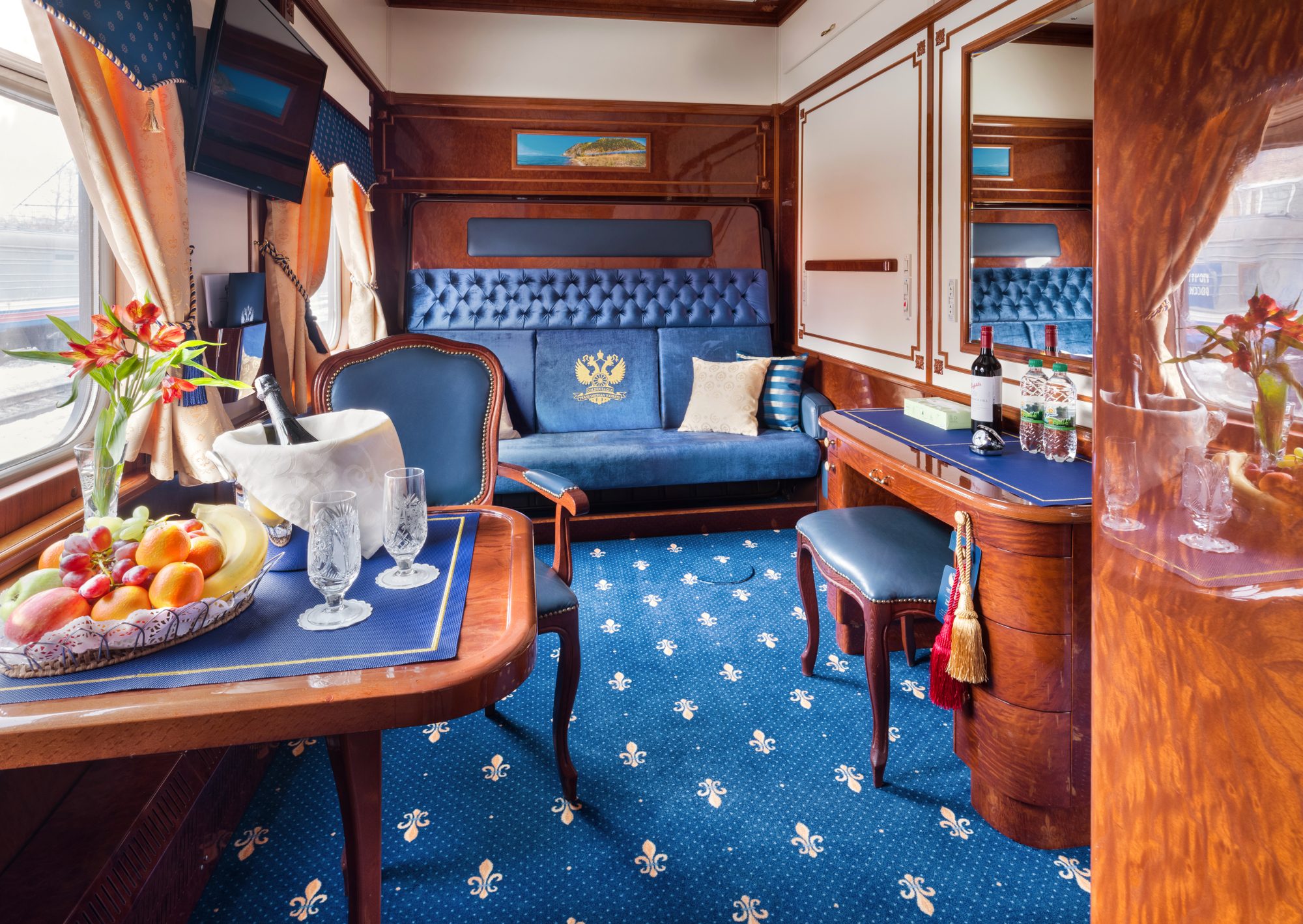
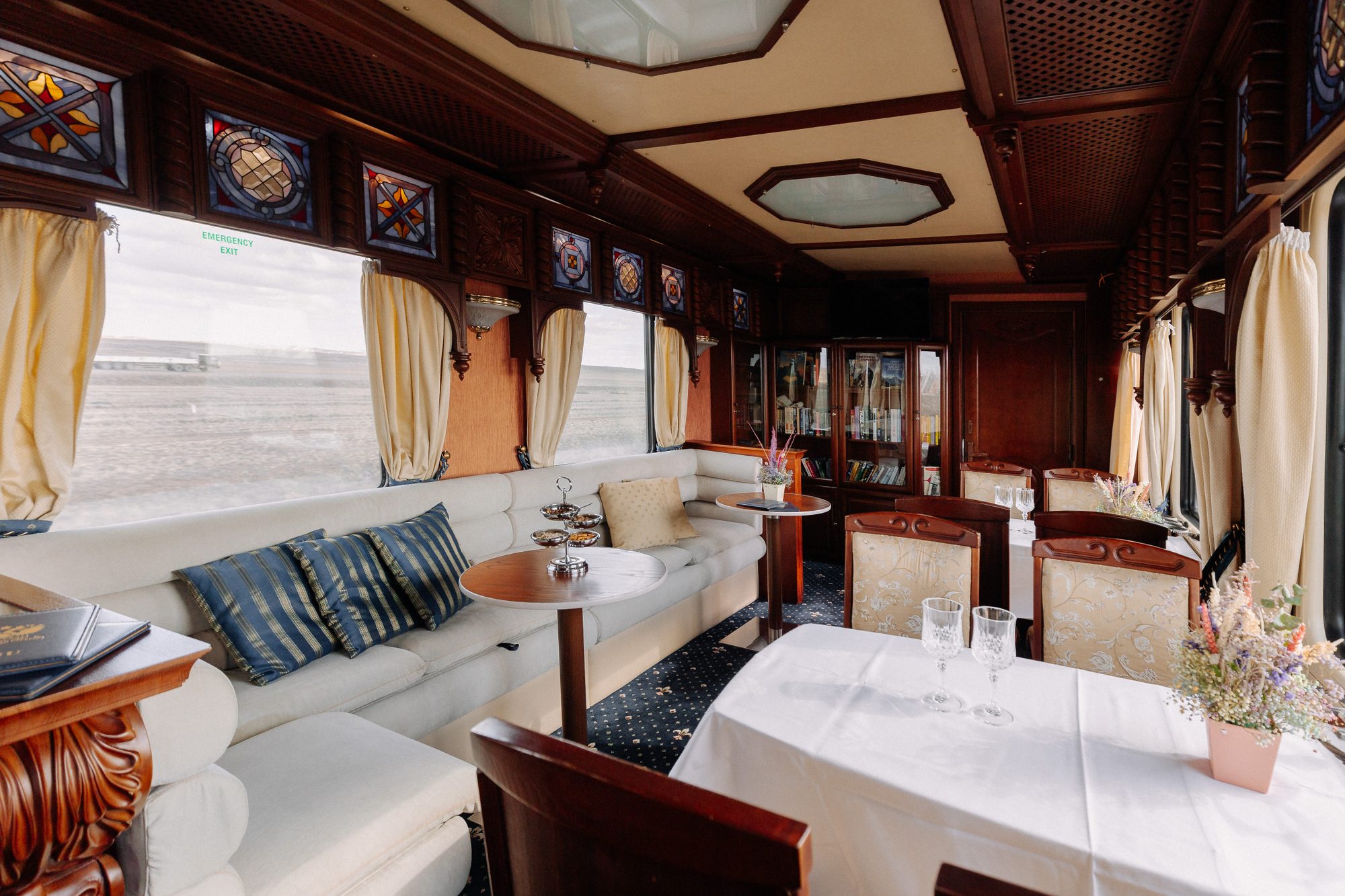
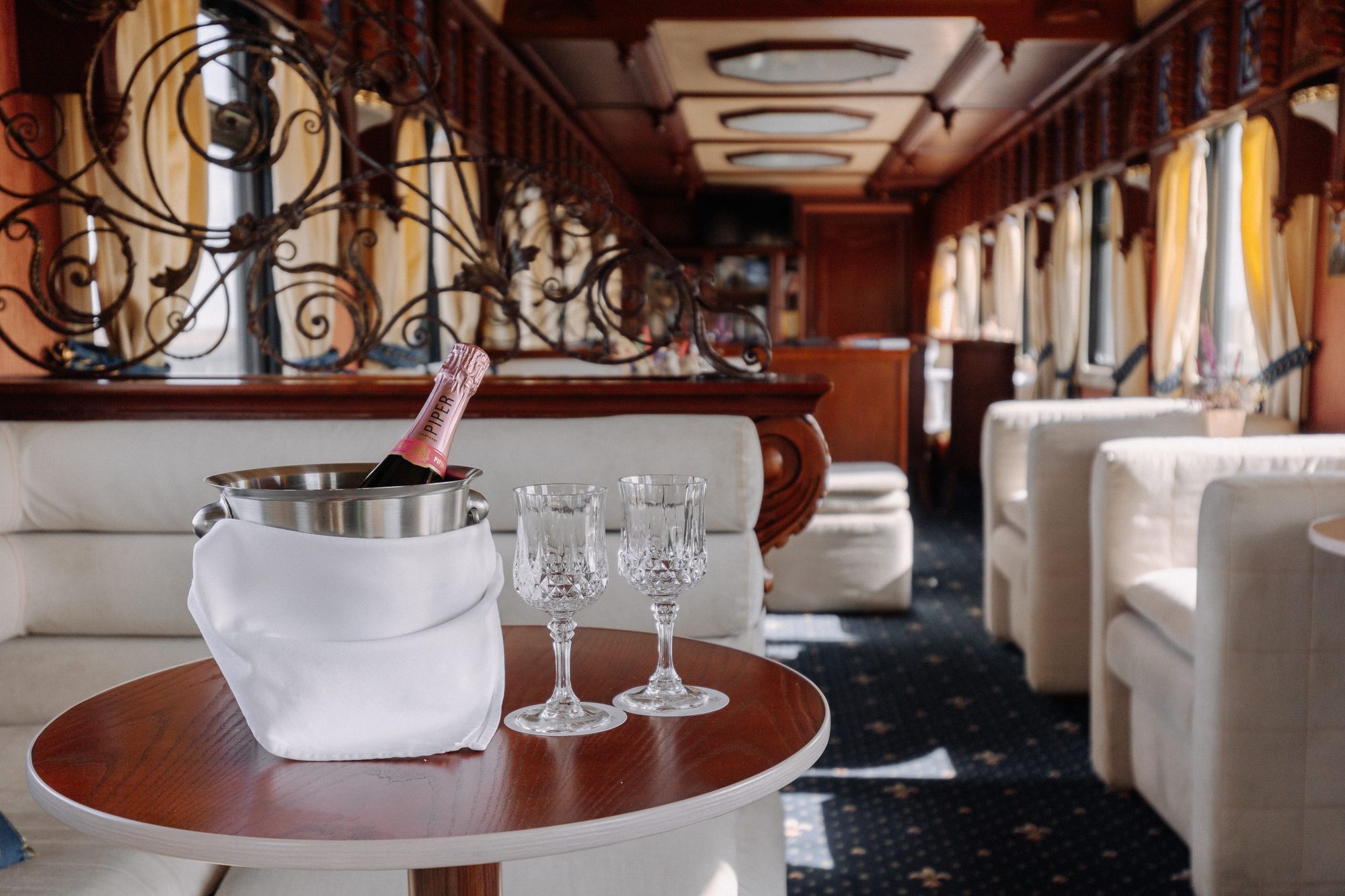
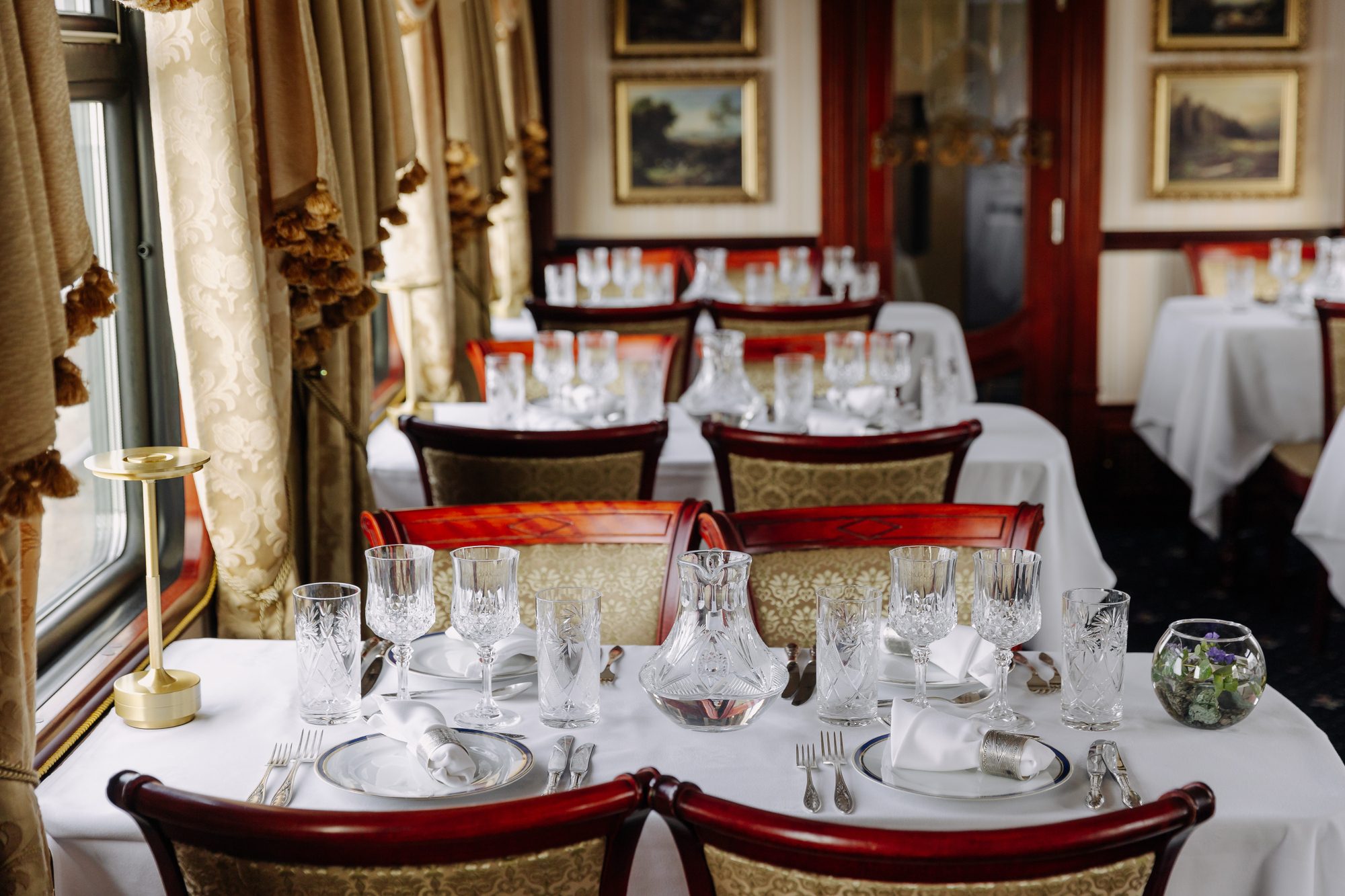
Scenes from the Journey
Day-by-Day Itinerary
Day 1 — Tashkent, Uzbekistan
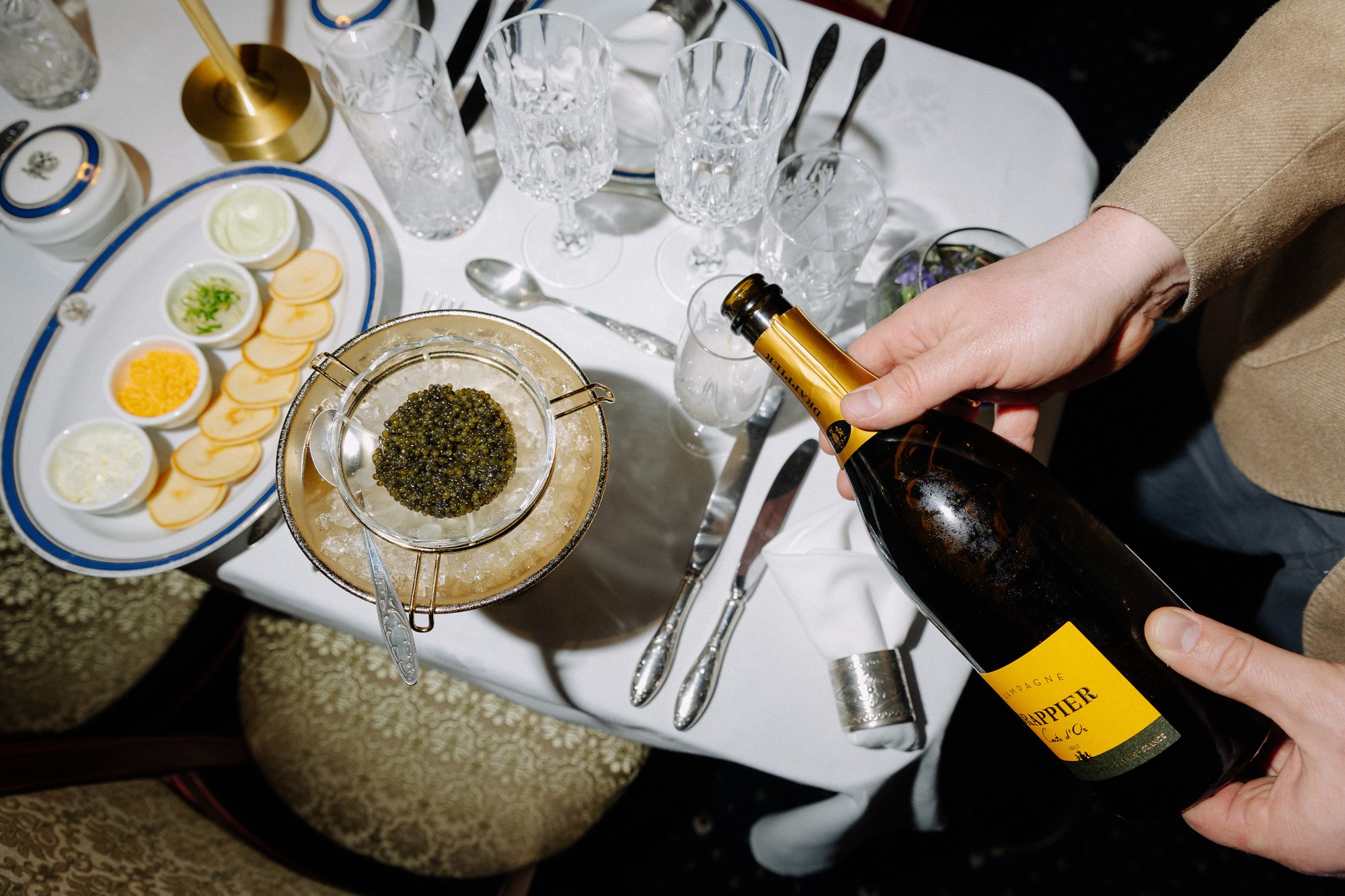
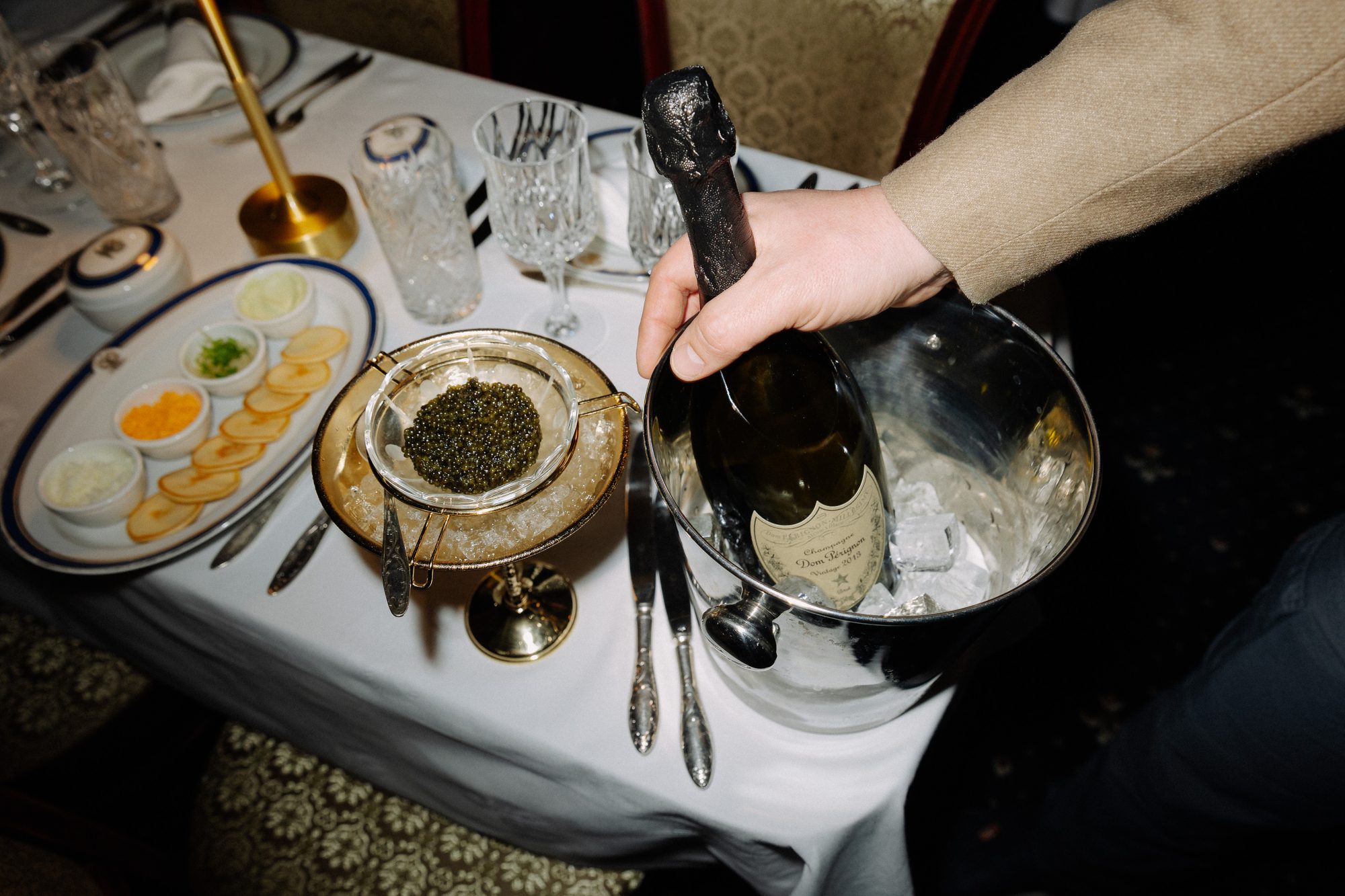
You are met at Tashkent Airport and taken to a five-star hotel in the centre. The first evening begins with a champagne reception and continues with the welcome dinner; international wines are included with dinner tonight, as with every meal on the journey.
Day 2 — Tashkent
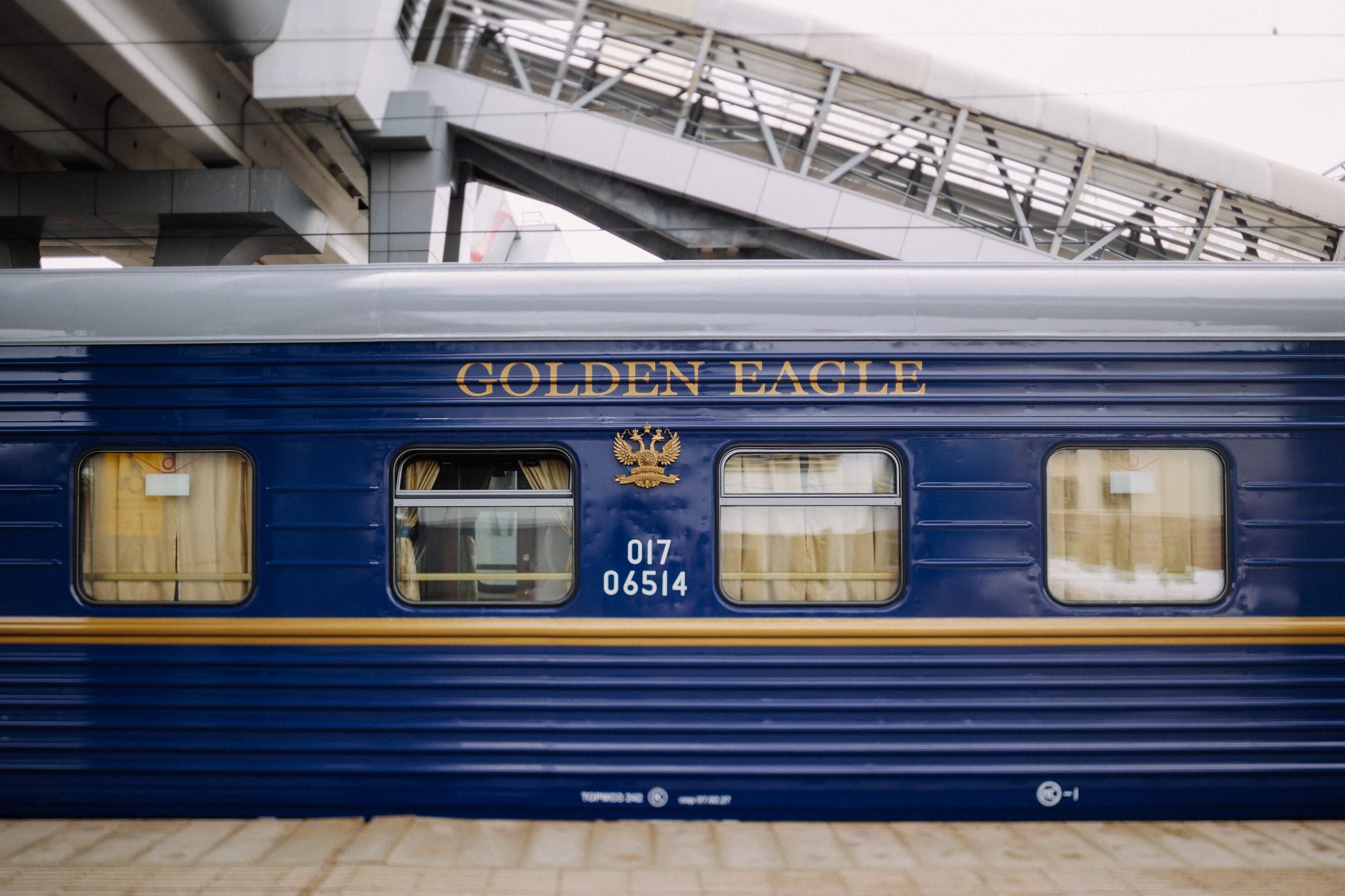
Tashkent was largely rebuilt after the earthquake of 1966, and Soviet planning sits over a much older city. The day starts in the Old Town, where you are shown one of Islam's most sacred relics — the world's oldest Koran — and continues at the Railway Museum and the Museum of Applied Arts. In the afternoon you board the Golden Eagle, settle into your cabin and meet again for the welcome dinner on board.
Day 3 — Kokand, Rishtan and Margilan
A day in the Fergana Valley. Kokand, one of Uzbekistan's oldest cities, was a major trading post on the Silk Road; here you visit the Palace of Khudayar Khan, known as the Pearl of Kokand, and the Jami Mosque, the finest in the city. By coach to Rishtan, the centre of Uzbek ceramics, where a master potter demonstrates the craft at close quarters and you see how the pieces are decorated. The last stop is Margilan, whose silk many regard as the best in Central Asia. A family who have made it for generations show you the whole process, from the mulberry trees that feed the silkworms to ikat woven by hand on traditional looms.
Day 4 — Bukhara
Bukhara was substantially restored under UNESCO sponsorship for its 2,500th anniversary in 1999. The day begins outside the city at the Emir's summer residence, the Palace of the Moon and Stars, then moves to the historic centre: The Ark, stronghold of the Emirs who ruled until Soviet times, and Poi-Kalyan Square with the Kalyan Mosque, its pillared galleries and deep niches a textbook of traditional Islamic design. There is time among the covered Trading Domes and at Lyabi-Hauz Square, around its pool in the shade of mulberry trees and tea houses. Weather permitting, a barbecue on the station platform before the train leaves.
Day 5 — Nukus
Nukus lies in the far north-west of Uzbekistan, surrounded by three deserts — the Kara Kum, the Kyzyl Kum and the Ustyurt. It is here for one reason: the Igor Savitsky State Museum of Fine Arts, known as the Louvre in the Sands, whose collection of some 100,000 avant-garde works and Karakalpak crafts is the most extensive in Central Asia.
Day 6 — Khiva
Khiva was founded 2,500 years ago where the routes linking Mongolia, Russia, China and Persia crossed, and became one of the Silk Road's most important trading posts. Today it is a World Heritage Site, rising out of the desert as a single walled town of mosques, madrassas, bazaars and minarets, which you explore on foot within its walls.
Day 7 — Dushanbe, Tajikistan
An afternoon in the Tajik capital on the Varzob River. The Museum of National Antiquities comes first, for the history and art of the region. Then the Kohi Navruz Palace, which began life as a teahouse; a local expert guide takes you through its chandeliered halls and explains who designed and decorated them. The touring continues to the Ismail Samani monument, honouring the first king of the Tajiks, Independence Square and the Mekhrgon Bazaar.
Day 8 — Shahrisabz
Shahrisabz is believed to be the birthplace of Amir Timur, who took Genghis Khan as his model and built his empire by much the same means. You visit his statue and the ruins of his Ak-Saray Palace, which took more than a quarter of a century to build. Its surviving facing still shows colourful mosaic and calligraphy from the Qur'an, including an inscription dated 798 — 1395 to 1396 AD — the year it was finished.
Day 9 — Samarkand
Samarkand was founded in the 6th century BC and is the name most closely tied to the Silk Road. Its great buildings date from the 14th to 17th centuries, when it was Timur's capital and that of his successors: Registan Square, the finely proportioned Bibi Khanum Mosque and the Ulugh Beg observatory of 1428, among the earliest in the Islamic world. As night falls you return to Registan, now illuminated, for a light show on the city's history, seen from front-row seats.
Day 10 — Samarkand
A second morning in Samarkand, at the Shakh-i-Zinda necropolis, a street of mausoleums going back to the 9th century, and then at the ancient settlement of Afrasiab, whose museum holds finds from its excavation, including the 7th-century frescoes from the Palace of Varkhuman. Lunch is back on board as the train runs on through Uzbekistan and Kazakhstan towards Kyrgyzstan.
Day 11 — Bishkek, Kyrgyzstan
Kyrgyzstan's capital began as a caravan stop on the Silk Road, but what you see today is mostly the 20th century. The afternoon tour covers Ala-Too Square, laid out in 1984 for the 60th anniversary of the Kirghiz Soviet Socialist Republic, and the city's parks, with their statues of Karl Marx and Friedrich Engels and the Memorial to the Red Guards.
Day 12 — Lake Issyk-Kul
Issyk-Kul, ringed by snow-capped peaks, is the second largest alpine lake in the world; its name means warm lake, and its depth, minerals and geothermal activity keep it from freezing. On the shore a festival is staged privately for the group: the sports and games of the steppe, handed down through generations — archery, horseback wrestling, hunting with golden eagles and ordo, a strategy game played with animal bones — together with music, dance, costume and crafts. Afterwards there is an optional visit to the open-air Museum of Petroglyphs, then dinner back on the train.
Day 13 — Almaty, Kazakhstan
Almaty, Kazakhstan's largest city, is a place of broad tree-lined boulevards under the snow-capped Tien Shan, and takes its name from alma, apple, for the orchards just beyond it. The morning tour takes in Panfilov Park and the Zenkov Cathedral, built entirely of wood without nails, and Independence Square. You leave the Golden Eagle for a final night in a five-star hotel, where the farewell dinner is held this evening.
Day 14 — Almaty
After breakfast, a transfer to the airport for your onward flight.
Destinations & Highlights
- Tashkent — Uzbekistan's rebuilt capital, and home to the world's oldest Koran.
- Fergana Valley — Kokand's palace, Rishtan's potters and a silk-making family at Margilan.
- Bukhara — The Ark, the Kalyan Mosque and the Palace of the Moon and Stars.
- Nukus — The Savitsky museum, the Louvre in the Sands, with some 100,000 works.
- Khiva — A walled Silk Road town, whole and intact, and a World Heritage Site.
- Samarkand — Two days, with Registan by day and again for the evening light show.
- Lake Issyk-Kul — A private festival of steppe sports beside the great alpine lake.
- Almaty — Kazakhstan's largest city, its boulevards backed by the Tien Shan.
Republics of the Silk Road: Tashkent to Almaty: Your Questions Answered
How long is the journey and how are the nights split?+
Which countries does it cross?+
Where does it start and finish?+
What happens in the Fergana Valley?+
Why stop at Nukus?+
How much time is there in Samarkand?+
What is the festival at Lake Issyk-Kul?+
What is included?+
Which cabin grades can I book?+
Is there a doctor on the train?+
Republics of the Silk Road: Tashkent to Almaty
| Departs | Returns | Route | Availability | |
|---|---|---|---|---|
| 2027 | ||||
| Mon 30 Aug 2027 | 12 Sep 2027 | Tashkent to Almaty | Available | Enquire |
| Thu 23 Sep 2027 | 6 Oct 2027 | Tashkent to Almaty | Available | Enquire |
Dates are as published by the operator and are subject to change and availability. We confirm your cabin and the final fare when you enquire.
Join the waitlist
This departure is currently sold out. Leave your details and our concierge will contact you the moment space becomes available.