When the last through service from Paris to Istanbul left the Gare de Lyon in May 1977, the only vehicle going the whole way was, according to one contemporary magazine account, an olive-drab French second-class coach with fewer than half of its 72 seats taken. The newspapers mourned the Orient Express. The train being withdrawn was the Direct Orient Express, and the Orient Express proper carried on under its own name until 2009.
The company behind the legend did not fall that night either. The Compagnie Internationale des Wagons-Lits had given up owning its sleeping cars six years earlier. What ended in 1977 was the last direct thread of an idea that had once bound Europe together by bed, linen and dinner service, and the way it frayed is more instructive than any single farewell.
A company that sold the night
The founder was Georges Nagelmackers, a Belgian engineer who had travelled on Pullman's sleeping cars in the United States and came home intending to run something comparable across European frontiers. Even the company's birth date is unsettled: reference accounts give 1872, a Trinity College Cambridge archive entry says 1874, and the rail historian behind Seat61 dates the Compagnie Internationale des Wagons-Lits to 1876. All describe the same business model. National railways pulled the trains; Wagons-Lits supplied the carriages in which people slept and dined.
Its most famous service first left Paris on 4 October 1883. The early journey to the Bosphorus involved a change of trains and a sea passage, and a direct train to Constantinople did not leave the Gare de l'Est until 1 June 1889. By then the company was building a network far larger than one route. In April 1919 came the Simplon Orient Express, which took a southern line from Calais and Paris through the Simplon Tunnel, then by Milan, Venice and Belgrade to Istanbul, with a portion for Athens. It is this train, not the plain Orient Express, that carries Agatha Christie's murder.
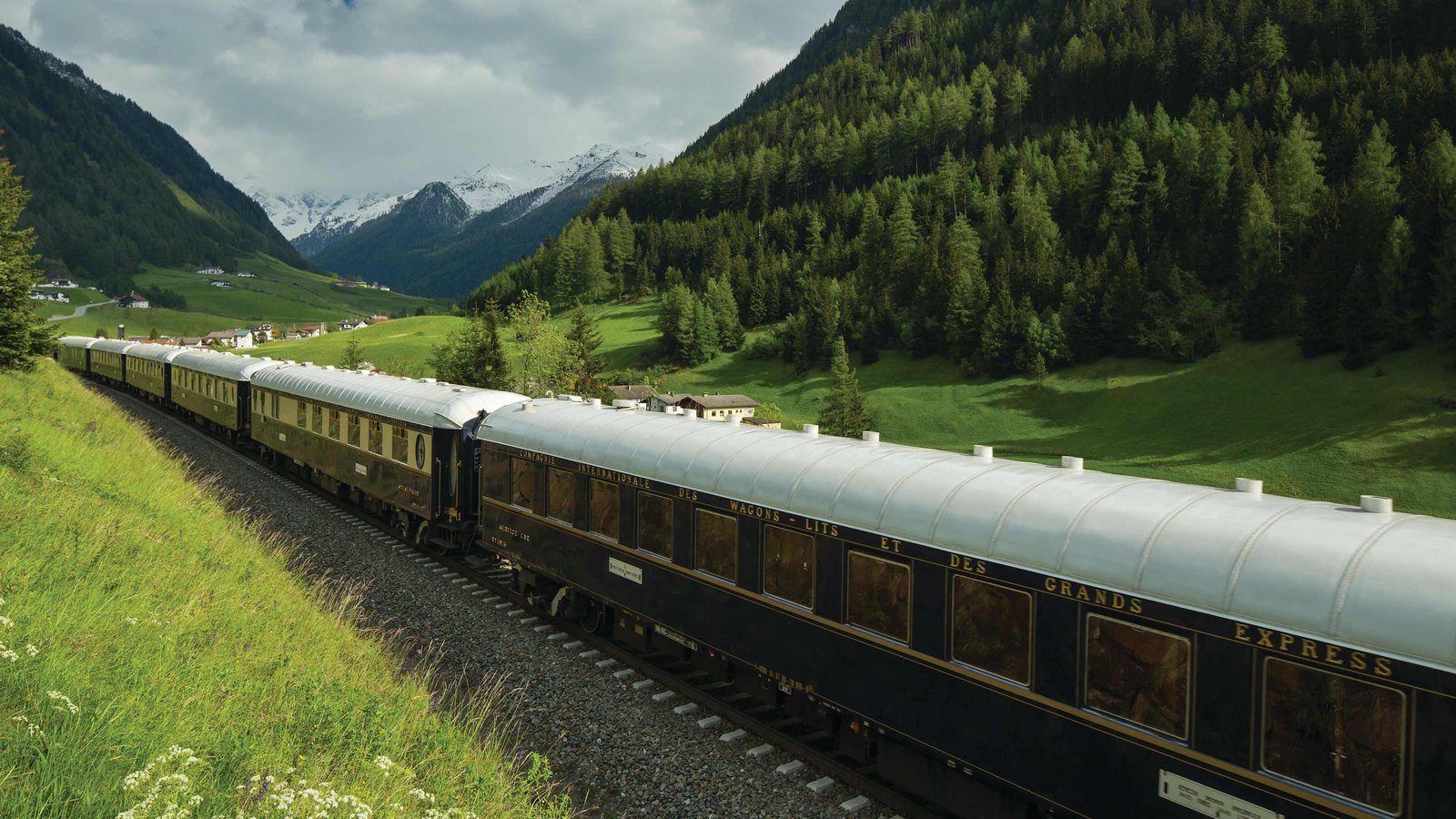
The fleet reached its recorded maximum of 2,268 vehicles in 1931. Blue and gold steel carriages, some decorated by designers of the standing of René Prou and René Lalique, made the company's livery a form of advertisement.
The arithmetic that failed
The weakness lay in how the money was divided. A passenger on the Orient Express bought an ordinary railway ticket and then paid a sleeper supplement. The ticket revenue went to the national railways. Wagons-Lits had the supplement, and from it had to maintain and eventually replace every sleeping car.
War had cost the company markets in central and eastern Europe, and the political division that followed cost more. Wagons-Lits turned increasingly towards travel agency and management work, and in 1967 it recognised the shift in its name, becoming the Compagnie Internationale des Wagons-Lits et du Tourisme.
By 1971 the sleeping fleet was ageing and the cost of renewing it was beyond the company. It sold or leased its coaches to the national operators, among them the French, Italian, Swiss, German, Austrian and Spanish railways. Many western European sleepers were then marketed jointly as Trans Euro Night, in a mid-blue livery with TEN on the side, an arrangement that lasted until 1995. Wagons-Lits staff still made up the berths and served the passengers, but as contractors on other people's carriages.
A slower train with a grand name
The Direct Orient Express had been created in 1962 to replace the Simplon Orient Express, and it was a slower and plainer affair. A 1965 timetable shows it as an assortment of through cars, with ordinary seats and couchettes alongside the sleeping cars. Istanbul received a through sleeper from Paris only twice a week.
Air travel had taken the wealthy, and the dining car and the better furnishings disappeared by degrees. Aramco World, reporting in 1977, described a once celebrated service that had declined into outright squalor.
Two accounts of the last night
The sources do not agree about the end. Seat61 records that the last run was timed to leave the Gare de Lyon at 23:56 on 19 May 1977, slipped a few minutes into the 20th, and carried a single sleeping car for Istanbul, of a type built in 1939 and by then repainted in modern blue and white. Aramco World places the final departure at seven minutes to midnight on 20 May and says the last sleeper had left the night before, filled largely with journalists. Both therefore have a sleeping car setting out on the 19th. They differ on whether that was the finale. Many reference works give the 19th.
The magazine's account of the following night is unsparing. The Istanbul coach sat among cars for Athens and Belgrade. The one-way fare was 88 dollars, and most of those aboard were students and workers going home, with their own food and blankets. Some 300 enthusiasts had asked Wagons-Lits for places on the final run; the company had hoped to add sleeping cars, but French Railways refused on grounds of economy. The station announcement did not mention the train's name, and the Direct Orient boards had been removed to discourage souvenir hunters.
In Yugoslavia the through coach waited two hours in a siding before being attached to another train for Turkey. It reached Sirkeci station six hours late. A porter quoted by the magazine said: "It just looks like any other dirty old train."
What did not end in 1977
The plain Orient Express, running from the Gare de l'Est by way of Strasbourg, Munich and Vienna, was unaffected by the funeral. It continued with through cars towards Budapest and Bucharest, was reduced to Paris and Vienna in 2001, was cut back to start from Strasbourg in June 2007 when high-speed trains took over the French leg, and left the timetables in December 2009.
The company also survived, in pieces. Wagons-Lits became part of the French hotel group Accor in 1991. Its European travel business was merged with Carlson's in 1997 to form Carlson Wagonlit Travel. In 2010 the rail catering operation passed to Newrest. The great fall was therefore a long dismantling, with ownership of the carriages going first and the name being parcelled out afterwards.
- 4 October 1883: the first Orient Express leaves Paris.
- April 1919: the Simplon Orient Express begins.
- 1962: the Direct Orient Express replaces it.
- 1971: Wagons-Lits sells or leases its coaches to the railways.
- May 1977: the direct Paris to Istanbul service is withdrawn.
- May 1982: restored carriages return as the Venice Simplon-Orient-Express.
- December 2009: the last timetabled Orient Express runs.
The auction at Monte Carlo, and what can be ridden now
Five months after the French railway announced the withdrawal, in October 1977, Sotheby's put five old carriages up for auction at Monte Carlo station. The American shipping businessman James Sherwood paid 104,000 dollars for two sleeping cars. Over the following five years he traced more than 20 further vehicles, among them one in use as a garden shed and another as a pigeon coop, and in May 1982 the restored train entered service.
That train, the Venice Simplon-Orient-Express, uses carriages built between 1926 and 1949, and has made Venice part of its name. On the English side, the British Pullman works from London Victoria. In Spain, Al Andalus carries travellers around the south in sleeping cars built by Wagons-Lits at the end of the 1920s. The Orient Express name, now associated with Accor, also appears on La Dolce Vita, a modern Italian train styled on the 1960s; our comparison of the Orient Express family sets out how these successors differ. None is a continuation of the 1977 timetable. What the restored carriages preserve is what that timetable had already lost.